
 en
en  fra
fra  de
de  ru
ru  ara
ara  gle
gle  it
it  jp
jp  kor
kor  th
th  zh
zh Casting vs Forging: How to Choose the Right Process for Your Part
2026-08-11 16:42:58 hits:0
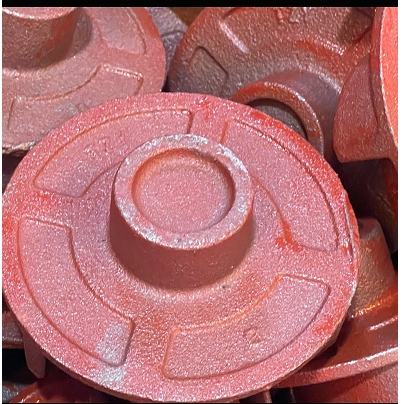
"Should this part be cast or forged?" is one of the first questions in any new-component program — and one buyers answer with incomplete information. Casting and forging are not better or worse; they are different tools. This guide gives you a practical framework to choose the right one by weighing strength, geometry, cost, and volume.
1. The One-Line Difference: Near-Net-Shape Casting vs Grain-Flow Forging
Casting pours molten metal into a mold and lets it solidify into the final shape. Forging shapes solid metal by compressive force, flowing it into a die. That single difference drives everything else.
Casting is a near-net-shape process: the part comes out close to its final form, often with features built in. Forging aligns the metal's grain structure along the part's contours, which gives superior fatigue and impact resistance in the forged direction. You trade shape freedom for directional strength.
Neither process is "premium" by default. A complex bracket is cheaper and lighter as a casting; a connecting rod is safer as a forging. The job decides the process, not the other way around. Both processes carry failure modes worth knowing — casting has its own defect types that disciplined inspection keeps in check.
2. Strength and Material Behavior: Forging's Directional Advantage vs Casting's Freedom
Forging wins on directional mechanical properties. Because the grain flow follows the part shape, forged components resist crack growth and shock loads better than cast ones of the same nominal composition. For fatigue-critical, highly stressed parts — crankshafts, gear blanks, suspension arms — forging is usually the right call.
But casting has closed the gap. Modern ductile iron grades such as GGG50–GGG70, and austempered ductile iron (ADI), deliver tensile and yield strengths that overlap with many forged steels. For static or moderately stressed parts, a casting can match the requirement at a fraction of the cost.
Castings also let you place mass exactly where needed and remove it where not — something forging cannot do without later machining. So "stronger" depends on which direction and which load case you mean.
3. Geometry: Why Complex Parts Can Only Be Cast
This is where casting wins decisively. Casting handles geometry forging cannot: internal cavities, cooling passages, undercuts, thin walls, and integral features in one piece. A forged part is limited by what can be squeezed into a die and ejected from it.
Consider a pump volute, a manifold with internal channels, or a housing with bosses and ribs on every face. Forging would need the part split into several pieces, then welded — adding joints, weight, and leak paths. A single casting eliminates them.
Design choices feed this decision early. Review design for manufacturability (DFM) before locking a process: many parts specified as "forge" are castable once the draft, wall thickness, and features are reconsidered.
4. Cost and Volume: Where the Crossover Sits
Forging has low tooling cost for open-die work but high per-piece cost; die forging needs expensive dies like casting does. Casting spreads tooling across volume but is hard to justify for a one-off.
| Factor | Casting | Forging |
|---|---|---|
| Tooling cost | Pattern/die, moderate–high | Die, moderate–high (open-die low) |
| Unit cost at volume | Low, scales well | Higher, material + upset loss |
| Material yield | High (near net shape) | Lower (flash, trim scrap) |
| Min order | Flexible, even prototypes | Less flexible at low volume |
| Secondary machining | Often needed for datums | Often needed for features |
For low volumes, casting is usually cheaper because you avoid heavy die investment and material waste. For very high volumes of a simple shape, die forging can win on cycle time. The crossover is not fixed — it moves with alloy, size, and tolerances. If you need a steel casting option instead of a forged steel part, the casting route often lowers both tooling and piece price.
5. The Decision Checklist
Use this list. Count the "cast" boxes; if most point to casting, cast it. If they point to forging, forge it.
Choose casting when:
The part has internal cavities, passages, or complex 3D geometry.
Weight and material savings matter more than peak directional strength.
Volume is low to medium, or you need a prototype fast.
The load is static or moderate, within modern ductile-iron or ADI grades.
You want one piece instead of several welded forgings.
Choose forging when:
The part is highly stressed, fatigue-critical, or shock-loaded in one direction.
Directional grain flow is required by the design spec.
The shape is simple enough to forge and volume is high.
Material yield and tight property scatter are priorities over geometry freedom.
When the answer is unclear, the safer commercial move is often casting — it protects you on geometry and cost, and modern grades cover most loads. Our guide to choosing a reliable casting supplier helps you vet shops that can hold your spec, whether the part is cast iron, ductile iron, or steel.
Still deciding between casting and forging for your component? Contact us at tieguexport.com →
FAQ
1. Are forged parts always stronger than cast parts?
No. Forging is stronger in the grain-flow direction and better for fatigue and impact. But cast ductile iron and ADI now reach tensile strengths that overlap with many forged steels. For static or moderate loads, a casting matches the requirement. "Stronger" depends on the load direction and the alloy grade, not the process name.
2. Can a part with internal cavities be forged?
Not in one piece. Forging shapes solid metal in a die, so internal passages and closed cavities must be machined or the part must be forged in sections and welded. Casting produces those features in a single shot. If your part has internal channels, casting is almost always the only monolithic option.
3. For low volume, which is cheaper — casting or forging?
Casting is usually cheaper at low volume. It avoids the heavy die investment of die forging and wastes less material. Open-die forging has low tooling but high per-piece cost and limited shape freedom. For a prototype or small batch with complex geometry, casting is the clear economic choice.
4. Can casting match forged strength grades (ductile iron / ADI)?
Yes, in many cases. Ductile iron grades GGG50–GGG70 cover a wide range of structural loads, and ADI reaches yield strengths competitive with forged medium-carbon steels. Casting cannot match forging's directional fatigue limit, but for most non-fatigue-critical parts the properties are sufficient — and the cost and geometry benefits are larger.
Tiegu is a China-based casting supplier serving international buyers through a vetted network of qualified Chinese foundries. We supply castings under a single commercial contract, managing supplier selection, technical confirmation, quality inspection, and export delivery from order to shipment.
Previous: Casting Tooling Cost and Ownership: What Buyers Must Know
Next: No More