
 en
en  fra
fra  de
de  ru
ru  ara
ara  gle
gle  it
it  jp
jp  kor
kor  th
th  zh
zh Casting Tooling Cost and Ownership: What Buyers Must Know
2026-08-10 17:36:29 hits:0
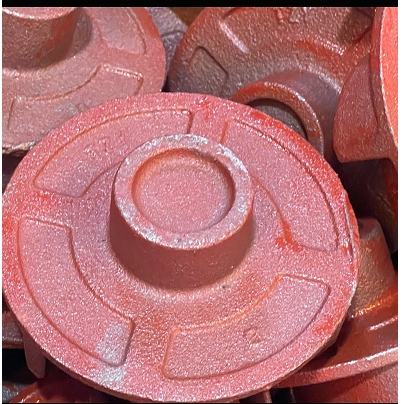
Most buyers negotiate the price per kilogram. Few negotiate the tooling. That is a mistake. Tooling — the pattern, mold, die, and fixtures used to make your part — is often the single largest sunk cost in a casting program, and the one most likely to trap you with a supplier you no longer want. This guide explains how tooling is priced, who should own it, and how to keep control of it from the first order to the last.
1. Why Tooling Is the Most Underrated Hidden Cost in Casting Procurement
Tooling is a hidden cost because it sits outside the unit price. A supplier may quote a low price per part and recover the margin through tooling. You see the piece price; you miss the tooling fee. The result is a program that looks cheap on paper and expensive in practice.
The bigger risk is not the money — it is the lock-in. If the supplier owns the mold and holds it hostage, you cannot walk away without losing the tool and paying to rebuild it elsewhere. For long-run programs, that leverage matters more than a five percent difference in unit cost.
Tooling also ages. Patterns wear, dies crack, and dimensional drift accumulates with every shot. Who pays for refurbishment is a question most purchase orders never answer — until a batch comes back out of tolerance. Poor tooling is also a frequent root cause of common casting defects.
Conclusion: treat tooling as a capital asset you are placing with a contractor, not a fee you pay and forget. The moment you sign, you have an interest in something physical that another company controls.
2. How Tooling Is Priced: Pattern, Mold, and Die
Tooling type drives cost. A wooden pattern for sand casting may cost a few hundred dollars. A machined metal pattern or a permanent mold runs into the thousands. A high-pressure die-casting die — hardened steel, cooled, and finished by EDM — can reach tens of thousands of dollars or more, depending on cavitation and complexity.
| Tooling type | Typical use | Cost range (indicative) | Rated life |
|---|---|---|---|
| Wood / resin pattern | Sand casting, low volume | Hundreds – low thousands USD | Hundreds of molds |
| Metal pattern / permanent mold | Repeat sand or gravity casting | Thousands USD | Thousands of cycles |
| Die-casting die | High-pressure die casting | Tens of thousands – 100k+ USD | 10k – 500k+ shots |
Complexity scales price fast. Undercuts, tight tolerances, and cores add machining hours. A die with four cavities costs far more than one with a single cavity, but it lowers unit cost at volume. Life matters too: a die rated for 50,000 shots is built differently from one rated for 500,000, and the cheaper one will fail sooner.
Ask for a tooling breakdown: material, machining hours, expected life, and spare-part policy. A vague "tooling: $X" line on a quote is a red flag. Design choices drive tooling cost more than anything else, so review design for manufacturability (DFM) before you approve a tooling quote — early changes often cut tooling cost by double digits.
3. Who Owns the Mold — and Why It Should Be You
The default assumption is simple: the party that pays owns it. In practice, many suppliers treat tooling as theirs by default and write that into the contract. That is the trap.
Buyers should retain ownership in writing. A clear clause — "all tooling paid for by the buyer remains the buyer's property" — gives you the right to retrieve it, audit it, and move it. Without that clause, the supplier can refuse access, charge "administration" fees, or simply deny the tool exists.
Ownership also affects liability. If the supplier owns the mold and it is damaged in a fire, you have no claim. If you own it, you can insure it. Watch the "tooling loan" wording too: some suppliers say "we provide the tooling free, but it stays ours." That is not free — it is a leash. You pay through higher piece prices and permanent lock-in.
Ownership risk is one face of a larger problem. See our breakdown of the risks of sourcing castings from China for the other places contracts quietly shift cost and control onto the buyer.
4. Multi-Sourcing and Mold Transfer: Avoiding Lock-In
The strongest protection against lock-in is the ability to move. That means the mold must be portable: documented, maintained, and physically retrievable. Before you commit, ask three questions. Is the tooling design open, or tied to one machine? Does the supplier allow periodic inspection? Will they ship it to you or a new supplier on request?
Put transfer terms in the agreement: who packs it, who pays freight, and what condition it must be returned in. A mold returned rusted or cracked is worthless. Some buyers keep a second set of tooling at a backup supplier, or hold the master pattern and let suppliers cut working tools from it. That decouples you from any single shop.
Before you split volume across foundries, make sure each one can actually hold your spec. Our guide to verifying a supplier's production capability covers the audits and sample checks that confirm a shop can run your tooling to print.
Not sure how to structure tooling terms with a new supplier? Contact us at tieguexport.com →
5. Turning Tooling Cost into Leverage
Tooling is not just a cost — it is negotiation capital. Three structures work well.
Amortization. Spread tooling cost across the first N orders instead of paying upfront. This lowers your early cash outlay and gives the supplier a reason to keep your program running.
Offset. Tie tooling to volume commitments: "We pay $X if annual volume reaches Y." This aligns both sides and avoids paying for capacity you never use.
Release conditions. Define when tooling is released to you — on final payment, on program end, or on request. Never leave it ambiguous. A good tooling agreement reads like a lease, not a fee: you control the asset; the supplier earns the work.
These terms belong in your supplier selection, not your first purchase order. Our guide to choosing a reliable casting supplier lists the questions to ask before you sign, including the tooling ones most buyers skip.
FAQ
1. What percentage of an order does tooling typically represent?
There is no fixed rule. For a one-off sand-cast prototype, tooling may be 30–60% of the first order. For high-volume die casting, tooling can be a small fraction of lifetime spend but a large upfront sum — often $10,000 to $100,000 or more for a production die. The right question is not "what percent" but "what control do I get for the money."
2. If a supplier goes bankrupt or the partnership ends, how do you recover the mold?
Only if you own it in writing and the contract allows retrieval. Send written notice, appoint a person to collect it, and specify freight and condition. If ownership is unclear, recovery becomes a legal fight you usually lose. Document everything at the start, not at the end.
3. Is tooling paid upfront or can it be offset against orders?
Either works. Upfront payment keeps ownership clean but hurts cash flow. Amortization or offset against volume spreads the cost and ties the supplier to your program. Avoid "free tooling" offers — they almost always mean the supplier owns the tool and prices it into the piece cost.
4. Can the same tooling be shared across different suppliers?
Sometimes. Sand-casting patterns and permanent molds can often move between shops if dimensions and machines are compatible. Die-casting dies are harder — they are built for a specific press and cooling layout. The safe approach is to retain the master pattern and let each supplier cut working tooling from it, so no single shop holds your only asset.
Tiegu is a China-based casting supplier serving international buyers through a vetted network of qualified Chinese foundries. We supply castings under a single commercial contract, managing supplier selection, technical confirmation, quality inspection, and export delivery from order to shipment.