
 en
en  fra
fra  de
de  ru
ru  ara
ara  gle
gle  it
it  jp
jp  kor
kor  th
th  zh
zh How to Find and Choose a Reliable Metal Casting Company: A Buyer's Guide
2026-07-13 15:40:07 hits:0
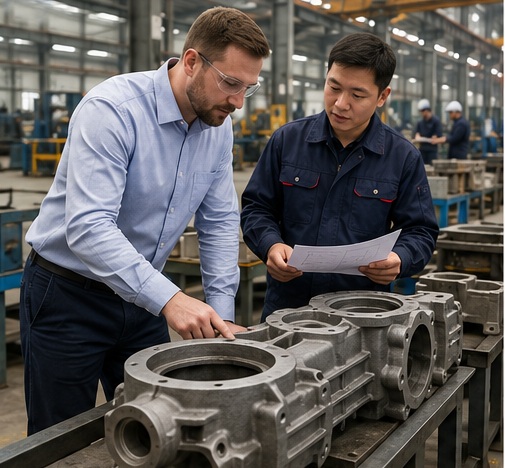
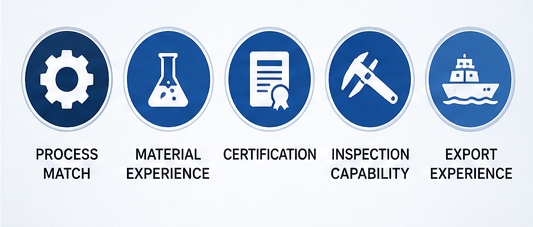
Choosing a metal casting company comes down to five things: process match, material capability, certification, inspection capability, and export experience. Get these five right, and most sourcing risks disappear. Miss one, and quality problems follow.
This guide covers how to find the right type of casting company for your application, how to evaluate them without visiting the facility, and how to source from China without unnecessary risk.
Tiegu is a China-based casting supplier serving international buyers through a vetted network of qualified Chinese foundries. We supply castings under a single commercial contract, managing supplier selection, technical confirmation, quality inspection, and export delivery from order to shipment.
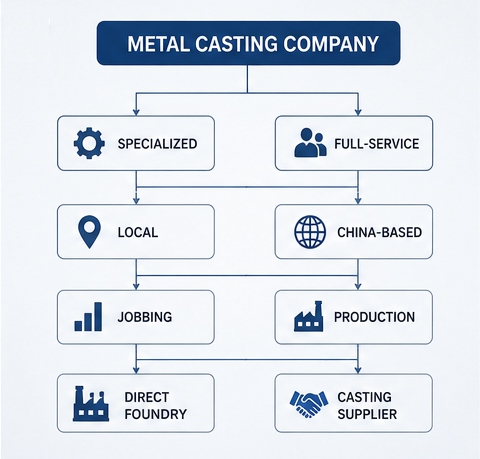
What Type of Metal Casting Company Do You Need?
Not all casting companies are the same. Matching the right type to your project is the first step — before comparing prices or certifications.
| Dimension | Option A | Option B | What to Choose |
|---|---|---|---|
| Specialization | Specialized foundry (one process/material) | Full-service casting company | Specialized if your spec is fixed; full-service for flexibility |
| Location | Local / domestic | China-based | China for cost and volume; local for speed and small batches |
| Volume model | Jobbing foundry (low volume, mixed parts) | Production foundry (high volume, repeat orders) | Match to your annual quantity |
| Commercial model | Direct foundry | Casting supplier / trading company | Direct if you have in-country audit resources; supplier if you don't |
The practical rule: Define your casting process, material, and annual volume before shortlisting suppliers. A foundry that excels at high-volume grey iron brake discs is not the right source for small-batch stainless steel investment castings.
5 Criteria That Actually Matter When Choosing
Most supplier evaluation guides list 8-10 criteria of equal weight. In practice, five criteria determine whether a casting company can actually deliver what you need.
1. Process Match
Does the foundry run the process your part requires?
A company that primarily does die casting will try to sell you on die casting — even if sand casting is better for your application. Confirm the foundry's primary process before anything else.
2. Material Experience
Has the foundry produced your specific material grade before?
Producing ductile iron EN-GJS-500-7 is different from producing stainless steel CF8M. Ask for MTCs (Mill Test Certificates — documents showing actual chemical and mechanical test results) from previous orders in your material grade. No records means no experience.
3. Certification
ISO 9001 — minimum for industrial supply
IATF 16949 — required for automotive supply chain
Check validity dates. A lapsed certificate is not a valid certificate.
4. Inspection Capability
A qualified casting company should have:
| Equipment | What It Does |
|---|---|
| Spectrometer | Verifies melt chemistry before pouring |
| CMM | Measures critical dimensions against drawing |
| MPI / FPI | Detects surface defects (magnetic particle / penetrant) |
| UT / RT | Detects internal defects (ultrasonic / X-ray) |
In-house capability matters. A foundry that outsources all inspection adds time, cost, and traceability risk.
5. Export Documentation Experience
Can the supplier provide:
Batch-specific MTCs (not generic typical analyses)
CMM dimensional reports
NDT certificates
Commercial invoice, packing list, certificate of origin
If they can't produce these on request from past orders, they are not ready for international supply.
Supplier Evaluation Checklist
☐ Process matches your casting requirement
☐ Documented experience with your material grade
☐ ISO 9001 or IATF 16949 (valid, in-scope)
☐ In-house spectrometer
☐ CMM dimensional inspection
☐ NDT capability on site
☐ Batch-specific MTCs available
☐ Accepts third-party pre-shipment inspection
☐ Export documentation experience confirmed
How to Source from Chinese Metal Casting Companies
China produces over 40% of the world's castings. For international buyers, this means access to the widest range of processes, materials, and price points — but also the need to understand how the industry is structured.
China's Casting Industry by Region
Different regions specialize in different processes and materials:
| Province | Specialization | Typical Products |
|---|---|---|
| Shandong | Grey iron, ductile iron | Automotive parts, agricultural machinery, pipe fittings |
| Jiangsu / Zhejiang | Stainless steel investment casting | Valves, pumps, marine hardware |
| Hebei | Carbon steel, alloy steel casting | Mining wear parts, valve bodies |
| Liaoning | Ductile iron pipe, large grey iron | Municipal infrastructure, heavy equipment |
| Guangdong | Aluminum / zinc die casting | Electronics, automotive brackets |
Knowing which region to target saves time. A stainless steel valve buyer should focus on Jiangsu and Zhejiang — not Shandong.
Direct Foundry vs Casting Supplier: Which Is Right for You?
| Direct Foundry | Casting Supplier (e.g. Tiegu) | |
|---|---|---|
| Process coverage | One foundry, one process | Multiple foundries, multiple processes |
| Commercial contract | Directly with foundry | Single contract with supplier |
| Quality coordination | You manage it | Supplier coordinates on your behalf |
| Audit requirement | You audit the foundry | Supplier pre-qualifies foundries |
| Best for | Buyers with in-country resources | International buyers without local presence |
Working directly with a foundry makes sense if you have in-country audit capability and a long-term single-process requirement. For most international buyers, a casting supplier that manages foundry qualification, inspection, and export logistics under one contract reduces risk significantly.
How to Audit a Casting Company Without Visiting
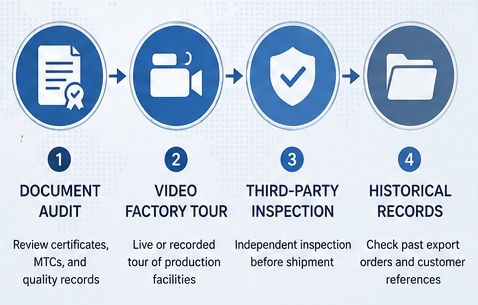
Most international buyers cannot visit a Chinese foundry before placing an order. These four methods provide meaningful verification without being on-site.
1. Document AuditRequest ISO / IATF certificates, sample MTCs from previous orders, NDT equipment calibration records, and CMM inspection reports. Genuine documents have specific dates, heat numbers, and equipment references. Generic documents without traceability are a red flag.
2. Video Factory Walk-ThroughSchedule a live video call and ask the supplier to walk through: the melting area (spectrometer visible?), mold shop, inspection lab (CMM and NDT equipment), and finished goods area. What you see in 30 minutes tells you more than a brochure.
3. Third-Party InspectionSGS, Bureau Veritas, and TÜV all offer pre-shipment inspection services in China. Engage them before your first production shipment. A supplier who resists third-party inspection is a supplier with something to hide.
4. Historical Order RecordsAsk for inspection records — not from your order, but from a previous customer's comparable order. A foundry that has been producing export-quality castings consistently will have records. One that cannot produce historical records probably has not.
Ready to source from a qualified Chinese casting company? Contact Tiegu — we review your drawing requirements and match your project to a pre-qualified foundry, with third-party inspection coordination included.
Red Flags: When to Walk Away
Watch for these warning signs before committing tooling cost or production to a new supplier:
Generic MTC with no heat number. Real batch traceability links documents to a specific melt. "Typical analysis" sheets are not MTCs.
Lapsed or unverifiable certification. Check expiry dates. Cross-reference the certifying body against the IATF or ISO recognized list.
Resistance to third-party inspection. No explanation needed — walk away.
Price 40-50% below market. That gap has to come from somewhere: thinner walls, substituted materials, skipped heat treatment, or uninspected batches.
First article samples significantly better than production batches. Carefully prepared samples that don't represent actual production conditions is one of the most common failure modes in China sourcing.
No records from previous comparable orders. If a supplier claims years of export experience but cannot show previous inspection documents, that experience is not real.
Slow or vague responses to technical questions. A foundry that cannot answer specific questions about their process, equipment, or previous work is not the right partner for precision supply.
Frequently Asked Questions
What is the typical MOQ at a metal casting company?There is no fixed industry minimum. Tooling cost is charged separately from unit price, making small batches (50-200 pieces) viable once tooling is paid for. Most Chinese export foundries prefer initial orders of 100-500 pieces. For prototype quantities, some foundries offer temporary tooling at lower cost. Always confirm MOQ and tooling policy before requesting a quotation.
How long does sampling take at a metal casting company?Sample lead time from drawing approval to first article samples is typically 3-6 weeks for sand and shell mold castings, and 4-8 weeks for investment casting. Die casting tooling takes longer — 6-10 weeks. Part complexity and material affect timeline. Confirm sample lead time in writing before tooling payment.
How do I protect my IP when sharing drawings with a casting company?Sign an NDA before sharing any drawings. Reputable export foundries sign NDAs routinely. Remove your company name and end-customer references from drawings before sharing with new suppliers. Working through a casting supplier adds a contractual layer — the supplier is commercially accountable for confidentiality compliance across their foundry network.
What does a casting company quotation include?A complete quotation should cover: tooling cost (one-time), unit casting price at stated annual volume, machining cost if applicable, heat treatment cost if required, inspection scope and documentation included, packaging, lead time for tooling and first samples, Incoterms, and payment terms. Any quotation missing tooling cost or inspection scope is incomplete.
When should I consider switching casting suppliers?Consider switching when: the same defect type recurs across multiple batches despite corrective action commitments; the supplier consistently misses agreed lead times without credible explanation; quality documentation becomes inconsistent or traceable records disappear; or the supplier refuses to accept third-party inspection. A single quality incident with a genuine corrective action response is manageable. A pattern of recurring issues with defensive responses signals a systemic capability gap.
Tiegu is a China-based casting supplier serving international buyers through a vetted network of qualified Chinese foundries. We supply castings under a single commercial contract, managing supplier selection, technical confirmation, quality inspection, and export delivery from order to shipment.
Find the Right Metal Casting Company for Your Project
Share your drawing, material grade, annual volume, and quality requirements. Tiegu will match your project to a qualified foundry, coordinate inspection, and provide a complete quotation under a single commercial contract.