
 en
en  fra
fra  de
de  ru
ru  ara
ara  gle
gle  it
it  jp
jp  kor
kor  th
th  zh
zh Pump Body Castings: How to Select Material, Process & Supplier — A Buyer's Guide
2026-08-04 16:55:46 hits:0
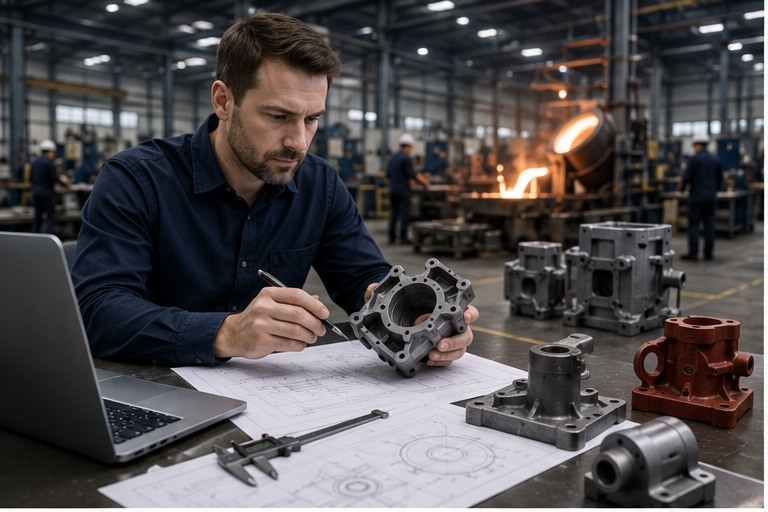
A pump body looks simple from the outside and is unforgiving on the inside. It holds pressure, sits in a corrosive or abrasive fluid, and fails in ways that are expensive to fix in the field. For the broader picture of pump types and how they work, see our comprehensive analysis of pumps. This guide stays on the buyer's decision: which casting material, which process, and which Chinese supplier will actually deliver a body that does not leak.
1. What a Pump Body Demands from the Casting
Start from the failure mode, not the catalog. Pump bodies mostly fail by:
Corrosion—wall thinning until the casing bursts or weeps.
Erosion—abrasive solids scour the wetted surface.
Porosity—hidden voids that leak under pressure or seed cracks.
Cavitation—vapor bubbles that pit the surface near the impeller eye.
Pressure rupture—at flanges, bosses, or thin sections.
Each failure mode points to a different material and a different check at incoming inspection. A body specified only by "cast iron" inherits all of these risks at once.
That is why the RFQ should name the fluid, not just the metal. Tell the supplier what the pump will actually move, and let the material follow from the service condition. A vague spec is what turns a casting decision into a field failure.
2. Choosing the Casting Material by Service
The fluid decides the metal. Match the material to the media, the temperature, and the solids content.
| Material | Best for | Strengths | Watch out |
|---|---|---|---|
| Gray iron (e.g. GG25) | Clean water, no abrasives | Low cost, good damping, easy to cast | Brittle; poor corrosion and impact resistance |
| Ductile iron (GGG40/50, ASTM A536) | Sewage, mild chemicals, moderate pressure | Strength and toughness at moderate cost | Not for strong corrosion or seawater |
| Stainless (CF8M / A351) | Chemicals, seawater, food, pharma | Corrosion resistant, strong | Higher cost; grade must fit the fluid |
| Duplex (2205 / A890) | Seawater, chlorides, abrasive slurries | High strength plus corrosion resistance | Most expensive; harder to cast and weld |
Standard ductile iron grades cover most water and sewage jobs. When the fluid is corrosive or contains chlorides, move to stainless or duplex—and note that steel castings bring different casting rules and certification than iron. The material choice, not the foundry, sets the floor on service life.
Temperature sets another limit. Many metal pump bodies lose strength or corrode faster above 80–120°C, so verify the grade's window against your worst-case shutdown or cleaning temperature—not only the steady running point.
3. Picking the Right Casting Process
Material is half the decision; the process sets the cost, the surface, and the achievable geometry.
Sand casting—the default for pump bodies: economical at volume, handles large and complex shaped casings, but needs machining on sealing faces.
Investment casting—tight tolerances and fine surfaces for small, complex bodies; higher cost, lower volume.
Shell molding / lost-foam—a middle path: better surface than green sand at moderate cost, good for mid-volume runs.
Pick the process by batch size, the finish you need on the wetted passage, and how much you want to spend on post-machining. Over-specifying the process wastes money; under-specifying it wastes the material you just paid for.
Also confirm the as-cast tolerances against your machining plan. A process that looks cheap per piece can cost more overall if it leaves too much stock to remove on the sealing faces.
Not sure which material or process fits your pump's service conditions? Send us the spec at tieguexport.com and we'll recommend both →
4. How to Source Pump Body Castings from China
The supplier question is about capability, not just price. Before requesting a quote:
Confirm the foundry can cast and certify your chosen material—ask for material standard compliance (e.g. ASTM A536, A351) and recent MTCs.
Check for hydrostatic test capability and NDT on site; a supplier that cannot pressure-test its own bodies will ship unknowns.
Put the service conditions in the RFQ: media, temperature, pressure class, and the acceptance standard (e.g. shell test at 1.5× working pressure).
Start with samples and a first-article inspection tied to the drawing; do not jump from drawing to full container.
Use our guide on how to find reliable casting suppliers in China to build the shortlist, then verify the supplier's production capability—pump bodies are exactly where a low quote hides a missing pressure-test bench.
Ask about tooling and lead time before you commit. A new pattern or mold can add weeks before the first sample, and some foundries quote low then stall at tooling. Build that step into your schedule, not your surprises.
5. Quality Checks That Catch Bad Pump Bodies
A pump body that passes on appearance can still leak under pressure. Verify at the material and pressure level:
Hydrostatic shell test—hold at 1.5× working pressure (or per your standard) with no weep or drop.
Pneumatic test—for bodies that cannot take water, per specification.
NDT—magnetic particle and ultrasonic where cracks matter; see our NDT methods guide.
Wall thickness—measure at the thinnest section, not just at a convenient spot.
Porosity check—radiography or section samples on the first article.
Mill test certificate with heat and casting lot traceability.
For critical or high-pressure bodies, a third-party witness of the hydrostatic test is cheap insurance against a shipment of leakers.
The hydrostatic test is the check buyers most often waive to save time—and the one that matters most for a pressure boundary. Treat a body that looks fine but was never pressure-tested as untested, not as passed.
FAQ
1. Which material should I choose for a corrosive pump body?
Match the metal to the fluid. Clean water and sewage run well in ductile iron; chemicals and seawater need stainless CF8M or duplex 2205. The chloride content and temperature decide where stainless stops and duplex begins—specify the exact fluid, not just "corrosive".
2. Sand casting vs investment casting for pump bodies—which is better?
Neither is universally better. Sand casting wins on cost and size for most volutes and casings and is the standard choice. Investment casting wins on surface finish and tolerance for small, complex bodies where machining cost dominates. Choose by batch size and the finish you need on the wetted passage.
3. What quality tests must a pump body casting pass before use?
At minimum a hydrostatic shell test at the specified multiplier of working pressure, wall-thickness verification at the thinnest section, and an MTC with heat-lot traceability. Add magnetic-particle or ultrasonic NDT and porosity checks (radiography or section) for critical or high-pressure services.
4. How do I avoid porous or leaky castings from a Chinese supplier?
Require the hydrostatic test as a release criterion, not a courtesy; verify the foundry owns a pressure-test bench; and qualify with samples plus first-article inspection before full production. A supplier that cannot show you a test rig or a recent MTC is a risk regardless of price.
Tiegu is a China-based casting supplier serving international buyers through a vetted network of qualified Chinese foundries. We supply castings under a single commercial contract, managing supplier selection, technical confirmation, quality inspection, and export delivery from order to shipment.