
 en
en  fra
fra  de
de  ru
ru  ara
ara  gle
gle  it
it  jp
jp  kor
kor  th
th  zh
zh Austempered Ductile Iron (ADI): A Buyer's Guide to Specifying, Sourcing & Verifying from China
2026-08-03 17:06:37 hits:0
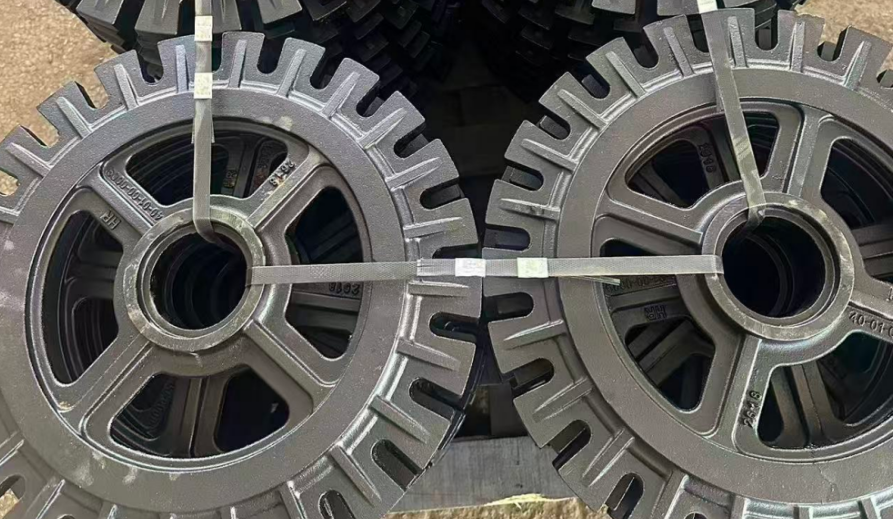
Austempered ductile iron (ADI) starts as ordinary ductile iron and then goes through a second heat-treatment step—austempering—that turns the matrix into a fine ausferritic structure. The payoff is large: tensile strength can reach roughly twice that of standard ductile iron, with much better wear and fatigue resistance. If you want the metallurgy and the heat-treatment window, see our explainer on what austempered ductile iron is. This guide is for buyers: when ADI is worth the cost, what to put in the RFQ, and how to make sure a Chinese supplier actually delivers the grade you paid for.
1. What ADI Is—and When It Beats Standard Ductile Iron
ADI is not a different base material; it is ductile iron with a controlled austempering cycle after casting. That cycle is what creates the strength. The practical question is whether your part needs it.
Specify ADI when the part sees wear and impact at the same time—gear teeth, differential carriers, agricultural rollers. ADI also wins on fatigue-loaded parts and where you want to replace a steel forging to save weight. For those jobs, standard ductile iron grades will wear out or crack early.
Stay with standard ductile iron when the load is static, the stress is low, and the shape is simple. ADI costs more and is harder to make. A foundry needs a dedicated austempering line, quench control, and extra testing—so you pay for that capability even on a quiet part.
The buying rule: ADI earns its premium only where strength, wear, or fatigue is the failure mode. If none of those apply, you are paying for a heat-treatment furnace you do not need. When in doubt, spec the part both ways and compare the quoted cost against the expected service life—the answer is usually clear.
2. Specifying ADI in Your RFQ
Vague requests like "make it ADI" are how buyers get parts that look right and fail in service. Pin the grade down.
The standard grade system is ASTM A897 / ISO 17804, with Grades 1–5 by minimum tensile strength. Match the grade to the failure mode, not to habit.
| ADI Grade (ASTM A897) | Min Tensile (MPa) | Typical use |
|---|---|---|
| Grade 1 | 850 | Gears, cams, lightly loaded brackets |
| Grade 2 | 1050 | Differential carriers, sprockets |
| Grade 3 | 1200 | High-stress brackets, linkages |
| Grade 4 | 1400 | Wear plates, heavy off-road parts |
| Grade 5 | 1600 | Extreme-wear components |
Your RFQ should state, at minimum:
The exact grade: "austempered to ASTM A897 Grade 3", not "ADI grade 3".
The hardness band, since hardness tracks the ausferritic structure.
Section thickness, because thick castings may not through-harden—a thin coupon can pass while the part core stays soft.
The heat-treatment cycle requirement and the accepted microstructure (ausferritic matrix, controlled retained austenite).
Put those notes on the drawing, not just in the email. Good design-for-manufacture practice means the foundry reads the spec off the print, not from memory.
3. Where Buyers Actually Specify ADI
The pattern is consistent across industries: any part where impact and abrasion meet is a candidate.
Gears and gear blanks—transmission, axle, and differential gears where tooth contact and shock load coincide.
Agricultural and construction equipment—rollers, sprockets, track links that chew through grit all day.
Heavy-truck and off-road suspension parts—where fatigue, not just load, drives the design.
Any bracket or carrier that must be both light and tough.
If your engineer keeps specifying steel forgings for these, ADI is worth a comparison. Same job, lower weight, often lower cost—provided the heat treatment is controlled.
Not sure which ADI grade or hardness band fits your part? Send us the drawing at tieguexport.com and we'll recommend a grade →
4. How to Source ADI Castings from China
The single most important sourcing question is not price. It is: does the foundry have an austempering furnace in-house, or a qualified heat-treat partner with a controlled process?
A regular ductile iron foundry can cast the part, but if it ships the castings out to an uncontrolled salt-bath line, your grade is a gamble. Before you ask for a quote:
Confirm in-house austempering or a named, certified heat-treat partner.
Ask for furnace calibration records and quench salt-bath temperature control—these are what keep the cycle inside the window.
Require cycle records per heat lot, not a one-time certificate.
Use our guide on how to find reliable casting suppliers in China to build the shortlist, and verify the supplier's production capability before sending the RFQ—ADI is exactly the kind of part where a pretty brochure hides a missing furnace. Start with a sample and a first-article inspection tied to the drawing.
5. Quality Control & Verification
ADI fails quietly when the heat treatment is off, so verification has to be material-level, not just dimensional.
Hardness mapping at several points, including the thickest section—one good reading is not enough.
Microstructure check: confirm an ausferritic matrix with controlled retained austenite and no excessive carbides. This is the test that catches "nominal ADI" that was never properly austempered.
Tensile and impact coupons per grade from the actual heat, not from a separate test bar.
Non-destructive testing—magnetic particle and ultrasonic per the application; see our NDT methods guide.
Mill test certificate with heat and treatment lot traceability, so a bad batch is traceable to a furnace run.
For high-value or safety parts, a third-party inspection at the foundry is cheap insurance against a whole container of misgraded iron.
FAQ
1. What's the difference between ADI and standard ductile iron, and when should I specify ADI?
Both start as ductile iron. ADI adds an austempering heat-treatment that creates an ausferritic matrix, roughly doubling tensile strength and greatly improving wear and fatigue resistance. Specify ADI when the part fails by wear, impact, or fatigue—gears, rollers, carriers. For static, low-stress parts, standard ductile iron is the cheaper, simpler choice.
2. Which ADI grade should I specify for high wear and impact?
Grades 4 and 5 (min tensile 1400–1600 MPa) suit extreme-wear parts; Grade 3 is a common balance for high-stress brackets and linkages. Pick by the failure mode and section thickness, not by defaulting to the highest number—thick sections may not through-harden at the top grades.
3. Can a regular ductile iron foundry make ADI, or do I need a specialist?
Casting the iron and austempering it are different capabilities. A foundry without its own controlled austempering line can still make ADI only if it uses a qualified heat-treat partner with documented process control. Always confirm the furnace and ask for per-lot cycle records before ordering.
4. How do I verify the ADI heat treatment was done correctly?
Require hardness mapping across the part (including thick sections), a microstructure check for an ausferritic matrix, tensile/impact coupons from the actual heat, and a mill test certificate with heat and treatment lot traceability. For critical parts, add third-party inspection at the foundry.
Tiegu is a China-based casting supplier serving international buyers through a vetted network of qualified Chinese foundries. We supply castings under a single commercial contract, managing supplier selection, technical confirmation, quality inspection, and export delivery from order to shipment.