
 en
en  fra
fra  de
de  ru
ru  ara
ara  gle
gle  it
it  jp
jp  kor
kor  th
th  zh
zh Rotary Kiln Nose Ring and Inlet Guard Castings for Cement and Lime Plants
2026-09-22 17:15:49 hits:0
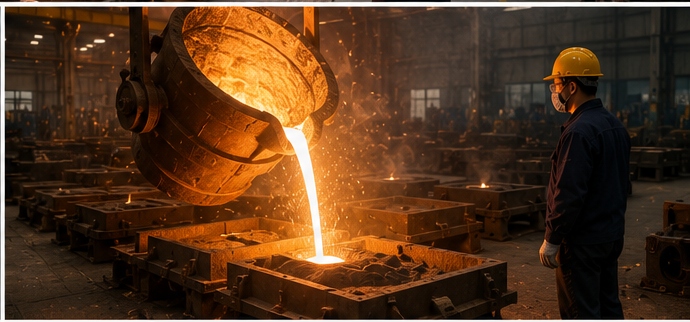
The rotary kiln nose ring and inlet guard sit at the hottest, most abrasive zone of a cement or lime kiln. They absorb direct flame radiation, hot gas erosion, and clinker drag on every rotation. Tiegu supplies rotary kiln nose ring and inlet guard castings to cement, lime, and mineral plants worldwide, matching each order to a foundry that runs heat-resistant steel grades and checks dimensions against your drawing before export.
1. What the Nose Ring and Inlet Guard Do
The nose ring seals and protects the kiln inlet where feed enters and hot gases exit. The inlet guard shields the surrounding shell and refractory from direct impingement. Because this zone runs near the flame, a warped or cracked ring drags the whole kiln offline — the part is small relative to the plant, but the downtime cost is not. Buyers therefore treat it as a planned-wear spare, not a commodity.
For a broader view of how we handle sourcing wear- and heat-resistant castings from China, see our casting sourcing guide.
2. Why Material Grade Decides Service Life
Standard carbon or low-alloy steel oxidizes and creeps above 600°C, so the grade is the whole game here. Heat-resistant cast steels carry the job through chromium for scale resistance and nickel for high-temperature strength and thermal-fatigue resistance:
ZG40Cr25Ni20 / ZG35Cr28Ni16 — typical for 1000–1200°C zones, good oxidation resistance and thermal shock tolerance.
ZG45Cr26Ni35 — higher nickel for zones running hotter or with heavier thermal cycling.
Lower-Cr alternatives — only where the local temperature is genuinely moderate; they warp and crack faster.
Pick the grade by the measured zone temperature and atmosphere (oxidizing vs reducing), not by price alone. If you are unsure how to choose a casting supplier that runs these grades, the supplier-selection guide walks through the foundry checks that matter.
3. What We Verify Before Shipment
Heat-resistant castings are bought on chemistry and high-temperature behavior, not room-temperature hardness. For nose ring and inlet guard orders, Tiegu confirms the following with the foundry and on the documents:
Chemistry on the MTC: verify Cr and Ni against the ordered grade — these elements, not the base iron, carry the oxidation resistance. See our note on how to read a mill test certificate.
Hot-cracking and thermal-fatigue risk: review the foundry's pouring and controlled-cooling practice, then apply PT/MT surface inspection on critical sections where casting stress concentrates.
Interface dimensions: dimensionally inspect the mounting flange and bolt-hole pattern against your kiln drawing — a mismatched interface means on-site machining or a rejected fit.
Spec stated, not assumed: confirm the temperature and performance requirement is written into the order, because heat-resistant castings are specified on chemistry plus service condition, not a hardness number alone.
Not sure which heat-resistant grade fits your kiln zone? Contact us at tieguexport.com →
4. Specification Checklist for Buyers
Operating zone temperature and atmosphere (oxidizing / reducing).
Grade (e.g. ZG40Cr25Ni20) and any third-party chemistry requirement.
Drawing with interface dimensions, bolt pattern, and allowable tolerance (ISO 8062).
Required NDT (PT / MT / UT) and acceptance criteria.
Spare strategy — wear parts are cyclical, so confirm lead time before you need the part.
When you are ready, submit an RFQ with your drawing and we will confirm grade, foundry match, and inspection scope.
FAQ
1. Can standard carbon steel be used instead of heat-resistant grades?
No. Carbon steel oxidizes and creeps rapidly above 600°C, while the nose ring runs far hotter. Only high-Cr-Ni heat-resistant cast steel holds its shape and resists scale in this zone.
2. How long does a nose ring casting last?
It depends on zone temperature, feed chemistry, and cooling practice. Buyers should plan spares on a maintenance cycle rather than waiting for failure; we help confirm the grade and lead time up front so the spare is on hand.
3. Do you supply the full kiln inlet assembly or just the cast ring?
Tiegu supplies the cast nose ring and guard to drawing. For welded or machined assemblies we confirm the scope with you and arrange the foundry and inspection accordingly under one contract.
Tiegu is a China-based casting supplier serving international buyers through a vetted network of qualified Chinese foundries. We supply castings under a single commercial contract, managing supplier selection, technical confirmation, quality inspection, and export delivery from order to shipment.
Request a quote for nose ring castings →