
 en
en  fra
fra  de
de  ru
ru  ara
ara  gle
gle  it
it  jp
jp  kor
kor  th
th  zh
zh Mining Equipment Castings: A Buyer's Guide to Wear Parts Sourcing
2026-07-24 15:57:37 hits:0
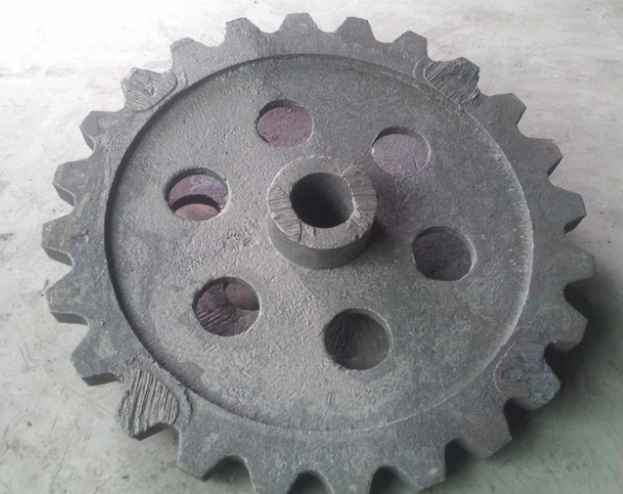
Mining equipment castings are not regular steel castings. They die for a living. Jaw plates, cone mantles, mill liners, bucket teeth — these parts take a beating from rock and ore every shift, wear out, and get replaced. That cycle is the core of your operating cost.
Yet most buyers approach wear parts the same way they approach structural castings: compare unit prices, pick the cheapest, reorder when it breaks. That approach costs you money on every ton you process.
This guide breaks down what actually matters when sourcing mining wear castings: material selection by operating condition, how to write an RFQ that gets real quotes, quality verification, and the one metric that determines whether you're winning or losing — cost per ton.
What Makes Mining Castings Different from Standard Steel Castings
A structural steel casting is designed to hold load indefinitely. A wear casting is designed to be consumed. The difference changes everything about how you buy.
Standard castings fail when they break. Wear castings "fail" when they wear past usable thickness — which is the normal end of life, not a defect. Your job as a buyer is not to prevent wear. It's to get the most tons processed per dollar spent before replacement.
Three categories of mining castings dominate procurement budgets:
| Category | Typical Parts | Wear Mechanism |
|---|---|---|
| Crusher wear parts | Jaw plates, cone mantles/concaves, impact bars | Impact + abrasive wear |
| Mill liners | Ball mill liners, SAG mill liners | Abrasive wear + minor impact |
| Ground engaging tools | Bucket teeth, adapters, ripper shanks | Abrasive wear + impact |
Each category has different material requirements, different failure modes, and different cost structures. Treating them all as "steel castings" and shopping by price is the most common — and most expensive — procurement mistake in mining.
Material Selection: Matching Steel Grade to Your Operating Conditions
The material conversation is where most buyers get lost. Foundries offer a menu of grades, and without knowing how each behaves under specific conditions, it's hard to tell whether you're getting the right part or just the cheapest one.
High Manganese Steel (Hadfield Steel)
Grades: Mn13 (ZGMn13), Mn13Cr2, Mn18Cr2
This is the workhorse of crusher wear parts. Manganese steel has a unique property: it work-hardens under impact. The surface gets harder as it takes a beating, while the core stays tough. That's why jaw plates and cone mantles are almost always manganese steel.
Mn13 is the baseline. Mn13Cr2 adds chromium for slightly better wear resistance. Mn18Cr2 steps up further for high-impact, high-throughput primary crushers.
The catch: manganese steel only work-hardens under sufficient impact. In low-impact applications (secondary crushing of soft limestone), it stays soft and wears out fast. For those conditions, you need a different material.
High Chromium Cast Iron
Grades: Cr20, Cr26, Cr27 (per ASTM A532)
Maximum abrasion resistance. The high chromium content forms hard carbides that resist cutting and gouging wear. But it's brittle — direct impact from large rocks can shatter it.
Best fit: ball mill liners, impact crusher blow bars, vertical shaft impactor tips. Anywhere abrasion dominates and impact is moderate.
Wrong fit: jaw plates in primary crushers. The impact load will crack them.
Alloy Steel
Grades: ZG42CrMo, 35CrMo, 30CrNiMo
When a part needs strength more than wear resistance — support brackets, crusher frames, housing components — alloy steel is the right call. It can be heat-treated to balance hardness and toughness for structural applications.
Composite / Bimetal Castings
A newer approach: high chromium iron at the wear face, welded or cast onto a mild steel backbone. The hammer head is the classic example — the tip takes the abrasion, the handle takes the impact. You get the wear resistance of high chrome where you need it and the toughness of steel where you can't afford to crack.
Quick Selection Reference
| Your Condition | Dominant Wear Type | Recommended Material |
|---|---|---|
| Primary crusher, hard ore, high impact | Impact + abrasion | Mn18Cr2 |
| Primary crusher, soft rock, moderate impact | Abrasion (low work-hardening) | Mn13Cr2 or alloy steel |
| Ball mill, dry grinding | Pure abrasion | Cr26 cast iron |
| Impact crusher, mixed feed | Impact + abrasion | Mn13Cr2 or Cr20 (application dependent) |
| Hammer crusher | Impact at tip, stress at handle | Composite (Cr26 tip + alloy steel body) |
If you're not sure which applies to your operation, that's exactly what should go in your RFQ. A good steel casting supplier will ask about your ore type, feed size, and throughput before recommending a grade.
Writing an RFQ That Gets Accurate Wear Part Quotes
Most wear part RFQs are one line: "Please quote jaw plate for Nordberg C160, drawing attached." That gets you a price. It does not get you an accurate quote.
Here's what a proper wear part RFQ should include:
1. Equipment details. Crusher make, model, and OEM part number. This tells the foundry the exact profile and mounting interface.
2. Operating conditions. Ore type (granite, limestone, iron ore, etc.), feed size range, throughput (TPH), and whether it's primary or secondary crushing. This determines material recommendation.
3. Material grade — specified by you. Don't leave it to the foundry to "default" to Mn13. If you've been running Mn18Cr2 and getting good life, say so. If you're switching from Mn13 to Mn18, say why. The grade affects price by 15–30%.
4. Heat treatment requirement. For manganese steel, water toughening (austempering) is non-negotiable. State it explicitly: "Water toughened per ASTM A128." Without this, some foundries skip the step to save cost — and your parts will crack in service.
5. Hardness specification. Give a Brinell range, not "hardened." Manganese steel after water toughening should read 200–230 HBW. If a foundry quotes 250+ HBW on as-cast manganese, they didn't water-toughen it properly — or they're measuring work-hardened surface.
6. Annual consumption estimate. This affects tooling cost amortization. A foundry amortizing mold cost over 500 sets per year can offer a very different price than one expecting 20 sets.
Not sure how to structure your technical requirements? Get a sourcing consultation →
Quality Verification: How to Know You Got What You Paid For
This is where most buyers drop the ball. The parts arrive, they look like jaw plates, they fit the crusher, so they go into production. Three weeks later, life is 40% shorter than expected. Nobody checked whether the material was actually what was specified.
Chemical Composition
Request an OES (optical emission spectrometry) report for every heat. Verify that manganese content matches the grade — Mn13 should show 11–14% Mn, Mn18 should show 17–20% Mn. Chromium in Mn13Cr2 should be 1.5–2.5%. If the numbers don't match the spec, the foundry substituted a cheaper grade.
Hardness Testing
Brinell test on the as-cast surface (not the work-hardened wear face). For manganese steel after water toughening: 200–230 HBW. Higher than 250 on a fresh part means carbides at grain boundaries — the heat treatment was wrong. Lower than 180 means the steel wasn't properly austenitized.
Heat Treatment Verification
This is the step foundries skip. Water toughening requires heating to 1050–1100°C, holding, then quenching in water. If the foundry cools too slowly, carbides precipitate at grain boundaries and the steel becomes brittle.
The only way to verify: metallographic examination. A polished sample should show fully austenitic structure with no carbide network at grain boundaries. If you're ordering significant volume, request a metallographic photo with each batch. Understanding common casting defects helps you read these reports.
Dimensional Check
Wear parts don't need aerospace tolerances, but they need to fit. A jaw plate with the wrong tooth profile wears unevenly and reduces throughput. A cone mantle that doesn't seat properly causes vibration and premature failure. Design for manufacturability reviews before production can catch these issues early.
Common Shortcut: Skipped Water Toughening
This is the single most common quality shortcut in manganese steel castings. Without water toughening, manganese steel retains as-cast carbides and is brittle. The part may look fine, may even pass a superficial hardness check, but it will crack or chip under service load within days.
If you're ordering from a new supplier, insist on third-party inspection that includes metallographic verification — not just dimensional and chemistry checks.
Cost-Per-Ton: The Metric That Actually Matters
Here's the procurement paradox: the cheapest jaw plate is rarely the cheapest jaw plate.
A Mn13 jaw plate costs $800 and processes 12,000 tons before replacement. Cost per ton: $0.067.
A Mn18Cr2 jaw plate costs $1,050 and processes 20,000 tons before replacement. Cost per ton: $0.053.
The "expensive" part is 21% cheaper per ton. Plus you save on changeout labor (one stoppage instead of nearly two), and your crusher runs at higher throughput with better-maintained tooth profiles.
Cost per ton = unit cost ÷ tons processed before replacement
This formula should be on every wear part purchase order. But most buyers never calculate it. They track unit price because it's easy, not because it's right.
When Premium Materials Justify the Cost
Composite/bimetal parts can cost 50–80% more than standard manganese. They justify that premium when:
Abrasion is the dominant wear mechanism (not impact)
Downtime cost is high (each hour of stoppage costs thousands)
Changeout requires special crews or extended shutdown
In high-abrasion, moderate-impact applications — hammer crusher tips, vertical shaft impactor wear plates — composite parts often deliver 2–3x the life of manganese. The math works.
Why Unit Price Comparison Is Misleading
Two foundries quote Mn13Cr2 jaw plates. One is $780, one is $950. The cheaper one uses Mn13 without chromium and skips water toughening. The expensive one is genuine Mn13Cr2, properly heat-treated, with full documentation.
If you compare by unit price, you pick the $780 part. If you compare by cost per ton — accounting for the fact that the $780 part will last 60% as long — the $950 part is the better deal.
This is why verifying your supplier's production capability matters more than negotiating the last 5% off the unit price.
Tiegu is a China-based casting supplier serving international buyers through a vetted network of qualified Chinese foundries. We supply castings under a single commercial contract, managing supplier selection, technical confirmation, quality inspection, and export delivery from order to shipment.
FAQ
1. What's the difference between Mn13 and Mn18 manganese steel?
Mn13 contains 11–14% manganese; Mn18 contains 17–20%. The higher manganese content in Mn18 gives better work-hardening capacity under heavy impact, extending service life in primary crushers processing hard rock. Mn13 is adequate for moderate impact; Mn18 is the upgrade for severe conditions.
2. Can I use high chromium cast iron for jaw plates?
No. Jaw plates in primary crushers take direct impact from large rocks. High chromium cast iron is brittle and will crack under that load. It's designed for abrasion-dominant applications like ball mill liners and impact crusher blow bars, where impact is moderate.
3. How often should I replace crusher wear parts?
It depends entirely on your feed material and throughput. A jaw plate in a primary crusher processing hard granite might last 2–4 weeks. The same plate in soft limestone could last 8–12 weeks. Track tons processed, not calendar time — and replace when tooth profile is worn past the usable threshold, not when the part "looks worn."
4. What hardness should manganese steel castings have after water toughening?
200–230 HBW (Brinell). This is the as-quenched hardness before work-hardening. In service, the surface will harden to 450–550 HBW as it takes impact. If a new part reads above 250 HBW, it likely has carbides at grain boundaries from improper heat treatment — it will be brittle.
5. How do I know if my supplier actually performed water toughening?
Request a metallographic examination report. Properly water-toughened manganese steel shows fully austenitic microstructure with no continuous carbide network at grain boundaries. For new suppliers, arrange third-party inspection that includes metallographic sampling — not just chemical and dimensional checks.