
 en
en  fra
fra  de
de  ru
ru  ara
ara  gle
gle  it
it  jp
jp  kor
kor  th
th  zh
zh How to Read a Mill Test Certificate for Castings: A Buyer's Guide
2026-07-29 16:57:39 hits:0
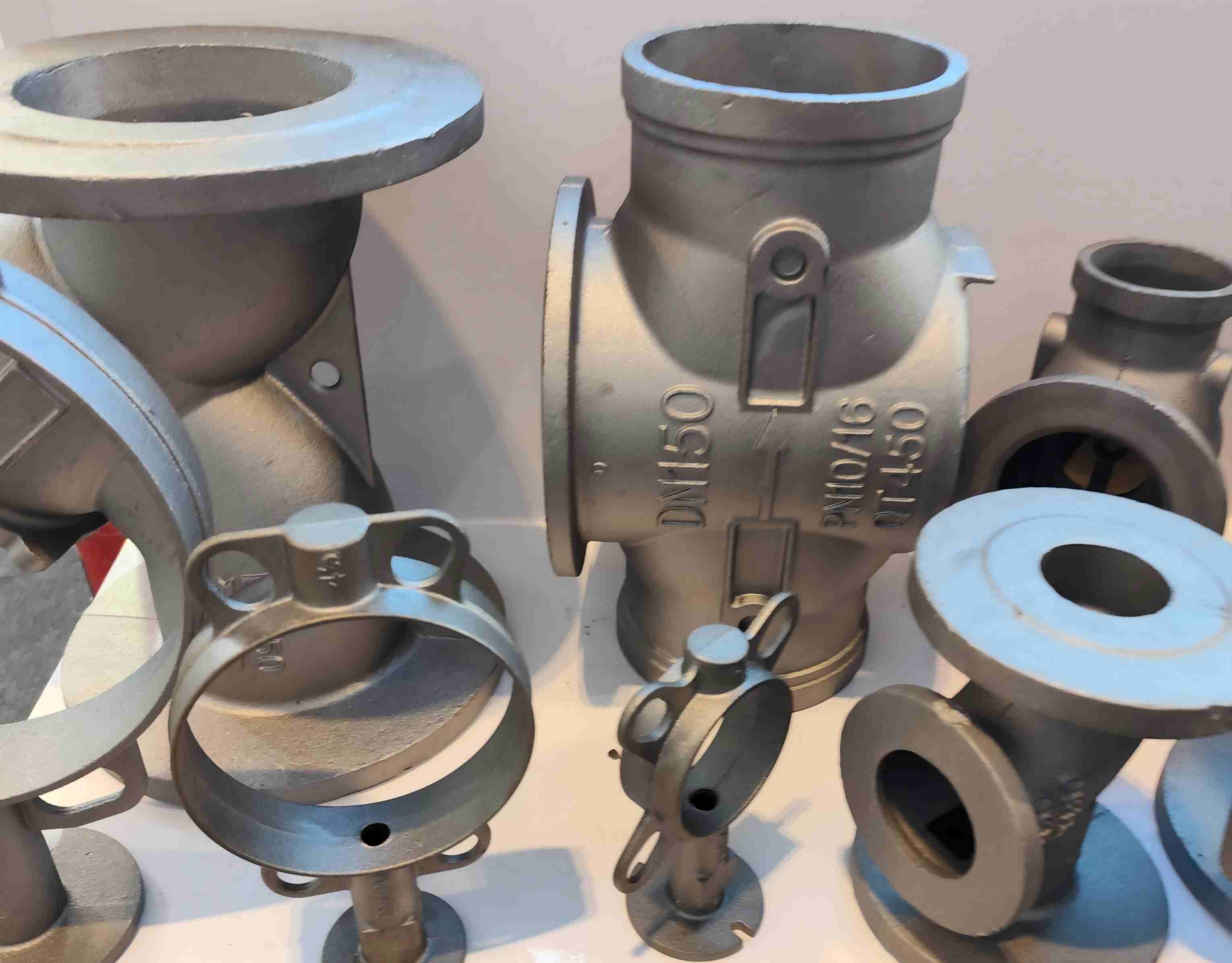
A mill test certificate (MTC) is your acceptance evidence, not a formality. When a container of castings lands at your dock, the MTC is the document that ties the metal in that box to a specific heat, a specific grade, and a set of measured values. Read it wrong and you accept material you shouldn't. Read it right and you catch problems before they reach your customer.
This guide walks through what an MTC actually contains, how EN 10204 types differ, and the red flags that should stop an acceptance.
1. What a Mill Test Certificate Actually Is (and Isn't)
An MTC, defined under EN 10204, is a document issued by the material's manufacturer — or its authorized representative — stating that the delivered material conforms to the ordered specification, with the chemical and/or mechanical values to back it up.
What it is not: an inspection report. An MTC speaks to the material — its chemistry and properties, tied to a heat or lot number. A separate inspection report covers the part: dimensions, surface condition, and non-destructive testing. Many buyers conflate the two and end up with chemistry on paper but no proof the casting was ever dimensionally or internally checked. For the checks that sit outside the certificate — crack detection, internal soundness — see our guide on non-destructive testing for castings.
For you as a buyer, the MTC's real value is traceability. Every batch you receive should map to a heat number you can verify against the material marking and the delivery note. Without that link, the certificate is just a piece of paper.
2. The Data Fields That Matter to Buyers
Most certificates list more lines than you need. These are the ones that protect you:
Chemical composition. Heat number, grade, and measured values for each element against the allowed range. "Pass" is not a value — you want the actual numbers. If an element is missing, ask why.
Mechanical properties. Tensile strength, hardness, elongation — matched to the grade, for example EN-GJS-500-7 ductile iron. Our ductile iron grade guide explains what each grade number actually demands.
Heat treatment. If your spec calls for annealing, normalizing, or quenching and tempering, the certificate should declare the treatment and the lot it was applied to.
Dimensional results. Usually this is not on the MTC — it belongs on the inspection report. Don't assume the MTC covers sizes; confirm them against ISO 8062 casting tolerances separately.
| Field | What to verify | Red flag |
|---|---|---|
| Chemical composition | Each element measured, within range; heat number present | "Pass" with no numbers; missing elements |
| Mechanical properties | Tensile, hardness, elongation match the grade | Value near but below the limit; wrong grade cited |
| Heat treatment | Declared if specified; lot identified | Treatment claimed but not declared on the cert |
| Dimensional | Usually absent — confirm on the inspection report | Assumed covered by the MTC; never checked |
3. EN 10204 Types Explained: 2.1 vs 2.2 vs 3.1 vs 3.2
The type tells you how much the certificate is worth. They are not interchangeable.
2.1 — Statement of compliance. Based on the manufacturer's experience with the same product, not measured on your lot. Weakest evidence.
2.2 — Test report. Based on tests, but not necessarily on your actual batch.
3.1 — Inspection certificate. Actual test results from your lot, issued by the manufacturer's authorized representative. Note: not an independent third party.
3.2 — Inspection certificate with third-party. Same as 3.1, but a recognized body (TÜV, Lloyd's, etc.) witnesses and signs. Strongest.
For general commercial castings, 3.1 is usually sufficient. For pressure equipment, safety-critical components, or where a regulation demands it, 3.2 is the requirement. The trap: "certificate" in 3.1 sounds official, but it carries no independent verification. In automotive programs, the documentation trail matters as much as the metal — see our automotive casting quality control guide for how this plays out in practice.
Need help specifying certification requirements in your RFQ? Contact us at tieguexport.com →
4. How to Verify an MTC Against Your Drawing and Standard
Don't read the MTC in isolation. Verify it against what you actually ordered:
Pull the drawing and the material standard. Confirm the grade, the standard (e.g., EN 1563, ASTM A536), and the mandatory tests before you look at a single value.
Check values item by item. Each element within range? Mechanical properties met? Heat treatment declared as specified? If a required test is blank, that is a gap, not a pass.
Match the heat/lot number. It must agree with the material marking on the castings and with the delivery note. A mismatch is an immediate stop — no argument about it.
Check the issuing details. Issuer, date, and the exact standard version cited. A certificate citing an expired standard version is a rejection on its own.
Red flags to watch: values sitting exactly on the limit line across every heat, blank fields marked "N/A" for items your contract required, heat numbers that don't match the physical parts, and certificates citing an outdated standard. Certificate problems often trace back to supplier selection — our casting sourcing risk guide covers how to screen for this before you order, not after a bad lot arrives.
5. When to Push Back: Common MTC Problems in Casting Orders
Some problems are fixable; some mean you should not accept the lot.
Signs of a falsified certificate: crude formatting, blurred or missing stamps, a third-party body whose number you can't verify, and data that looks too perfect across every heat. A supplier unwilling to show the underlying test records is a signal on its own.
Data mismatches: measured values out of tolerance but marked "qualified," mixed units (MPa vs psi errors), or the wrong grade printed on an otherwise tidy certificate. Unit confusion alone has caused more rejected lots than most buyers admit.
Missing items: a 2.1 delivered where your contract required 3.1, or no third-party witness where 3.2 was specified. These are not minor clerical gaps — they change what the certificate actually proves.
What to do: reject or require a re-test and a corrected certificate before acceptance. Record it and feed it into your supplier evaluation. The MTC is the first gate of acceptance — it is not paperwork to collect after the fact, when the container is already in your warehouse and the dispute is already expensive.
FAQ
1. What's the difference between an MTC and an inspection report?
An MTC certifies the material — its chemistry and mechanical properties, tied to a heat number. An inspection report covers the part itself: dimensions, surface condition, and NDT. You typically need both; one does not replace the other.
2. Is EN 10204 3.1 enough, or do I need 3.2?
For most commercial castings, 3.1 is enough — it carries actual test results from your lot. You need 3.2 (third-party witnessed) for pressure equipment, safety-critical parts, or where a regulation or your customer's spec demands independent verification. Don't assume 3.1 includes a third party; it does not.
3. Can an MTC be faked, and how do I check?
Yes. Verify the issuing body's identity and certificate number where a third party is involved, check that heat numbers match the physical material and delivery note, and be suspicious of perfect-looking data or missing stamps. A supplier who cannot produce the underlying test records is a risk regardless of how the certificate looks.
4. Which fields on a casting MTC should I check first?
Start with the heat number (does it match the parts and delivery note?), the grade and standard, the chemical composition values against the allowed range, and the mechanical properties against the grade. Those four catch most acceptance problems before the material goes any further.
Tiegu is a China-based casting supplier serving international buyers through a vetted network of qualified Chinese foundries. We supply castings under a single commercial contract, managing supplier selection, technical confirmation, quality inspection, and export delivery from order to shipment.
Request casting material certification support and pricing →