
 en
en  fra
fra  de
de  ru
ru  ara
ara  gle
gle  it
it  jp
jp  kor
kor  th
th  zh
zh Mill End Liner Selection: High-Chrome vs Manganese and How to Avoid Premature Wear
2026-09-15 17:36:57 hits:0
Mill End Liner Selection: High-Chrome vs Manganese and How to Avoid Premature Wear
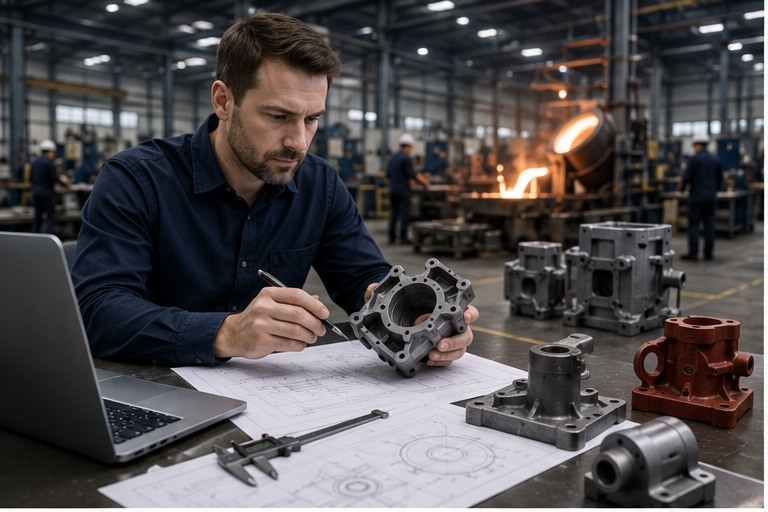
Specify the end liner by the grinding mode at the mill head, not by copying the shell liner grade. Use high-chrome white iron (KmTBCr20 / KmTBCr26, per GB/T 8263) for dry cement and abrasion-dominated mills; use manganese steel (ZGMn13Cr2, per GB/T 5680) where large balls deliver heavy impact. The end wall also must match the shell liner's bolt pattern and transition radius — a wrong interface wears the whole head prematurely.
What a Mill End Liner Does — and Why It Fails
The end liner protects the end wall (head) of a ball or SAG mill where the charge piles and turns. It sees less sliding abrasion than the shell but takes concentrated impact near the center and at the liner junctions. Tiegu supplies mill end liner castings to cement, mining, and mineral-processing plants worldwide, matching each order to a foundry that casts and heat-treats the plates against your mill drawing before export.
They fail in predictable ways: uneven wear and step formation at the shell-to-end junction when the two liners are not matched; bolt-hole elongation and loosening when the pattern is wrong; and brittle spalling of a high-chrome plate placed where ball impact is severe. None of these show up in a plain "liner, as shell" order.
Which Grade Should You Specify?
Pick the grade from the dominant wear mode at the mill head, then match the geometry to the shell liner you already run.
| Grade (standard) | Dominant wear | Hardness | Typical mill |
|---|---|---|---|
| KmTBCr20 / KmTBCr26 (GB/T 8263 high-Cr iron) | abrasion + corrosion, low impact | HRC 58–65 | cement ball mill, dry grinding |
| ZGMn13Cr2 (GB/T 5680 Mn steel) | heavy ball impact, work-hardening | surface HB 450–550 after work-hardening | SAG mill, wet ore grinding |
| KmTBCr15Mo3 (GB/T 8263 medium-Cr iron) | balanced abrasion | HRC 50–58 | smaller dry mills, moderate load |
Not sure whether your end wall needs chrome iron or manganese steel? Contact us at tieguexport.com →
What We Verify Before Shipment
Chemistry and grade: we confirm Cr, C, and Mo on the material certificate (MTC) — high-Cr and Mn steel look similar on a drawing but wear completely differently.
Hardness band: for high-Cr iron we verify the HRC band (58–65) across the plate, not just at one corner; inconsistent hardness means uneven wear in service.
Surface and cracks: magnetic-particle testing per EN 1369 and liquid-penetrant testing per EN 1371-1 on the wearing face — white iron is difficult to ultrasound, so surface NDT carries the load.
Geometry match: bolt-hole pattern and the shell-to-end transition radius are checked to the agreed ISO 8062 tolerance class so the end liner seats flush with the shell liner.
Common Specifying Mistakes
Copying the shell-liner grade onto the end wall without checking impact vs abrasion — a brittle high-Cr plate spalls where balls pound the center.
Wrong bolt-hole pattern or transition radius — the liner loosens, elongates the holes, and the head wears out ahead of the shell.
Accepting a single-corner hardness reading — inconsistent hardness across the plate produces step wear and jamming at the junction.
Specification Checklist
[ ] Mill type and grinding mode stated (dry cement / wet SAG / other)
[ ] Grade chosen per end-wall wear mode
[ ] HRC band (high-Cr) or work-hardening response (Mn) written into the PO
[ ] MT (EN 1369) + penetrant (EN 1371-1) scope agreed
[ ] Bolt pattern + transition radius matched to existing shell liner
FAQ
1. Can the end liner be a different grade than the shell liner?
Yes, and often should be. The end wall and shell see different wear, so a high-Cr end with a Mn-steel shell (or vice versa) is normal — as long as the bolt pattern and transition radius match. Buyers who choose a supplier that reviews both drawings avoid step wear at the junction.
2. Why not just ultrasound the high-Cr liner?
White iron's coarse carbide structure scatters ultrasound, so UT is unreliable; surface methods — MT per EN 1369 and penetrant per EN 1371-1 — are the practical checks. A first-article inspection confirms hardness band and geometry before a full set.
3. What lead time should I plan for end liners?
Typically 8–14 weeks including pattern, casting, heat treatment, and NDT — longer for first-piece qualification. Send both the end-wall and shell-liner drawings, and submit a clear RFQ so the transition geometry is matched from the start.
Tiegu is a China-based casting supplier serving international buyers through a vetted network of qualified Chinese foundries. We supply castings under a single commercial contract, managing supplier selection, technical confirmation, quality inspection, and export delivery from order to shipment.