
 en
en  fra
fra  de
de  ru
ru  ara
ara  gle
gle  it
it  jp
jp  kor
kor  th
th  zh
zh Blast Furnace Cooling Stave Castings for Ironmaking
2026-09-01 17:25:35 hits:0
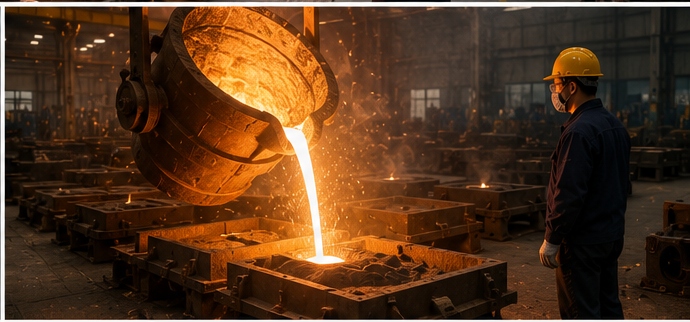
Blast Furnace Cooling Stave Castings for Ironmaking
The cooling stave is a cast-iron plate bolted to the inside of the furnace shell, with a cooling pipe cast into the body that carries water to pull heat from the lining and the shell. It protects the shell from the furnace heat and keeps the refractory in place, so stave life sets how long a campaign runs before a reline. Tiegu supplies blast furnace cooling stave castings to iron and steel plants worldwide, matching each order to a foundry that runs gray and ductile iron grades and casts the cooling pipe into the profile against your drawing before export.
1. What Cooling Staves Do
Staves ring the furnace from the throat down through the stack, bosh, and hearth, forming a cooled boundary behind the brick. They carry heat out of the wall, limit lining wear, and keep the shell below its safe temperature. A stave with a leaking pipe or a hot crack forces a furnace outage; a badly cast body with a pipe too close to the surface fails early and shortens the campaign. Staves are planned capital spares bought on integrity and fit, not on unit price.
For a broader view of how we handle sourcing iron and steel castings from China, see our casting sourcing guide.
2. Why Material Grade Decides Service Life
A stave must move heat and survive thermal cycling, so the grade is chosen by zone temperature and the duty on the body:
Heat-resistant gray iron (e.g. HT250-class) — good thermal conductivity and damping, the common choice for the cooler upper stack where heat transfer matters most.
Ductile iron (GGG40 / GGG50) — higher strength and toughness where the body sees more mechanical and thermal stress, such as the bosh and lower stack.
Ni-Resist (high-nickel heat-resistant iron) — for the hottest, most aggressive zones where scaling and heat-check cracking would limit a plain iron grade.
Pick the grade by furnace zone and temperature, not by habit. If you are unsure how to choose a casting supplier that runs these grades, the supplier-selection guide walks through the foundry checks that matter.
3. What We Verify Before Shipment
Staves are bought on cooling-pipe integrity and internal soundness, not on a nameplate. For these orders, Tiegu confirms the following with the foundry and on the documents:
Chemistry on the MTC: verify C, Si, and Ni against the ordered grade — these set thermal conductivity, strength, and scaling resistance that decide service life. See our note on how to read a mill test certificate.
Cooling-pipe position and integrity: confirm the embedded pipe sits at the right depth from the hot face (checked by RT or UT) and passes a hydrostatic pressure test with no leak at the joints — a pipe too close to the surface or a hidden flaw is the usual cause of early failure.
Profile and bolt-hole fit: dimensionally inspect the outer radius, body contour, and bolt pattern against your shell drawing — a plate that does not follow the shell leaves a gap that the lining cannot bridge.
Internal soundness: review UT/MT for shrinkage and cracks, especially around the pipe and bolt bosses, so the stave holds pressure through thermal cycling.
Not sure which iron grade fits your furnace zone? Contact us at tieguexport.com →
4. Specification Checklist for Buyers
Furnace type and the zone (throat / stack / bosh / hearth) and shell radius.
Grade (heat-resistant gray iron, GGG40/50, Ni-Resist) and any conductivity target.
Drawing with body contour, cooling-pipe layout and depth, bolt pattern, and tolerance (ISO 8062).
Cooling-pipe material and required hydrostatic test pressure.
NDT level (RT/UT/MT) and spare quantity / lead time for the campaign plan.
When you are ready, submit an RFQ with your drawing and we will confirm grade, foundry match, and inspection scope.
FAQ
1. Gray iron or ductile iron for staves?
Gray iron conducts heat better and is typical for the upper stack; ductile iron adds strength and toughness for the bosh and lower zones where stress is higher. Ni-Resist is used in the hottest zones. We confirm the grade against your furnace zone rather than defaulting to one.
2. How do you prevent cooling-pipe leaks?
Leaks trace to pipe position and casting soundness. We confirm the pipe depth by RT or UT and require a hydrostatic pressure test on every stave, and we review UT/MT around the pipe and bolt bosses for shrinkage before shipment.
3. Do you supply by furnace zone or full set?
Tiegu supplies cast cooling staves to drawing, as a single zone or a full furnace ring set. For a complete reline we confirm the scope with you and arrange the foundry and inspection accordingly under one contract.
Tiegu is a China-based casting supplier serving international buyers through a vetted network of qualified Chinese foundries. We supply castings under a single commercial contract, managing supplier selection, technical confirmation, quality inspection, and export delivery from order to shipment.
Previous: Slag Pot Castings for Iron and Steel Plants
Next: No More