
 en
en  fra
fra  de
de  ru
ru  ara
ara  gle
gle  it
it  jp
jp  kor
kor  th
th  zh
zh Slag Pot Castings for Iron and Steel Plants
2026-08-28 17:32:53 hits:0
Slag Pot Castings for Iron and Steel Plants
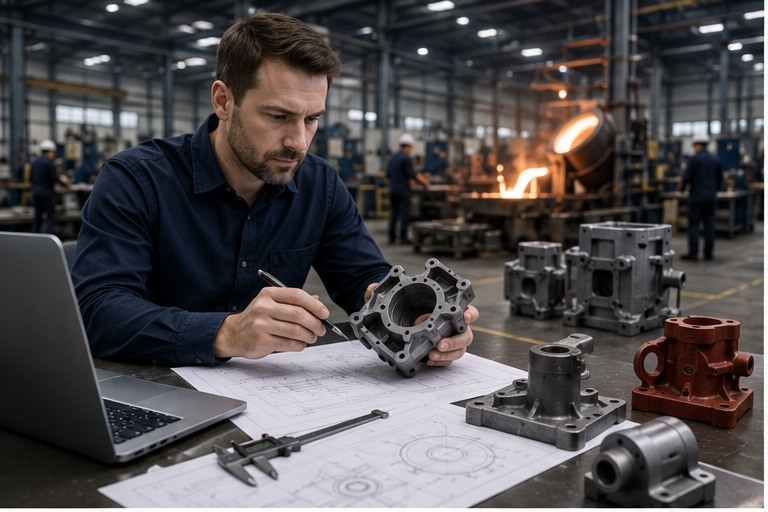
The slag pot receives molten slag from the furnace, carries it to the treatment or dumping point, and takes the full thermal shock of liquid slag on every fill. It runs hot, oxidizes, and sees repeated heating and cooling while it is moved and emptied. Tiegu supplies slag pot castings to iron and steel plants worldwide, matching each order to a foundry that runs heat-resistant cast steel and casts the body and trunnions against your drawing before export.
1. What Slag Pots Do
A slag pot holds the slag so the melt shop can keep producing without stopping the furnace. It must survive liquid-slag thermal shock, resist cracking from repeated heating and cooling, and keep its shape so it still seats on the transfer car and hangs true from the crane. A pot that cracks or distorts drops out of service early and ties up the crane; a poorly cast body with a hidden defect can fail under a full load. Slag pots are capital spares planned on campaign life, not on unit price.
For a broader view of how we handle sourcing iron and steel castings from China, see our casting sourcing guide.
2. Why Material Grade Decides Service Life
A slag pot lives or dies by resistance to thermal fatigue and oxidation, so the grade is chosen by slag temperature and how often the pot cycles:
ZG35Cr24Ni7SiN / ZG30Cr20Ni10 heat-resistant cast steel — high Cr and Ni hold strength and resist scaling and heat-check cracking; the workhorse for pots in regular hot service.
Medium-silicon molybdenum heat-resistant cast steel — a lower-cost option for pots that run cooler or cycle less often, where the duty is less severe.
Higher-alloy grades for severe duty — where slag runs hotter or the pot is tipped frequently, a more alloyed cast steel is specified to stretch the campaign.
Pick the grade by slag temperature and cycle rate, not by habit. If you are unsure how to choose a casting supplier that runs these grades, the supplier-selection guide walks through the foundry checks that matter.
3. What We Verify Before Shipment
Slag pots are bought on internal soundness and heat resistance, not on a nameplate. For these orders, Tiegu confirms the following with the foundry and on the documents:
Chemistry on the MTC: verify Cr, Ni, Si, and N against the ordered grade — these set the high-temperature strength and oxidation resistance that decide service life. See our note on how to read a mill test certificate.
Internal soundness: review UT and MT for shrinkage, porosity, and cracks across the wall and trunnions — a hidden defect in a load-bearing pot is the usual cause of early failure, so this check matters more than on a small part.
Wall thickness and contour: gauge wall thickness and internal contour against your drawing — a thin or uneven wall runs hot, cracks early, and shortens the campaign.
Trunnion and lifting fit: confirm trunnion size, lifting-lug position, and seating contour match your crane and transfer car so the pot hangs true and seats safely.
Stress-relief heat treatment: confirm the pot was stress-relieved after casting so residual stress does not open cracks in service.
Not sure which heat-resistant grade fits your slag duty? Contact us at tieguexport.com →
4. Specification Checklist for Buyers
Slag pot capacity (tonnes / cubic metres) and the source furnace type.
Grade (ZG35Cr24Ni7SiN, ZG30Cr20Ni10, etc.) and rated slag temperature.
Drawing with internal contour, wall thickness, trunnion and lug detail, and tolerance (ISO 8062).
Required NDT level (UT / MT) and stress-relief treatment.
Spare quantity and lead time — pots wear on a campaign, so confirm before a planned reline or capacity change.
When you are ready, submit an RFQ with your drawing and we will confirm grade, foundry match, and inspection scope.
FAQ
1. Which heat-resistant grade should I specify for a slag pot?
It depends on slag temperature and how often the pot cycles. High Cr-Ni steel suits regular hot service where scaling and heat-check cracking dominate; a silicon-molybdenum grade works for cooler or less-cycled pots at lower cost. We confirm the grade against your slag duty rather than defaulting to one.
2. How long does a slag pot last?
It is governed by thermal cycling and slag temperature, counted in fills and campaigns rather than months. Operators plan pot changes on a campaign schedule; we help confirm grade, wall thickness, and heat treatment so spares are on hand.
3. Do you supply bare pots or with trunnions and lugs?
Tiegu supplies cast slag pots to drawing, with trunnions and lifting lugs cast in as specified. For a matched set we confirm the scope with you and arrange the foundry and inspection accordingly under one contract.
Tiegu is a China-based casting supplier serving international buyers through a vetted network of qualified Chinese foundries. We supply castings under a single commercial contract, managing supplier selection, technical confirmation, quality inspection, and export delivery from order to shipment.
Previous: Kiln Riding Ring Castings for Rotary Kilns
Next: No More