
 en
en  fra
fra  de
de  ru
ru  ara
ara  gle
gle  it
it  jp
jp  kor
kor  th
th  zh
zh Jaw Crusher Jaw Plate (Tooth Plate / Movable & Fixed Jaw Liner)
2026-08-17 17:25:17 hits:0
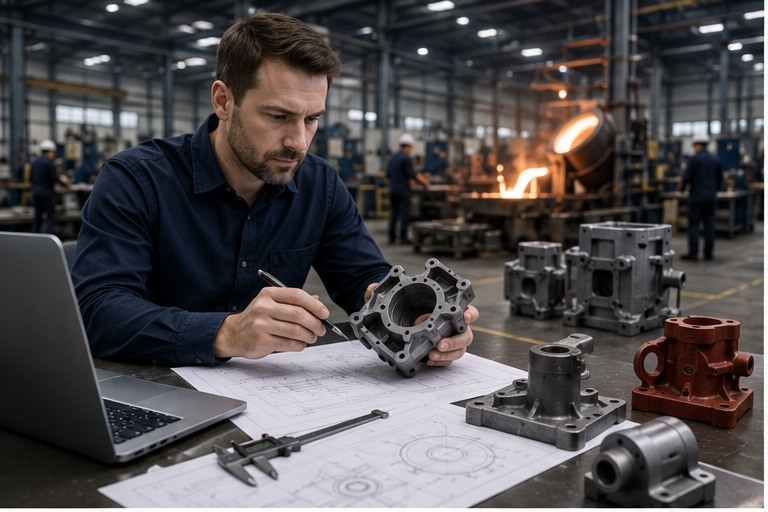
Jaw plates are the primary wear surfaces in a jaw crusher — the moving and fixed liners that compress and fracture ore, rock, and recycled concrete. When they wear out, output drops and energy climbs. This spotlight covers what international buyers should specify before ordering, and how to source manganese-steel jaw liners from China with proper documentation.
Specifications at a Glance
| Item | Typical specification |
|---|---|
| Material | High manganese steel: ZGMn13Cr2, Mn18Cr2 (Mn13 with Cr / Mo alloying) |
| Casting process | Water-glass sand or resin-bonded sand casting, then solution heat treatment |
| Weight | Made to drawing; common range 50–2000 kg by crusher model |
| Surface hardness | Work-hardens to ~HB 500+ under impact, while the core stays tough |
| Application | Primary & secondary crushing of granite, basalt, iron ore, limestone |
What the Jaw Plate Does
The serrated (tooth) profile grips and fractures feed material. The fixed and movable plates work as a pair; the movable plate swings to close the gap. Wear concentrates at the lower crushing zone, so plate profile and alloy choice decide service life. In abrasive, high-impact duty, the right grade can mean 30–60% longer life than a generic liner. For a broader view of wear-part sourcing, see our mining equipment castings sourcing guide.
Why Manganese Steel
Manganese steel is the default for jaw plates because of one property: it work-hardens. Under repeated impact, the surface transforms into a hard, wear-resistant layer while the core remains ductile and resists cracking. That is why ZGMn13Cr2 and Mn18Cr2 outperform plain carbon or low-alloy steel in crushing. For low-impact, high-abrasion duty — some recycled concrete, for example — high-chrome alternatives may be considered, but for rock and ore, manganese remains the safe choice.
Not sure which grade or profile fits your feed material and crusher model? Request a quote at tieguexport.com →
Sourcing Notes
Jaw plates are made to order against your crusher model and drawing — there is no universal off-the-shelf size. When you submit an RFQ to a Chinese casting company, send the model number, profile drawing, and required alloy. Expect a single commercial contract covering pattern confirmation, heat treatment, dimensional inspection, and export. Before choosing a partner, review how to choose a reliable casting supplier, and require a mill test certificate (MTC) stating the actual chemical and hardness results.
FAQ
1. Can jaw plates be supplied for any crusher brand?
Most Chinese foundries produce liners for Metso, Sandvik, Telsmith, and common Chinese models against a drawing or a worn sample.
2. How long does a jaw plate last?
Highly variable — from weeks in hard abrasive ore to months in softer stone. Alloy grade and tooth profile are the main levers.
3. ZGMn13Cr2 or Mn18Cr2?
Mn18Cr2 gives higher toughness for large crushers and heavy impact; ZGMn13Cr2 suits standard-duty machines.
Tiegu is a China-based casting supplier serving international buyers through a vetted network of qualified Chinese foundries. We supply castings under a single commercial contract, managing supplier selection, technical confirmation, quality inspection, and export delivery from order to shipment.