
 en
en  fra
fra  de
de  ru
ru  ara
ara  gle
gle  it
it  jp
jp  kor
kor  th
th  zh
zh Casting Inspection Checklist: A Practical Guide for International Buyers
2026-08-06 15:39:14 hits:0
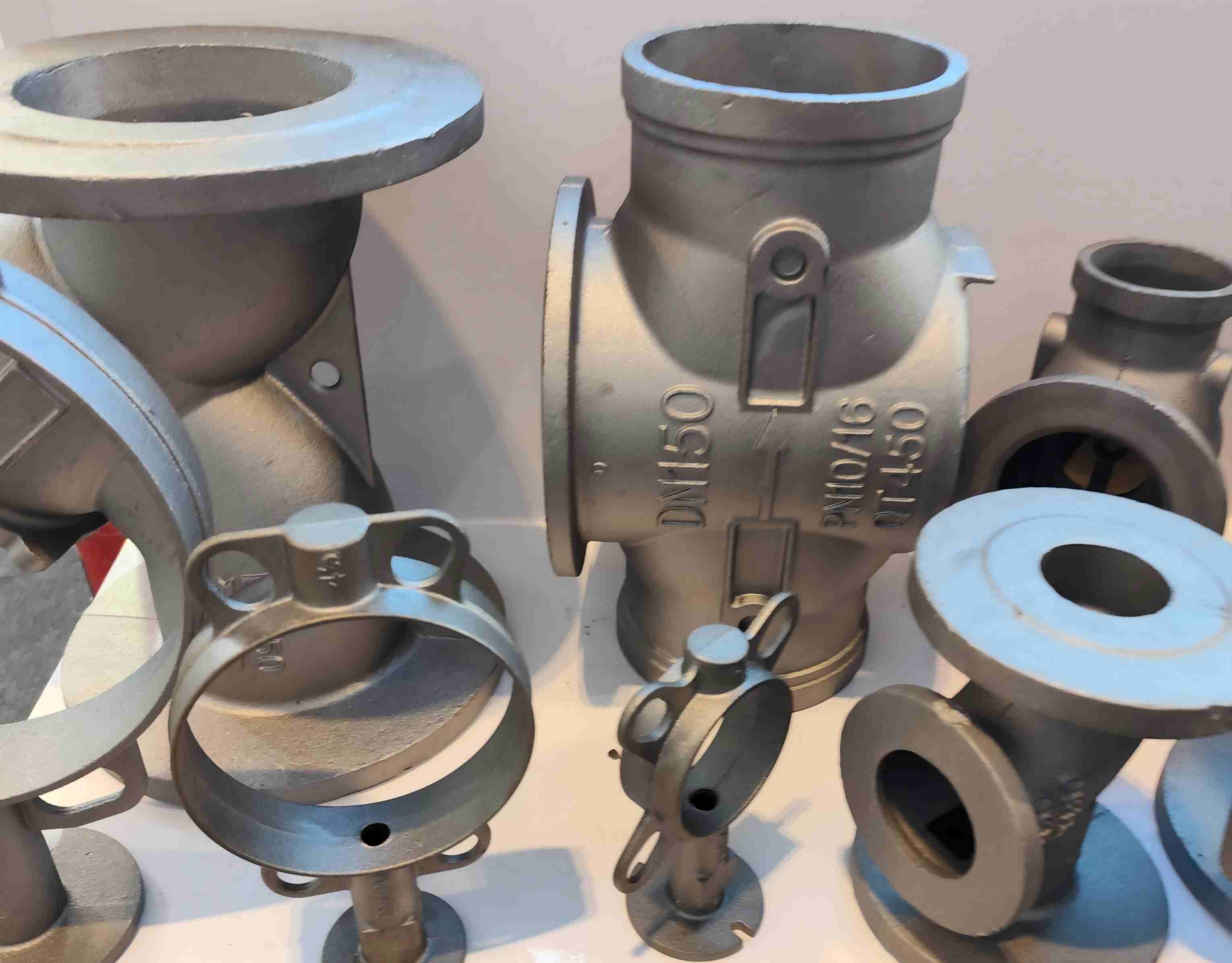
A casting order is only as good as what you actually verify. A low price means little if the parts fail on your line or in the field. This casting inspection checklist gives international buyers a practical, stage-by-stage plan — from supplier documents to the parts sitting on your receiving dock. Use it to set expectations in writing before production, and to catch problems while they are still cheap to fix.
1. Why a written inspection checklist protects your order
A verbal promise of "we will check it" is not a quality plan. A written checklist turns expectations into a document that both sides agree to, and that your receiving team can still act on months later. It sets the pass/fail bar before metal is poured, so disagreements are settled by reference, not by argument.
For international buyers the real risk is the gap between a foundry's internal QC and your actual service condition. The part may pass the foundry's own test and still fail your assembly. A checklist closes that gap by forcing the two definitions of "good" to meet on paper. It also creates a paper trail you can use for warranty claims, reorders, and supplier scoring.
Buyers who skip this step usually learn the hard way: a 2% defect rate across a 10,000-piece order is 200 field failures, each one a support ticket, a return, and a dent in the customer relationship. A checklist is the cheapest insurance in the whole project.
If you are still selecting a partner, the cheapest defect is the one prevented upstream. Start with our guide on how to find and choose a reliable metal casting company, then build your checklist on top of a supplier you trust.
2. Pre-production: verify documentation and the supplier before parts move
Solve problems on paper, not in solid metal. Before any volume runs, require and review these documents:
Material certificate (mill test report): confirms chemistry and grade match the drawing. Require it per heat, not per order — a single cert for 10 heats hides variation between them.
Drawing and tolerance specification: this is the inspection reference. Confirm the foundry works to your stated standard (for example ISO 8015) and understands the critical dimensions.
Process route card: shows every operation — pattern, pouring, heat treatment, machining, coating — and the order they happen in.
Supplier capability proof: photos of similar parts, an equipment list, and valid accreditation. Our guide on how to verify a casting supplier's production capability explains what counts as real proof versus a sales photo.
Before you commit volume, read about the risks of sourcing castings from China so your checklist addresses the failure modes that actually apply to your part — porosity in thin sections, mixed heats, or undocumented process changes.
3. First-article inspection (FAI): approve the sample before the volume run
FAI is the single highest-leverage check in the entire order. You approve one fully measured part; the foundry then repeats that exact process for the whole batch. A wrong sample copied 5,000 times is not a discount — it is a recall.
What to check on the first article:
All dimensions against the drawing, delivered as a full dimensional report with measured values, not just "OK".
Material verification — spectro analysis or a coupon test — confirming the declared grade.
Critical features: datum scheme, threads, sealing faces, and the tolerances that affect mating parts.
Surface and cosmetic limits, agreed in writing, so "acceptable" means the same thing to both sides.
Our detailed first-article inspection guide for casting orders lists exactly what the report should contain. Do not release the production run until FAI is signed and filed. Build the approval step into the purchase order as a hold point, not a courtesy.
Not sure which grade or standard fits your service condition? Contact us at tieguexport.com →
4. In-process and pre-shipment checks: what to require at the foundry
You do not need to be on site every day. You need the foundry to prove the run stayed consistent with the approved first article. Put these points in the contract:
Sampling plan: agree an AQL (for example ANSI/ASQ Z1.4) and a sample size before production, tied to batch size and part criticality.
Destructive tests where structure matters: tensile, hardness, impact — at an agreed frequency, not "if we have time".
Non-destructive testing for hidden flaws: our overview of NDT methods for castings covers MT, PT, RT, and UT, and which defect types each one finds. Specify the method your service condition requires.
Pre-shipment inspection (PSI): an independent check of quantity, packing, marking, and a random visual sample, done before the container is sealed.
Witness points let your inspector observe a critical operation without stopping the line; hold points force a stop until you sign off. Use hold points for heat-treatment records and final dimensional sign-off on safety parts. A checklist written after the parts are boxed is just a complaint form — write it into the PO, with the points the foundry must stop at.
5. Receiving inspection at your dock: the final gate
The container is not "accepted" until you confirm it matches the order. Receiving inspection is cheap insurance — a 30-minute check can prevent a line-down event that costs more than the whole shipment.
Paperwork match: certificate, packing list, and purchase order must agree on grade, quantity, and revision number.
Visual check: no obvious cracks, cold shut, misrun, or rust; marking is readable and correct.
Spot dimensions: measure the features that matter to your assembly, not all 200 on the drawing.
Functional check: fit a mating part, or pressure-test if the part is pressurized in service.
Quarantine rejects: hold non-conforming parts separate and notify the supplier inside the claim window, with photos.
Keep a photographic record of the opening. It turns "they sent bad parts" into a documented event both sides can act on, instead of a dispute over who is at fault.
FAQ
1. What documents should I request before accepting a casting shipment?
At minimum: a material certificate (mill test report) per heat, a dimensional or FAI report, the packing list, and the purchase order. For structural or safety parts, add NDT reports and heat-treatment records. Match the revision number on every document to the drawing you approved.
2. How many pieces should be inspected in a shipment?
Use a sampling plan (ANSI/ASQ Z1.4 or an equivalent standard) tied to batch size and part criticality. Critical safety parts justify 100% inspection of key features; standard commercial parts usually pass on AQL sampling. Write the plan into the PO so the sample size is not a last-minute guess.
3. Which defects can NDT find that visual inspection cannot?
Visual inspection catches surface flaws you can see. NDT — magnetic particle, penetrant, radiographic, and ultrasonic testing — finds sub-surface and internal defects such as inclusions, porosity, hot tears, and lack of fusion. Those flaws can pass a look but fail in service, which is why they matter for loaded or safety-critical parts.
4. Do I need a third-party inspector or can I rely on the supplier's report?
For new suppliers or critical parts, a third-party pre-shipment inspection removes bias and gives you an independent record you control. For proven suppliers on low-risk parts, their report plus your own receiving spot-check is often enough. The decision should follow the cost of failure, not the convenience of the moment.
Tiegu is a China-based casting supplier serving international buyers through a vetted network of qualified Chinese foundries. We supply castings under a single commercial contract, managing supplier selection, technical confirmation, quality inspection, and export delivery from order to shipment.