
 en
en  fra
fra  de
de  ru
ru  ara
ara  gle
gle  it
it  jp
jp  kor
kor  th
th  zh
zh Cement Mill Classifier Blade Castings for Separators
2026-09-08 17:35:36 hits:0
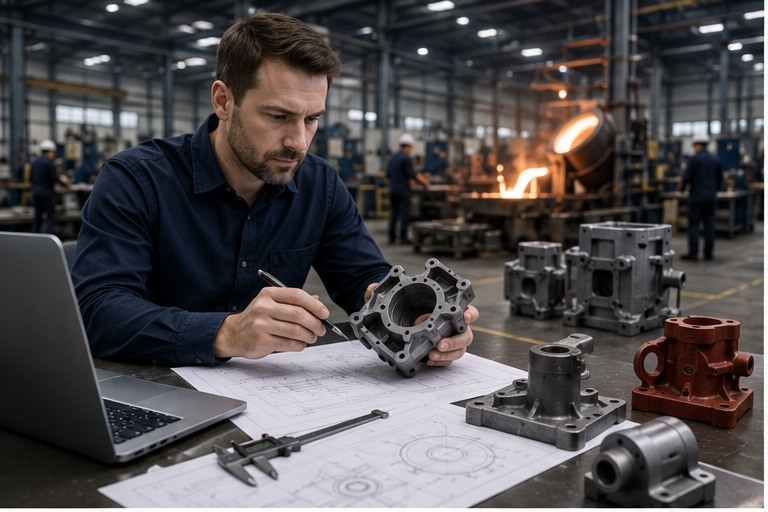
The classifier (or separator) in a cement grinding circuit returns oversize particles and lets fine product pass. Its blades face a high-velocity, abrasive, dust-laden airflow on every rotation. Tiegu supplies cement mill classifier blades and separator wear parts to cement plants and OEMs worldwide, matching each order to a foundry that runs high-chrome and Ni-Hard grades and checks profile dimensions against your drawing before export.
1. What Classifier Blades Do
The classifier sits at the heart of the grinding circuit, controlling the cut size between recirculated coarse material and finished product. The blades generate and shape that airflow. A worn or distorted blade shifts the cut point, so the mill over-grinds coarse return or loses fines out the reject — either way you pay in energy and product quality. Blades are consumable spares specified on wear life, not unit price.
For a broader view of how we handle sourcing wear-resistant castings from China, see our casting sourcing guide.
2. Why Material Grade Decides Wear Life
Classifier blades run dry, abrasive, and often warm in the separator. The grade balances hardness against the occasional impact of coarse rejects:
KmTBCr26 / KmTBCr20 high-chrome white iron — high hardness with excellent sliding-abrasion resistance for most separator duties.
Ni-Hard 4 — higher hardness and good abrasion resistance where the blade sees finer, hotter dust.
ZG30CrMnSi with hardfacing — for larger blades that need some toughness; the weld overlay carries the wear surface.
Pick the grade by dust loading and particle size, not by catalogue. If you are unsure how to choose a casting supplier that runs these grades, the supplier-selection guide walks through the foundry checks that matter.
3. What We Verify Before Shipment
Classifier blades are bought on hardness and profile, not on a brand name. For these orders, Tiegu confirms the following with the foundry and on the documents:
Chemistry on the MTC: verify Cr (and Ni for Ni-Hard) against the ordered grade — the hardness comes from these elements, not the base iron. See our note on how to read a mill test certificate.
Hardness and microstructure: confirm as-cast or heat-treated hardness and check that carbides are evenly distributed; uneven carbide bands wear unevenly and shorten life.
Profile and mounting dimensions: dimensionally inspect the blade profile, thickness, and bolt-hole pattern against your separator drawing — a mismatched blade changes the airflow cut and the whole circuit suffers.
Set interchangeability: for rotor-mounted blade sets, confirm replacement blades match the set already in service so a single change does not throw off balance.
Not sure which grade fits your separator duty? Contact us at tieguexport.com →
4. Specification Checklist for Buyers
Separator model and blade position (rotor / stator / guide vane).
Grade (KmTBCr26, Ni-Hard 4, etc.) and hardness requirement.
Drawing with profile, thickness, hole pattern, and tolerance (ISO 8062).
Required NDT and surface condition.
Spare quantity and lead time — blades wear cyclically, so confirm before you need them.
When you are ready, submit an RFQ with your drawing and we will confirm grade, foundry match, and inspection scope.
FAQ
1. Can mild steel blades be used to save cost?
No. Mild steel erodes within days in separator airflow; high-chrome or Ni-Hard is what gives the blade a usable life. The apparent saving disappears once you count downtime and re-orders.
2. How long does a classifier blade last?
It depends on dust loading, particle size, and rotor speed. Buyers plan spares on a grinding-cycle basis; we help confirm grade and lead time so blades are on hand before the set wears out.
3. Do you supply single blades or full rotor sets?
Tiegu supplies cast blades to drawing, single or as a matched set. For assembled rotors we confirm the scope with you and arrange the foundry and inspection accordingly under one contract.
Tiegu is a China-based casting supplier serving international buyers through a vetted network of qualified Chinese foundries. We supply castings under a single commercial contract, managing supplier selection, technical confirmation, quality inspection, and export delivery from order to shipment.
Previous: VRM Grinding Table Liner Castings for Cement and Slag Mills
Next: No More