
 en
en  fra
fra  de
de  ru
ru  ara
ara  gle
gle  it
it  jp
jp  kor
kor  th
th  zh
zh Cement Mill Diaphragm Castings for Grinding Compartments
2026-09-03 17:32:51 hits:0
Cement Mill Diaphragm Castings for Grinding Compartments
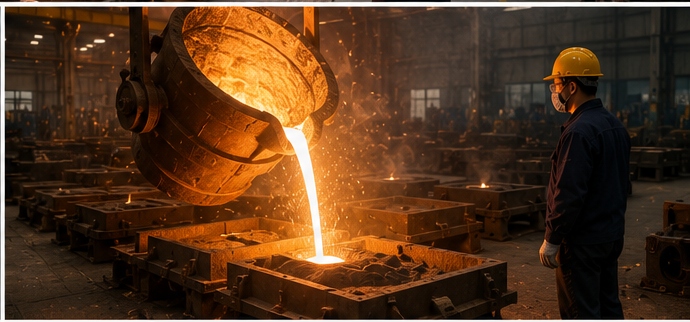
The diaphragm divides a cement tube mill into grinding compartments and sets how fast material and media move between them. Its slots screen coarse particles back for more grinding while letting fine material pass, so slot design and wear both shape mill output and power draw. Tiegu supplies cement mill diaphragm castings to cement grinding plants worldwide, matching each order to a foundry that runs high-chrome and high-manganese grades and machines the plate profile, slot pattern, and bolt holes against your drawing before export.
1. What Diaphragm Plates Do
A diaphragm separates the first chamber (coarse grinding with larger media) from the second (fine grinding with smaller media). It holds the media back by size, controls the material flow rate, and keeps the two chambers from mixing. A worn or clogged diaphragm drops throughput and pushes power consumption up; a plate that cracks lets media scatter and can damage the downstream chamber. Diaphragms are planned-wear spares sized on tonnage and slot life, not on unit price.
For a broader view of how we handle sourcing wear-resistant castings from China, see our casting sourcing guide.
2. Why Material Grade Decides Service Life
A diaphragm sees grinding-media impact plus slurry abrasion across the slots, so the grade is chosen by chamber duty and media size:
KmTBCr20 / KmTBCr26 high-chrome white iron — the common choice for the fine chamber: high hardness with dense carbides that resist slot-edge wear and keep the opening true.
Ni-Hard 4 — high hardness with a bit more toughness where media is larger or the feed is coarser.
ZGMn13Cr2 high-manganese steel — for the coarse first chamber where heavy impact dominates; the surface work-hardens under the media while the core stays tough.
Pick the grade by chamber and media, not by catalogue. If you are unsure how to choose a casting supplier that runs these grades, the supplier-selection guide walks through the foundry checks that matter.
3. What We Verify Before Shipment
Diaphragms are bought on slot accuracy and plate soundness, not on a nameplate. For these orders, Tiegu confirms the following with the foundry and on the documents:
Chemistry on the MTC: verify Cr and C (and Mn for Mn-steel) against the ordered grade — the carbide volume and hardness that set slot life come from these elements. See our note on how to read a mill test certificate.
Hardness and microstructure: confirm surface hardness and check carbide distribution; for Mn-steel confirm the as-cast austenite is sound and free of carbonitride banding that weakens the edge.
Slot width and plate flatness: gauge slot opening, pitch, and plate flatness against your drawing — a drifted slot clogs fast and a warped plate cracks at the bolt line.
Fit with liners and shell: confirm bolt-hole pattern and edge profile match the surrounding liners and mill shell so the compartment seals and the media stays where it belongs.
Not sure which grade fits your chamber duty? Contact us at tieguexport.com →
4. Specification Checklist for Buyers
Mill type and diameter, and the chamber position (first / second).
Grade (KmTBCr26, Ni-Hard 4, ZGMn13Cr2) and hardness requirement.
Drawing with slot pattern, pitch, plate contour, bolt pattern, and tolerance (ISO 8062).
Required NDT and surface condition.
Spare quantity and lead time — diaphragms change on a planned mill stop, so confirm before the outage.
When you are ready, submit an RFQ with your drawing and we will confirm grade, foundry match, and inspection scope.
FAQ
1. Which grade for a first- vs second-chamber diaphragm?
The first chamber takes heavier media impact, so high-manganese steel is typical there; the second chamber is dominated by abrasion, so high-chrome or Ni-Hard is the usual pick. We confirm the grade against your chamber duty and media size rather than defaulting to one.
2. How do you stop diaphragm slots from clogging?
Clogging starts with slot drift and wrong grade for the feed. We confirm slot width and pitch to drawing and match the grade to the material, and we help you set the right opening for your throughput so the plate stays clean through its life.
3. Do you supply full sets or single plates?
Tiegu supplies cast diaphragm plates to drawing, as single replacement plates or a full compartment set. For a complete mill lining we confirm the scope with you and arrange the foundry and inspection accordingly under one contract.
Tiegu is a China-based casting supplier serving international buyers through a vetted network of qualified Chinese foundries. We supply castings under a single commercial contract, managing supplier selection, technical confirmation, quality inspection, and export delivery from order to shipment.
Previous: Sinter Machine Grate Bar Castings for Iron Ore Sintering
Next: No More