
 en
en  fra
fra  de
de  ru
ru  ara
ara  gle
gle  it
it  jp
jp  kor
kor  th
th  zh
zh Casting Drawing & Specification: What to Send Your Supplier
2026-08-13 17:29:16 hits:0
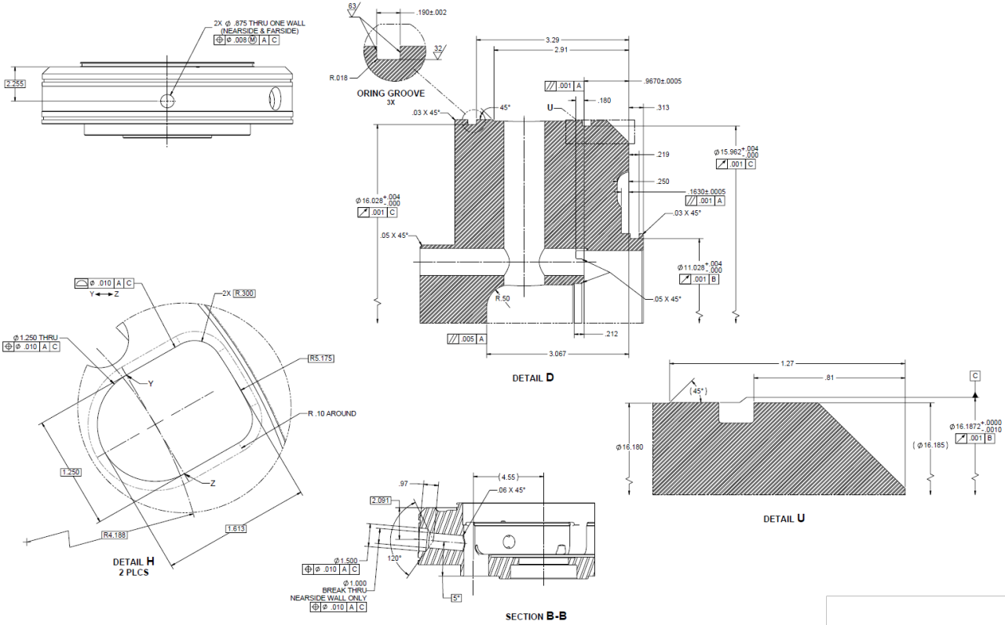
Most rejected castings are not lost to bad melting or a weak process. They are lost to a vague drawing. A buyer sends a PDF with a part shape, a material name, and "make it to spec" — then receives parts that are the wrong hardness, the wrong tolerance class, or impossible to weld. The fix is not a better foundry. It is a clearer specification. This guide gives international buyers a practical checklist of what to put in a casting drawing and its companion technical specification, so the supplier quotes the part you actually need.
1. Why unclear specs are the #1 cause of casting scrap
A tolerance mistake at the foundry is visible and arguable. A missing requirement on your drawing is invisible — until the parts arrive and fail. The supplier did exactly what you wrote, and what you wrote was incomplete. That gap is where most international casting disputes start.
The pattern repeats. A buyer writes "ductile iron" with no grade, so the foundry picks the cheapest grade that passes a basic tensile test. Another writes "tight tolerance" with no standard, so the shop guesses. A third omits weld repair rules, then rejects a part that was repaired exactly as the drawing allowed. None of these is a foundry's fault. They are specification gaps.
Specification gaps also drive the costly outcomes buyers fear most — rework, sorting, and returns. When the part is wrong because the drawing was vague, the buyer usually pays for the correction. That is why the risks of sourcing castings from China so often trace back to unclear requirements rather than to the supplier's capability.
2. Material and grade — how to write it so it is not substituted
Write the standard and the grade, never just the family name. "Ductile iron" tells a foundry almost nothing. "ASTM A536 65-45-12" tells them the minimum yield, tensile, and elongation, and leaves little room to substitute a cheaper alternative. For gray iron, cite the ASTM A48 or EN 1561 class. For steel castings, cite the ASTM A27 or A216 grade and the condition.
State the condition explicitly, because the same grade in different conditions behaves differently:
As-cast — the properties straight from the mold, no heat treatment.
Annealed — softer, more machinable, better ductility.
Normalized — higher strength and a more uniform structure.
If your application depends on a microstructural target — ferrite content, nodule count, or carbides — put it in the spec. A foundry can hit those targets only if you name them. This is the downstream of design for manufacturing (DFM): the material you lock in at the design stage is the material the drawing must enforce at the order stage.
Not sure which grade or standard fits your service condition? Talk to our team at tieguexport.com →
3. Dimensions and tolerances — datum, critical sizes, ISO 8062 grade
Tolerances are where drawings quietly fail. Two rules keep you safe. First, mark a clear datum or reference system so the supplier measures from the same points you do. Second, separate critical dimensions from general ones — a uniform "±0.5 mm everywhere" either costs too much or protects too little.
For cast dimensions, reference the ISO 8062 standard and name a tolerance grade, not a feeling. Casting tolerance grades run roughly from CT7 (tight) to CT11 (loose) depending on the process and size. A loose grade is cheaper and usually fine for non-critical faces; a tight grade belongs only on features that mate or seal. Pair the drawing with a machining allowance so the foundry knows how much stock to leave for your finish cut.
Buyers who skip this step create exactly the problems explained in the complete guide to casting tolerances and the ISO 8062 standard. Name the grade, and your quote becomes comparable across suppliers instead of a guess against a guess.
4. Surface, NDT, and weight tolerance — where to write them
Three requirements routinely get left off the drawing and then argued about at inspection:
Surface finish — state the required roughness (e.g. Ra 3.2 on a sealing face) and any surface treatment (shot blasting, painting, coating).
Non-destructive testing (NDT) — name the method and acceptance level: magnetic particle (MT), ultrasonic (UT), or radiographic (RT), each to a stated standard. Visual inspection alone will not catch an internal shrink.
Weight tolerance — give a single-piece weight range (e.g. ±5%) so a heavy or light pour is caught before it ships.
These items are not decoration. They decide whether a part is fit for service, and they decide who pays when it is not. A supplier can only plan NDT and finishing if your specification names them — which is part of how to verify a casting supplier's production capability before you commit volume.
5. Pre-order checklist — run it before you send the RFQ
Before the RFQ goes out, walk the drawing and the spec against this list. If an item is missing, the quote you receive will be built on an assumption:
| Item | Ask yourself |
|---|---|
| Material & grade | Did I cite the standard and grade, not just the family? |
| Condition | Did I state as-cast, annealed, or normalized? |
| Tolerance grade | Did I name an ISO 8062 CT grade, not "tight"? |
| Critical dimensions | Are key features marked, with datums set? |
| Surface & NDT | Did I specify roughness, treatment, and test level? |
| Weight tolerance | Did I give a single-piece weight range? |
| Weld repair rules | Did I say whether repair is allowed, and to what standard? |
A complete specification also makes supplier selection simpler, because every shop quotes the same part. That is the backbone of how to find and choose a reliable metal casting company — you compare real numbers, not sales pitches built on different assumptions.
FAQ
1. Does a casting drawing have to include a 3D model?
Not always, but it helps. A 2D PDF with clear views and dimensions is enough for many jobs. A 3D STEP or IGES model removes ambiguity on complex geometry and speeds the tooling quote. If the part is simple, a good 2D drawing is fine; if it has internal cavities or tight mating faces, send the model.
2. What happens if I specify tolerances that are too tight?
You pay for it. Tighter cast tolerances need slower molding, more machining stock, and higher scrap rates, so the unit price climbs. Worse, an over-tight spec can make the part impossible to cast economically, and a supplier may quietly loosen it or walk away. Tighten only the features that truly matter.
3. Will suppliers accept a PDF drawing, or do they need CAD?
Most foundries quote from a PDF and ask for CAD only when they cut tooling. Send a clean PDF for the RFQ, and hold the native CAD file ready for the chosen supplier. Make sure the PDF shows every critical dimension — a scanned sketch with missing callouts will not do.
4. How do I mark critical dimensions versus general ones?
Flag key features with a symbol or a note (for example "CRITICAL" or a boxed tolerance) and give them a tighter value; leave the rest at the general casting tolerance grade. This tells the foundry where to spend effort and inspection budget, and it tells incoming inspection what to check first.
Tiegu is a China-based casting supplier serving international buyers through a vetted network of qualified Chinese foundries. We supply castings under a single commercial contract, managing supplier selection, technical confirmation, quality inspection, and export delivery from order to shipment.