
 en
en  fra
fra  de
de  ru
ru  ara
ara  gle
gle  it
it  jp
jp  kor
kor  th
th  zh
zh Oil & Gas Valve Castings: Sourcing from China — A Buyer's Guide to Standards, Materials & Supplier Selection
2026-07-31 06:15:58 hits:0
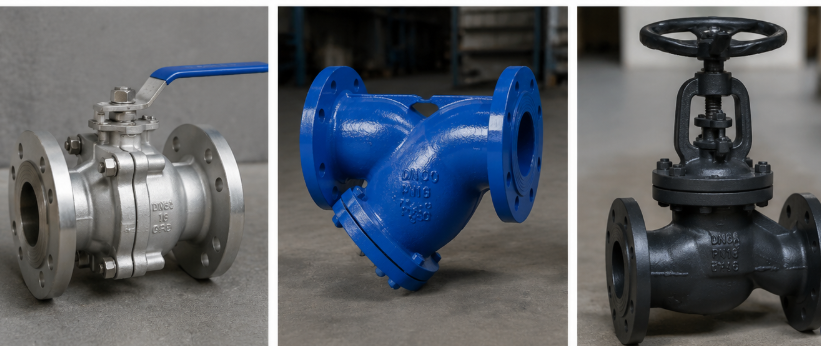
A valve body is the pressure boundary of the whole assembly. In oil and gas service, that boundary sees sour gas, cryogenic temperatures, or pressures that turn a small material flaw into a leak — and a leak into an incident. Buyers who treat valve castings like general-purpose parts end up with components that fail inspection, miss delivery, or never get certified in the first place. This guide covers the standards you must specify, how to choose material by service condition, and how to vet a Chinese foundry before you commit.
1. Why Oil & Gas Valve Castings Are a Different Game
In most industries, a casting quote is about price and lead time. In oil and gas, it starts with qualification. A valve body for a pipeline, wellhead, or LNG terminal has to satisfy a specification chain — an API product standard, a material specification, and often a sour-service clause — before anyone discusses cost. A foundry without the right furnace practice, heat-treatment capability, and traceability simply cannot make it, no matter the price offered.
The second difference is consequence. A misgraded body in sour service can crack by sulfide stress cracking; a porous body in cryogenic service can fail on cooldown. So the buyer's job is not to find the cheapest casting — it is to find the one that will pass the tests the end client demands. That shifts the entire sourcing conversation toward documentation, certification, and verification, not just unit price. Our guide on how to verify a casting supplier's production capability covers the qualification checks you should run first.
2. The Standards You Must Put in the RFQ
Do not send "valve castings, please quote." Send the standard chain. The core references buyers specify:
API 600 / 602 / 603 / 608 / 609 — the product standards that define valve type, pressure-temperature ratings, and acceptance criteria.
API 6D — for pipeline valves (ball, gate, check, plug); the one most EPC buyers ask for by name and the usual gatekeeper for project approval.
ASTM material specs — A216 (WCB/WCC carbon steel), A217 (WC6/WC9 alloy steel for high temperature), A351 (CF8/CF8M/CF3M stainless), A352 (LCB/LCC low-temperature).
NACE MR0175 / ISO 15156 — the sour-service clause. If your fluid carries H2S, this is non-negotiable; it constrains hardness, chemistry, and heat treatment.
EN equivalents — EN 10213 (steel castings for pressure purposes) is the European counterpart and is often required for projects outside North America.
State the edition year. "API 6D" without the edition year leaves room for interpretation, and interpretation is exactly where disputes start. A clear standard chain is what turns a vague inquiry into a comparable, certifiable quote.
3. Choosing Material by Service Condition
Our valve casting material showdown compares the grades in detail, but the short version for valve bodies is to match the grade to the fluid, the temperature, and the H2S partial pressure — not by reflex:
| Service condition | Typical grade | Why |
|---|---|---|
| Ambient, non-sour, general | A216 WCB / WCC | Cheapest qualified carbon steel; fine for most land-based valves |
| High temperature (steam, hot oil) | A217 WC6 / WC9 | Creep-resistant low-alloy steel |
| Cryogenic (LNG, −46°C and below) | A352 LCB / LCC | Charpy impact tested at low temperature |
| Sour service (H2S) | A216 / A217 with NACE limits, or CF8M | Hardness and chemistry capped by MR0175 |
| Corrosive / seawater | A351 CF8M (316) / CF3M | Stainless resists pitting and chloride |
The mistake buyers make is specifying CF8M everywhere "to be safe" — it can double cost and lead time for a valve that only needed WCB. If you are unsure, name the service condition and let a qualified supplier recommend the grade; just make sure the recommendation carries the standard and the NACE clause in writing, not as a verbal assurance.
Not sure which grade or standard fits your service condition? Contact us at tieguexport.com →
4. How to Source Valve Castings from China
China produces a large share of the world's valve bodies, but "made in China" spans a wide quality range. Screen before you buy:
Certification: API 6D (and API 600/608 as applicable) is the baseline for pipeline valves. Ask for the certificate number and verify it. A foundry that cannot show a current API monogram is a non-starter for most EPC specs. Start your shortlist with our guide on how to find reliable casting suppliers in China.
Capacity and process: valve bodies are typically sand-cast (green sand or chemically bonded) in carbon, low-alloy, or stainless. Confirm the foundry pours your grade regularly, not as a one-off experiment.
RFQ package: drawing (2D + 3D), material spec with edition, pressure class, NACE clause if sour, inspection level (API 598), and required certificates (EN 10204 3.1 or 3.2). A design-for-manufacturability review before sending catches tolerance conflicts that otherwise surface as change orders.
Sample and FAI: for new tools, require a first-article inspection against your drawing before mass production begins.
Third-party inspection: for critical lots, book DNV, SGS, or BV to witness testing and the material certificate. It is a small cost against the cost of a rejected shipment.
Common trap: a trader quoting a foundry-grade price without owning the qualification. Verify who actually holds the API monogram — the trader or the foundry they subcontract. Verifying the supplier's production capability closes this gap.
5. Quality Control & Acceptance
Acceptance for oil and gas valve castings is defined by API 598 (or the project specification), not by "looks fine." Expect:
Pressure testing: shell and seat tests at the specified pressure class.
NDT: surface MT or PT on critical areas; volumetric UT or RT where the spec calls for it. Our NDT methods guide explains what each technique actually checks.
Material certificate: EN 10204 3.1 (or 3.2 with a third party) covering heat chemistry, mechanical properties, and heat treatment.
Traceability: heat number on the casting, matching the certificate and the test report. No heat number, no acceptance.
A clean MTC, NDT report, and pressure-test record is what your end client's inspector will ask for. Build the requirement into the purchase order, and the foundry delivers it as standard rather than as a surprise.
FAQ
1. Which ASTM grade should I specify for sour-service (H2S) valve bodies?
For sour service under NACE MR0175 / ISO 15156, you do not just pick a grade — you cap its hardness, chemistry, and heat treatment. Carbon steels like A216 WCB or low-alloy A217 WC6/WC9 are common when the H2S partial pressure is low and hardness is controlled; for higher corrosion risk, A351 CF8M (316) stainless is used. The deciding factor is the H2S partial pressure and the required hardness ceiling, so state the service condition and let the spec — not the supplier's default — drive the grade.
2. Do Chinese valve casting foundries actually hold API 6D certification?
Many do, especially those serving pipeline and EPC projects. The API 6D monogram is issued to specific facilities and must be current. Ask for the certificate number and verify it through API's registry, and confirm whether the foundry or a subcontracted shop holds it. A supplier that cannot show a current monogram for the exact valve type is a non-starter for most oil and gas specifications.
3. What inspections are mandatory for oil and gas valve castings?
At minimum: pressure testing per API 598 (shell and seat), a material certificate (EN 10204 3.1), and surface NDT (MT or PT) on critical areas. Volumetric testing (UT or RT) applies where the spec requires it, and sour-service parts need hardness verification tied to NACE MR0175. High-value or safety-critical lots often add a third-party witness (DNV/SGS/BV) on testing and certification.
4. How do I avoid substandard or misgraded valve castings from China?
Verify the foundry's API monogram and pour history for your grade before ordering, require EN 10204 3.1/3.2 with a matching heat number on the casting, and book third-party inspection on the first lot. Most failures trace back to one of three gaps: no API qualification, no material traceability, or a trader reselling a foundry-grade part without owning the certificate. Close those three and the risk drops sharply — you can start by verifying a supplier's production capability.
Tiegu is a China-based casting supplier serving international buyers through a vetted network of qualified Chinese foundries. We supply castings under a single commercial contract, managing supplier selection, technical confirmation, quality inspection, and export delivery from order to shipment.