
 en
en  fra
fra  de
de  ru
ru  ara
ara  gle
gle  it
it  jp
jp  kor
kor  th
th  zh
zh What Is a Foundry? Types, Processes & How to Source from Chinese Foundries
2026-07-10 15:25:35 hits:0
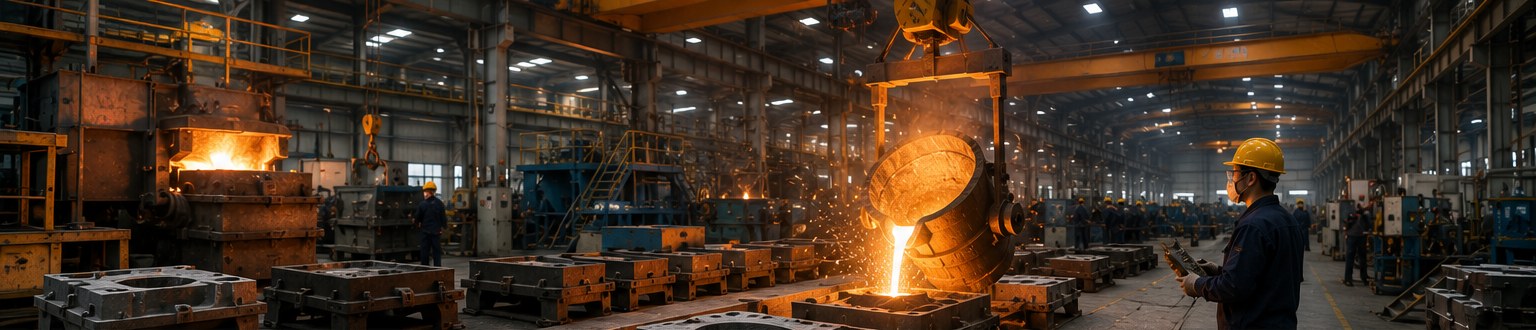
A foundry is a manufacturing facility that produces metal castings by melting metal, pouring the liquid into a mold, and allowing it to solidify into a shaped component. Foundries produce parts for nearly every industrial sector — from automotive and mining to oil and gas, marine, and agricultural machinery.
Choosing the right foundry is one of the biggest factors affecting casting quality, delivery performance, and long-term supply reliability.
What types of foundries exist, how do they differ, and how do you evaluate one when sourcing castings from China?
Tiegu is a China-based casting supplier serving international buyers through a vetted network of qualified Chinese foundries. We supply castings under a single commercial contract, managing supplier selection, technical confirmation, quality inspection, and export delivery from order to shipment.
Foundry, Casting Factory, Casting Plant, Casting Shop: What's the Difference?
Buyers encounter all four terms in international trade. In practice, they refer to the same type of facility. The differences are mainly context and scale:
| Term | Common Usage | Typical Context |
|---|---|---|
| Foundry | Technical / industry standard term | Used in engineering, quality standards, industry associations |
| Casting Factory | General commercial term | Common in international trade, especially China sourcing |
| Casting Plant | Large-scale industrial facility | High-volume, often vertically integrated operations |
| Casting Shop | Small-scale or job shop | Prototype runs, small batches, local service |
The takeaway for buyers: Don't get distracted by the name. What matters is process capability, material experience, and quality systems — not what the facility calls itself.
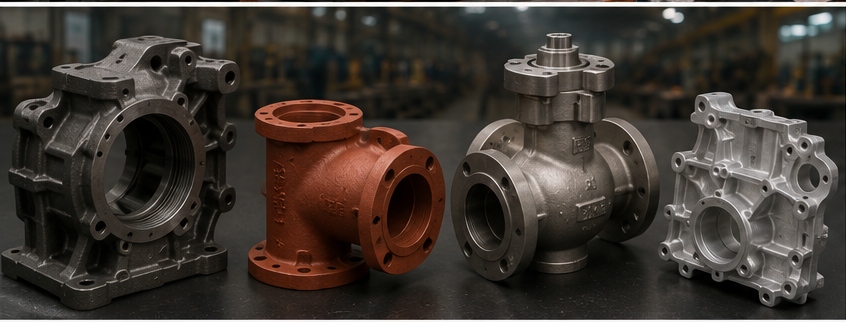
Types of Foundries: A Buyer's Classification
Not all foundries are the same. Understanding foundry types helps buyers identify the right source for their specific application.
By Metal Type
Ferrous foundries work with iron and steel alloys. This is the largest foundry category globally and covers:
Grey iron foundries — brake discs, engine blocks, machine housings
Ductile iron foundries — steering knuckles, control arms, pipes, pump bodies
Steel foundries — valves, mining wear parts, pressure vessels
Non-ferrous foundries work with aluminum, copper alloys (brass, bronze), zinc, and magnesium. Common applications include automotive brackets, electrical components, marine hardware, and lightweight structural parts.
Most foundries specialize in one metal family. A grey iron foundry does not typically cast stainless steel. Matching your material to the right foundry type is the first qualification step.
By Business Model
| Foundry Type | How It Works | What It Means for Buyers |
|---|---|---|
| Captive foundry | Produces exclusively for its parent company | Not available for external orders |
| Independent foundry | Accepts orders from external customers | Primary sourcing target for buyers |
| Jobbing foundry | Handles diverse low-volume, multi-part orders | Good for prototypes and small batches |
| Serial production foundry | Optimized for high-volume repeat orders | Best for large annual volumes |
International buyers work almost exclusively with independent foundries. Whether you need a jobbing or production foundry depends on your annual volume and part diversity.
By Casting Process
Different foundries invest in different processes. Process selection influences tooling cost, dimensional accuracy, production volume, and overall part cost.
| Process | Typical Foundry Type | Best For | Volume Range |
|---|---|---|---|
| Green Sand Casting | Iron / steel foundry | Large housings, general industrial parts | Low–High |
| Shell Mold Casting | Precision iron foundry | Automotive parts, consistent dimensions | Medium–High |
| Investment Casting | Precision / stainless foundry | Valves, pumps, complex geometry | Low–Medium |
| Die Casting | Non-ferrous foundry | Aluminum/zinc, high volume | High |
| Lost Foam Casting | Iron / steel foundry | Complex internal geometry | Medium |
A full-service foundry may offer multiple processes. Most specialize in one or two. Always confirm the foundry's primary process before requesting a quotation.
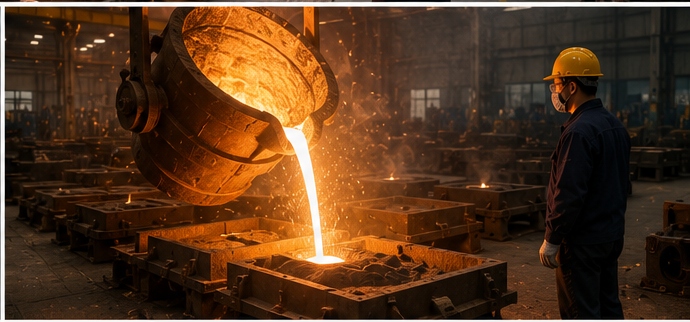
What Happens Inside a Foundry
The core production sequence in any foundry follows the same logic:
Pattern / tooling → Mold making → Melting & chemistry verification → Pouring → Cooling & shakeout → Fettling → Heat treatment (if required) → Inspection → Machining / surface treatment (if offered)
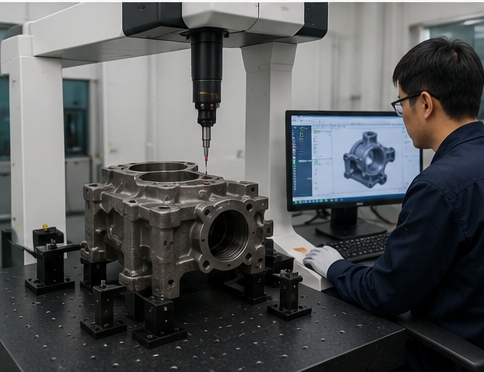
What separates a qualified export foundry from a basic one is not the sequence — every foundry follows it. It is the controls at each stage: spectrometer verification before pouring, temperature records during heat treatment, CMM inspection after fettling, and documented traceability from raw material to finished casting.
How to Evaluate a Foundry Before Placing an Order
Use this checklist before committing tooling cost or production to any new foundry:
☐ Process capability matches your required casting method
☐ Documented experience with your material grade
☐ ISO 9001 certified (minimum); IATF 16949 for automotive supply
☐ In-house spectrometer for melt chemistry verification
☐ CMM or calibrated gauge inspection capability
☐ NDT capability matched to your application (MPI / FPI / UT / RT)
☐ Heat treatment on site or with documented subcontractor
☐ Batch-specific MTCs available (not generic typical analysis)
☐ Accepts third-party pre-shipment inspection (SGS / BV)
☐ Export documentation experience (commercial invoice, COO, packing list)
☐ Can provide FAI report for new part numbers
A foundry that cannot satisfy most of these points is not qualified for industrial export supply — regardless of price.
Not sure if your current or prospective foundry checks all the boxes? Contact Tiegu — we review supplier capability against your drawing and quality requirements before recommending a source.
China's Foundry Landscape: What International Buyers Need to Know
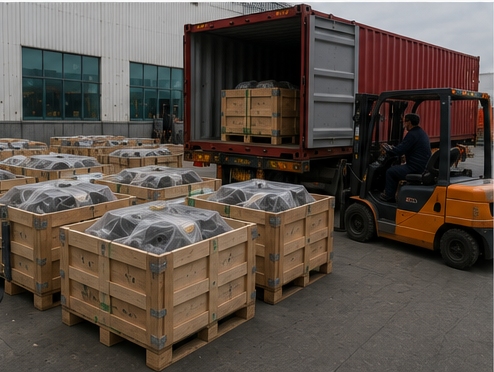
China is the world's largest casting producer, accounting for over 40% of global output. But "Chinese foundry" is not a single category. The industry is organized into distinct regional clusters, each specializing in different processes and materials:
Shandong Province is China's largest grey iron and ductile iron casting base. Foundries here supply automotive structural components, agricultural machinery parts, and pipe fittings to global buyers. Shell mold and green sand casting are the dominant processes.
Jiangsu and Zhejiang Provinces are home to China's most concentrated investment casting clusters. Silica sol investment casting for stainless steel valves, pump components, and marine hardware is a core export product from this region, with established supply chains to North America and Europe.
Hebei Province has significant steel casting capacity — carbon steel and alloy steel foundries supplying mining wear parts, valve bodies, and heavy industrial components.
Liaoning Province hosts major ductile iron pipe and large grey iron casting producers, particularly for municipal infrastructure and heavy equipment applications.
Guangdong Province is the hub for aluminum and zinc die casting, primarily serving electronics, automotive, and consumer product buyers.
What This Means for Buyers
Sourcing from China is not just finding any foundry with a low price. It is identifying the right regional cluster, the right process specialization, and the right quality tier for your application.
A single foundry rarely covers everything. A steering knuckle buyer needs a Shandong shell mold ductile iron foundry. A stainless steel valve buyer needs a Jiangsu silica sol investment casting foundry. These are different supply chains entirely.
Working with a China-based casting supplier that maintains relationships across multiple specialized foundry clusters helps buyers access the right production capability without managing multiple factory relationships. Tiegu follows this model by matching each project with foundries that fit the required material, process, quality system, and production scale.
Understanding these regional strengths helps buyers avoid sending RFQs to foundries that are not specialized in their products.
Frequently Asked Questions
What is the difference between a foundry and a casting factory?
The terms are interchangeable in international trade. "Foundry" is the standard technical term used in engineering and quality standards. "Casting factory" is common in commercial contexts, particularly in China sourcing. Both refer to a facility that produces metal castings by melting metal and pouring it into molds.
What is an iron foundry?
An iron foundry is a foundry that specializes in casting iron alloys — primarily grey iron and ductile (nodular) iron. Grey iron foundries produce brake discs, engine blocks, and machine housings. Ductile iron foundries produce safety-critical components such as steering knuckles, control arms, and pipe fittings. Iron foundries use cupola furnaces or induction furnaces and typically work with green sand or shell mold casting processes.
What is the difference between a ferrous and non-ferrous foundry?
A ferrous foundry works with iron-based alloys — grey iron, ductile iron, carbon steel, alloy steel, and stainless steel. A non-ferrous foundry works with metals that contain no significant iron content — aluminum, copper, brass, bronze, and zinc. The furnace types, mold materials, pouring temperatures, and inspection methods differ significantly between the two. Most foundries specialize in one or the other, not both.
What metals can a foundry cast?
Industrial foundries cast grey iron, ductile iron, carbon steel, alloy steel, stainless steel, manganese steel, aluminum alloys, copper alloys (brass and bronze), zinc, and magnesium. The metals a specific foundry can cast depend on its furnace type, mold process, and temperature capability. Not every foundry casts every metal — confirming material compatibility is a basic qualification step.
What certifications should a foundry have for industrial supply?
ISO 9001 is the minimum quality management certification for industrial casting supply. Automotive supply requires IATF 16949. Oil and gas applications may additionally require API Q1 or customer-specific quality plans. Beyond certifications, buyers should verify spectrometer capability, inspection equipment, and heat treatment records — certifications confirm the quality system exists, but production records confirm it is being used.
How do I find a reliable foundry in China?
Start by identifying the right foundry type for your material and process. Verify ISO 9001 or IATF 16949 certification with current validity dates. Request batch-specific MTCs from previous comparable orders. Confirm NDT capability and willingness to accept third-party pre-shipment inspection. Working with a China-based casting supplier who maintains a vetted foundry network is the most practical approach for buyers without in-country audit resources — the supplier handles foundry qualification, quality coordination, and export documentation under a single commercial contract.
Can Chinese foundries produce castings to ASTM or EN standards?
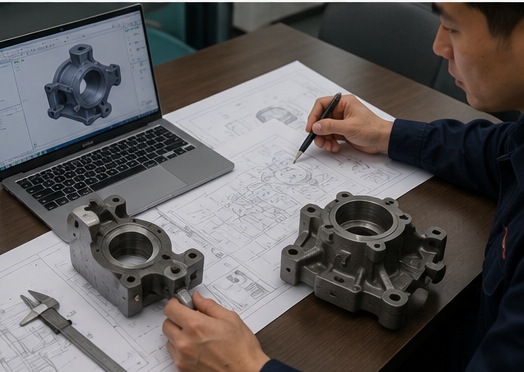
Yes. Established Chinese export foundries produce to ASTM, EN, DIN, and JIS material standards and issue the chemical and mechanical test documentation required by international buyers. Material grade compliance is verified by spectrometer analysis on each heat. The key is selecting a foundry with documented export experience for your specific material grade and application — not all Chinese foundries have export-oriented quality systems.
Tiegu is a China-based casting supplier serving international buyers through a vetted network of qualified Chinese foundries. We supply castings under a single commercial contract, managing supplier selection, technical confirmation, quality inspection, and export delivery from order to shipment.
Submit Your Requirements to Source from a Qualified Chinese Foundry
Share your part drawing, material grade, casting process requirement, and annual volume. Tiegu will identify the right foundry from our network, coordinate qualification and inspection, and provide a complete quotation under a single commercial contract.