
 en
en  fra
fra  de
de  ru
ru  ara
ara  gle
gle  it
it  jp
jp  kor
kor  th
th  zh
zh Pig Iron Chemical Composition: What Each Element Means for Your Foundry
2026-07-21 17:11:13 hits:0
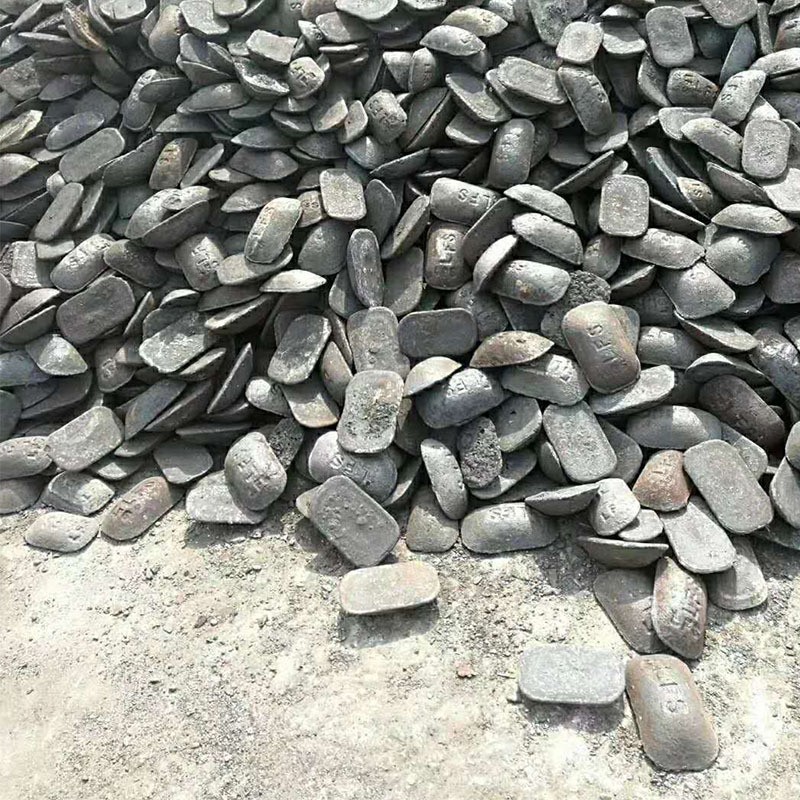
Here's a scenario that plays out in foundries more often than anyone admits.
Two shipments of pig iron arrive from the same supplier, same grade, two weeks apart. Same price per ton. One shipment pours smoothly, machines easily, passes testing. The other produces 18% shrinkage defects and a pile of scrap castings.
The difference? One number on the certificate was off by 0.4% — silicon. The foundry didn't catch it because nobody compared the certificates before charging the furnace.
This happens because most foundry buyers negotiate hard on per-ton price, get the order in, and don't look at the chemistry data until something has already gone wrong on the floor.
Here's what I think foundries should actually be reading on every pig iron certificate — and why.
Silicon isn't just a number. It's your melt behavior.
Silicon is the element that varies most between pig iron grades, and it's the one that causes the most expensive surprises. A foundry pouring grey iron at 2.2% target Si with base pig iron at 1.8% has room to inoculate. That same foundry with base pig iron at 2.5% is already near the ceiling — add your standard inoculant, and suddenly you're at 3.1%, your elongation drops, and your customer rejects the batch.
I've seen this happen. The foundry didn't change their recipe. The pig iron changed underneath them.
For ductile iron shops, the risk is even sharper. Base silicon above 1.5% in your pig iron and you're starting the race with one hand tied. You need room for the ferrosilicon you'll add during treatment, and if your base is already high, you don't have it.
Sulfur: the ductile iron killer hiding in plain sight
Almost every foundry manager I talk to knows sulfur matters for ductile iron. What fewer people fully internalize is the math: every 0.01% of sulfur in your base iron consumes about 0.0076% of magnesium. So if your pig iron certificate says 0.06% sulfur and you're making ductile, you're burning through roughly 0.045% Mg just to neutralize it — before a single nodule forms.
That's not a bad batch. That's the wrong grade for the job.
What I tell buyers: if you make ductile iron, don't accept pig iron above 0.02% sulfur. Not "close to 0.02%." Below it. Every time.
The elements the certificate might not show
A competent pig iron certificate reports carbon, silicon, manganese, phosphorus, and sulfur. That's the minimum.
A useful certificate reports trace elements — titanium, lead, arsenic, antimony. These appear in parts per million. Easy to overlook. And for ductile iron, they can be catastrophic. Lead above 20 parts per million degrades nodularity. Titanium above 0.04% interferes with graphite formation.
If your pig iron supplier uses scrap steel in the blast furnace charge — and some of the lower-cost ones do — trace elements drift batch to batch. One shipment clean, the next contaminated. You won't know unless you ask for the data.
This is also where the trustworthiness of the certificate matters. A piece of paper with numbers on it is not proof. I recommend asking for EN 10204 Type 3.1 — meaning the manufacturer's authorized inspector has independently verified the results, not just transcribed what the lab handed them.
What to actually do with this
If you run a foundry, here's the three-minute version:
Before you compare pig iron prices, compare the silicon range. Are you buying something your process can actually use?
If you make ductile iron, sulfur is your gatekeeper. Below 0.02% or don't buy it.
Ask for trace elements. If the supplier can't provide them, that's information too.
Store your certificates. When a defect pattern appears, pull the last three and look for trends.
The certificate isn't paperwork. It's your first quality check — before the pig iron ever reaches your furnace.
Tiegu supplies pig iron to foundries across Southeast and South Asia, with batch-specific mill test certificates for every shipment. For specification sheets and current pricing, contact us at tieguexport.com.