
 en
en  fra
fra  de
de  ru
ru  ara
ara  gle
gle  it
it  jp
jp  kor
kor  th
th  zh
zh Pig Iron Types Explained: A Buyer's Guide for Foundries in Southeast Asia and South Asia
2026-06-30 15:49:03 hits:0
Foundries across Vietnam, Indonesia, India, Bangladesh, Pakistan, and the Philippines share the same recurring sourcing problem: pig iron looks like a commodity on a price sheet, but the wrong grade in the cupola or induction furnace leads straight to scrap castings, rejected batches, and missed delivery dates. The fix starts with understanding that "pig iron" is not one product — it is a family of grades, each formulated for a different metallurgical job.
This guide breaks down the four main pig iron types, what chemical composition actually controls in your casting process, and how to evaluate a supplier before you commit to a container order.
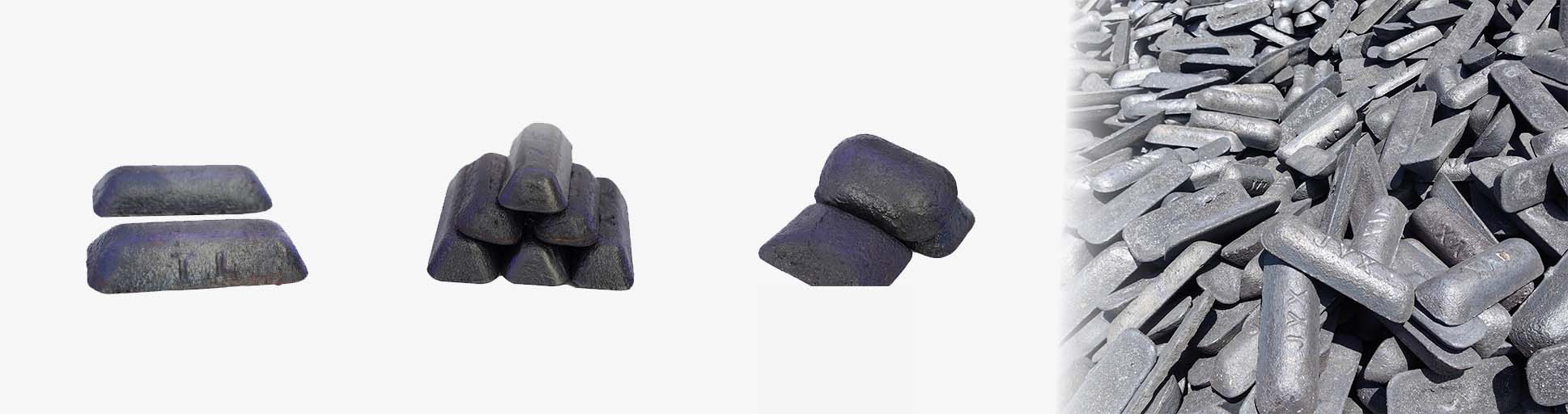
What Is Pig Iron, Exactly?
Pig iron is the crude iron product of a blast furnace (or induction furnace, for smaller producers), made by smelting iron ore with coke and limestone. It typically contains 3.8–4.7% carbon along with varying levels of silicon, manganese, phosphorus, and sulfur. On its own, pig iron is too brittle for direct structural use — instead, it serves as the primary charge material for steelmaking furnaces and iron foundries, where its composition is adjusted to produce steel, grey iron castings, or ductile (nodular) iron castings.
For a foundry, pig iron is not a raw material you simply "have enough of" — the specific grade you charge determines the mechanical properties of the finished casting before you even add alloys.
The Four Main Pig Iron Grades
1. Grey (Foundry) Pig Iron
Grey pig iron is formulated with higher silicon (typically 1.2–3.5% Si) and is the standard charge material for grey cast iron production — engine blocks, brake discs, machine tool beds, pipe fittings, and general industrial castings. The elevated silicon promotes graphite formation during solidification, giving grey iron its characteristic machinability, vibration damping, and casting fluidity.
Best suited for: automotive castings, machine tool components, general engineering castings, cookware.
2. High-Purity Pig Iron
High-purity pig iron is defined by tightly controlled trace elements — low phosphorus (often below 0.06%) and low sulfur — with consistent, certifiable chemistry from batch to batch. It is used where mechanical performance and pressure tightness cannot tolerate variation, such as pump and valve bodies, hydraulic components, and precision castings destined for export markets with strict inspection standards.
Best suited for: pump components, valve bodies, precision and pressure-rated castings, applications requiring third-party chemical certification (mill test certificates).
3. Nodular (Ductile/SG) Pig Iron
Also called spheroidal graphite pig iron, this grade is engineered with low sulfur and controlled trace elements so that, after magnesium treatment in the foundry, graphite forms as nodules rather than flakes. This is the feedstock for ductile iron, which offers significantly higher tensile strength and elongation than grey iron — critical for components under stress or pressure.
Best suited for: ductile iron pipes (water and sewage infrastructure), crankshafts, wind turbine components, agricultural machinery parts, and any casting that needs strength plus ductility rather than just rigidity.
4. Steelmaking Pig Iron
Steelmaking pig iron is optimized for charge into electric arc furnaces (EAF) or basic oxygen furnaces — high carbon, low phosphorus, with chemistry designed to dilute and purify scrap-heavy charges. Many EAF-based steelmakers in South and Southeast Asia import steelmaking pig iron specifically to offset the residual elements (copper, tin, chromium) that accumulate in recycled scrap, which scrap alone cannot dilute.
Best suited for: EAF steel mills, scrap-blending operations, secondary steelmakers needing residual-element dilution.
Comparison at a Glance
| Grade | Typical Si | Typical P | Typical S | Primary Use |
|---|---|---|---|---|
| Grey pig iron | 1.2–3.5% | ≤0.15% | ≤0.05% | Grey iron castings, automotive, machinery |
| High-purity pig iron | 0.5–1.5% | ≤0.06% | ≤0.03% | Pumps, valves, pressure castings |
| Nodular (SG) pig iron | 0.8–1.5% | ≤0.05% | ≤0.02% | Ductile iron pipe, crankshafts, ag/wind components |
| Steelmaking pig iron | ≤0.8% | ≤0.10% | ≤0.05% | EAF/BOF steelmaking, scrap dilution |
Exact specifications vary by supplier and customer requirement — always request a mill test certificate (MTC) matched to your application.
Need help matching a grade to your furnace? Talk to Tiegu .
Why So Many Southeast Asian and South Asian Foundries Import from China
Domestic blast furnace capacity in much of Southeast Asia is concentrated in flat steel and basic construction-grade output, leaving a gap for foundry-grade, high-purity, and nodular pig iron that smaller and mid-sized foundries struggle to source locally in consistent volumes. China's blast furnace network, by contrast, produces the full spectrum of grades at scale, with established export logistics into Vietnam, Indonesia, the Philippines, Bangladesh, and Pakistan through major ports.
The practical advantages buyers cite most often:
Grade availability — sourcing grey, high-purity, nodular, and steelmaking pig iron from a single supplier base rather than juggling multiple origins
Consistent chemistry — established Chinese exporters run spectrometer testing on every batch and issue certificates of analysis
Container-ready logistics — experience packing and documenting bulk and bagged pig iron for ASEAN and South Asian ports
Price competitiveness — supported by scale production and proximity to coking coal and ore processing infrastructure
How to Vet a Pig Iron Supplier Before You Order
Foundry buyers who get burned on pig iron almost always trace it back to the same gaps: no independent chemical verification, vague grade labeling, or no traceability between the quoted spec and the delivered batch. Before placing an order, confirm:
A batch-specific mill test certificate (MTC), not a generic "typical analysis" sheet
ISO 9001 certification and, where relevant to your end customer, environmental or sustainability documentation
Willingness to allow third-party inspection (SGS, BV, or similar) before shipment
Clear grade labeling — ask the supplier to confirm which of the four categories above matches your furnace charge requirement, not just "pig iron" on the invoice
A consistent supply track record — ask for references from foundries in your region producing similar castings
Frequently Asked Questions
What is the difference between grey pig iron and nodular pig iron?
Grey pig iron has higher silicon and is used to produce grey cast iron, where graphite forms as flakes. Nodular pig iron has lower sulfur and controlled trace elements so that, after magnesium treatment, graphite forms as spheres (nodules), producing ductile iron with much higher tensile strength and elongation.
Can high-purity pig iron be used for ductile iron production?Yes, but it is not the same as nodular-grade pig iron. High-purity pig iron's main advantage is tightly controlled phosphorus and sulfur; nodular pig iron specifically controls the trace elements (such as titanium and lead) that interfere with magnesium treatment. For ductile iron pipe production, suppliers typically recommend nodular-grade or magnesium-treatment-ready pig iron rather than general high-purity grade.
Why do EAF steel mills need steelmaking pig iron if they already use scrap?
Recycled steel scrap accumulates residual elements like copper and tin that cannot be removed by refining. Steelmaking pig iron, made from virgin iron ore, has none of these residuals and is blended into the charge to dilute them, allowing mills to produce higher-grade steel from scrap-heavy charges.
How do I know which pig iron grade matches my casting application?
Match the grade to your end product: grey pig iron for general castings and automotive parts, high-purity pig iron for pressure-rated pump and valve components, nodular pig iron for ductile iron pipe and high-strength components, and steelmaking pig iron for EAF/BOF charge. A reliable supplier should ask about your finished casting's mechanical requirements before recommending a grade.
Is Chinese pig iron suitable for export to ASEAN countries under current trade terms?
Pig iron (HS code 7201) is a globally traded commodity, and Chinese exporters regularly ship to Vietnam, Indonesia, the Philippines, Bangladesh, and Pakistan. Buyers should confirm current tariff classifications and any anti-dumping measures applicable in their specific country, as trade terms can change by jurisdiction.
Tiegu is a China-based pig iron supplier and authorized distributor, representing over ten major Chinese pig iron producers as their core export agent. With an annual sales volume exceeding 900,000 tonnes in China, Tiegu's product portfolio covers the full spectrum of pig iron grades — including grey pig iron, high-purity pig iron, nodular pig iron, and steelmaking pig iron — meeting the sourcing needs of foundries and steel mills across Southeast Asia, South Asia, and global markets. Every order is supported by batch-specific mill test certificates and end-to-end export logistics.
Not sure which pig iron grade fits your furnace charge?
Tell us your casting application and target chemistry, and we'll match you with the right grade.