 en
en  fra
fra  de
de  ru
ru  ara
ara  gle
gle  it
it  jp
jp  kor
kor  th
th  zh
zh What Is Lost Wax Casting? Process, Materials, Applications & How to Source from China
2026-07-06 13:47:52 hits:0
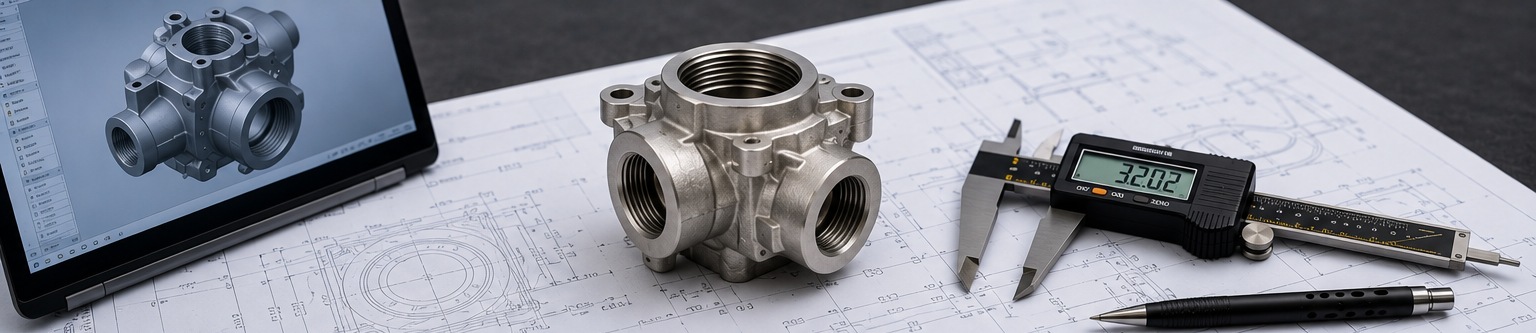
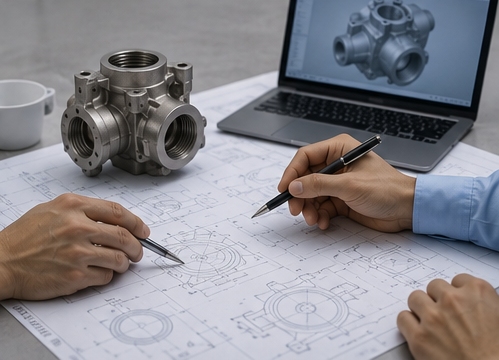
Lost wax casting — also known as investment casting or precision casting — is a metal forming process in which a wax pattern shaped like the desired part is coated in refractory ceramic, melted out to create a hollow mold cavity, and filled with molten metal to produce a near-net-shape component with excellent surface finish and dimensional accuracy. It is one of the oldest manufacturing processes still in active industrial use, and today accounts for a significant share of precision metal components in the automotive, valve and pump, oil and gas, marine, and agricultural machinery industries.
So which process variant suits your application, which material grade is right for your part, and how do you source lost wax castings reliably from Chinese foundries? This guide covers the full picture.
Tiegu is a China-based casting supplier serving international buyers through a vetted network of qualified Chinese foundries. We supply lost wax castings in stainless steel, carbon steel, alloy steel, and aluminum under a single supply contract, managing supplier selection, technical confirmation, quality inspection, and export delivery from order to shipment.
How the Lost Wax Casting Process Works
Lost wax casting produces complex, precision metal parts through a multi-stage process that begins with a wax pattern and ends with a finished metal component. Understanding each stage helps buyers evaluate supplier capability and identify where quality problems originate.
Step 1 — Die and Tooling FabricationA metal die (typically aluminum) is precision-machined to the exact negative shape of the desired part, with allowances built in for wax shrinkage, ceramic shell shrinkage, and metal solidification shrinkage. Tooling quality directly determines dimensional consistency across the production run.
Step 2 — Wax Pattern InjectionMolten wax is injected into the die under controlled pressure and temperature to produce a wax pattern that is an exact positive replica of the final casting. Pattern dimensions must compensate for all subsequent shrinkage stages.
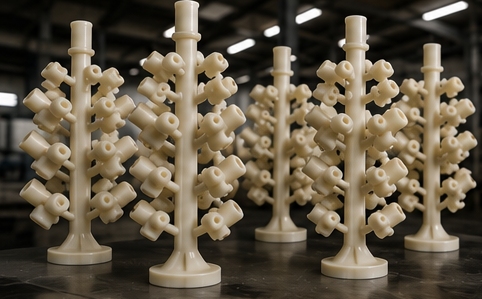
Step 3 — Assembly onto Casting TreeIndividual wax patterns are attached to a central wax sprue to form a "tree" — a cluster of multiple parts that will be cast simultaneously. Gating design at this stage affects metal flow and porosity distribution in the final casting.
Step 4 — Ceramic Shell BuildingThe wax tree is repeatedly dipped into a ceramic slurry and coated with refractory sand in alternating layers, building up a ceramic shell of sufficient thickness to contain the molten metal. Each layer must dry completely before the next is applied — a process that takes several days and requires controlled temperature and humidity.
Step 5 — DewaxingThe ceramic shell assembly is placed in a high-pressure steam autoclave or furnace to melt and drain the wax from the shell, leaving a hollow ceramic mold cavity. This is the step that gives the process its name — the wax is "lost." Any residual wax is burned out in the subsequent firing stage.
Step 6 — Shell FiringThe dewaxed ceramic shell is fired at high temperature (typically 900–1100°C) to burn out residual wax, cure the ceramic binder, and bring the mold to pouring temperature. A properly fired shell has sufficient strength to contain the molten metal without cracking.
Step 7 — Metal PouringMolten metal is poured into the preheated ceramic shell under gravity or, for certain alloys, under vacuum or pressure. Pouring temperature, speed, and shell preheat temperature must be precisely controlled to achieve complete fill without porosity or cold shuts.
Step 8 — Shell Removal and FinishingAfter cooling, the ceramic shell is broken away and individual castings are cut from the sprue. Parts are then cleaned by shot blasting, inspected dimensionally and visually, and subjected to any required post-processing — heat treatment, CNC machining, surface treatment, or NDT inspection — before shipment.
Water Glass vs Silica Sol: Which Process Should You Specify?
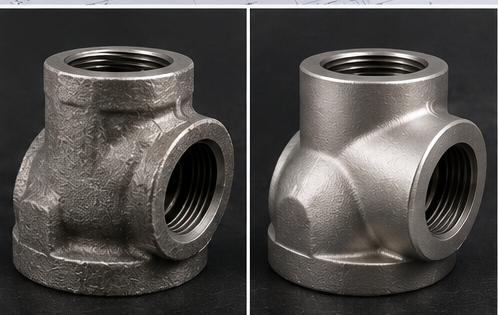
This is the most important process decision for buyers sourcing lost wax castings from China — and the one that most supplier quotations handle poorly. Chinese foundries use two principal shell-building systems that produce significantly different results:
Water Glass (Sodium Silicate) ProcessWater glass casting uses sodium silicate as the ceramic binder. It is faster to build, cheaper to run, and suitable for less demanding surface finish and dimensional accuracy requirements. The resulting surface finish is typically Ra 12.5–25μm with dimensional accuracy of CT7–CT9 per ISO 8062. Water glass castings are appropriate for carbon steel and low-alloy steel components where the as-cast surface will be machined, or where surface finish is not a critical specification.
Buyers choosing water glass process are typically prioritizing cost and volume over precision. It is well-suited to valve body blanks for general service, engineering machinery structural components, agricultural machinery fittings, and other industrial parts where downstream machining handles the final dimensional requirements.
Silica Sol (Colloidal Silica) ProcessSilica sol casting uses colloidal silica as the binder, producing a much finer ceramic shell surface that transfers to a significantly better as-cast finish — typically Ra 1.6–6.3μm with dimensional accuracy of CT4–CT6. Silica sol parts often require little or no post-cast machining on non-critical surfaces, and the process is compatible with stainless steel, high-alloy steel, duplex stainless, and other grades that require clean, oxide-free mold surfaces.
Buyers choosing silica sol process are sourcing precision components where surface finish, dimensional accuracy, or material cleanliness is a specification requirement. It is the standard process for stainless steel pump and valve components, automotive precision parts, food and pharmaceutical equipment, marine hardware, and any application where the casting will be pressure-tested or used in a corrosive environment.
| Water Glass | Silica Sol | |
|---|---|---|
| Surface finish | Ra 12.5–25μm | Ra 1.6–6.3μm |
| Dimensional accuracy | CT7–CT9 | CT4–CT6 |
| Compatible materials | Carbon steel, low-alloy steel | Stainless steel, alloy steel, aluminum |
| Shell build time | Shorter | Longer |
| Unit cost | Lower | Higher |
| Post-cast machining | Usually required | Often minimal |
| Typical applications | Valve blanks, machinery parts | Precision valves, pumps, automotive, food, marine |
The practical rule: If your part is carbon steel and will be fully machined, water glass is appropriate and more cost-effective. If your part is stainless steel, requires tight as-cast tolerances, or has a surface finish specification, specify silica sol. If your drawing does not specify the process, ask your supplier which they plan to use — the difference in quality is significant enough that it should never be assumed.
Material Grades for Lost Wax Casting
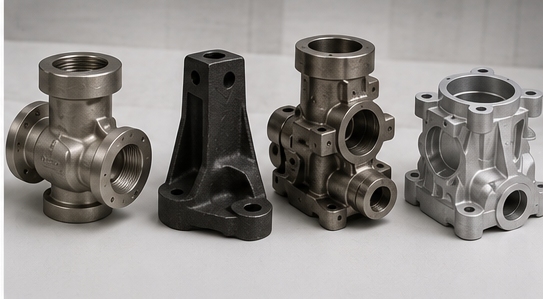
Lost wax casting is compatible with virtually any pourable metal alloy. For industrial buyers sourcing from China, the following material families cover the majority of applications:
Carbon Steel (ASTM A216 WCB, WCC; ASTM A352 LCB) is the most cost-effective option for general industrial castings — valve bodies and bonnets for standard service, pump casings, structural components, and engineering machinery parts. Water glass process is standard. Chinese foundries supply carbon steel investment castings to ASTM A216, EN 10213, and equivalent DIN and JIS grades.
Austenitic Stainless Steel (CF8/304, CF8M/316, CF3/304L, CF3M/316L) is the dominant material for corrosion-resistant lost wax castings — pump impellers and casings, valve bodies for chemical, water treatment, and food service applications, marine hardware, and pharmaceutical components. Silica sol process is standard for stainless steel. Chinese foundries regularly supply CF8M and CF8 investment castings to ASTM A351, A743, and A744.
Precipitation-Hardened Stainless Steel (17-4 PH / CB7Cu-1) combines high strength with good corrosion resistance, used for pump shafts, high-pressure valve components, and marine and offshore hardware where both strength and corrosion resistance are required.
Duplex Stainless Steel (CD4MCu, 2205) provides superior resistance to chloride stress corrosion cracking compared to standard austenitic grades, specified for seawater pump components, desalination equipment, and chemical process valves in aggressive media.
Alloy Steel (Cr-Mo grades including WC6, WC9; ASTM A217) is used for high-temperature, high-pressure applications in power generation, petrochemical, and refinery service — turbine valve bodies, reactor components, and pressure-containing parts that must maintain strength at elevated temperatures.
Aluminum Alloy investment castings (A356, A380) serve lightweight precision applications — instrument housings, aerospace brackets, automotive sensor components — where the combination of complex geometry, tight tolerances, and low weight justifies the investment casting process over die casting.
Industries and Applications
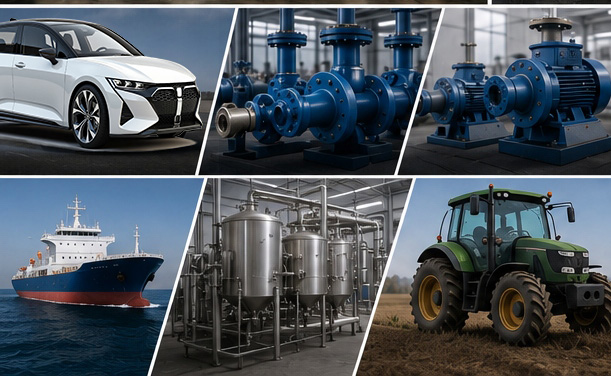
Lost wax casting's ability to produce complex geometries with excellent surface finish and minimal post-cast machining makes it the process of choice across a wide range of industrial sectors:
Valves and pumps represent the largest global market for industrial investment castings. Valve bodies, bonnets, ball and gate components, pump casings, and impellers are routinely produced in stainless steel and carbon steel investment castings — silica sol process for stainless steel, water glass for carbon steel blanks.
Oil, gas, and petrochemical applications require investment castings in alloy steel, stainless steel, and duplex stainless for high-pressure, high-temperature service. Valve trim components, manifold blocks, wellhead hardware, and instrumentation fittings are common products from Chinese export foundries in this segment.
Automotive and transportation investment castings include turbocharger housings, exhaust manifolds, sensor and actuator brackets, transmission components, and precision structural fittings. The combination of complex geometry and tight tolerances makes lost wax casting the preferred process where sand casting cannot achieve the required accuracy.
Marine and offshore equipment requires stainless steel and duplex stainless investment castings for seawater resistance — deck hardware, mooring fittings, valve bodies, pump components, and structural brackets. Chinese silica sol investment casting foundries have extensive experience supplying marine hardware to European and North American buyers.
Agricultural machinery uses both water glass and silica sol investment castings for hydraulic fittings, linkage components, implement attachment hardware, and precision connections that require better dimensional accuracy than sand casting provides at comparable cost.
Food, beverage, and pharmaceutical equipment demands hygienic stainless steel surfaces with minimal as-cast roughness — exactly what silica sol investment casting delivers. Pump and valve components, fittings, and processing equipment parts in 316L are a significant export category from Chinese foundries.
Lost Wax Casting vs Other Casting Processes
| Lost Wax Casting | Sand Casting | High-Pressure Die Casting | |
|---|---|---|---|
| Surface finish | Excellent (Ra 1.6–25μm) | Moderate (Ra 12.5–50μm) | Excellent (Ra 0.8–3.2μm) |
| Dimensional accuracy | CT4–CT9 | CT10–CT13 | CT4–CT6 |
| Part complexity | Very high | High | High |
| Tooling cost | Low–Medium | Low | Very High |
| Compatible materials | Nearly all alloys | Nearly all alloys | Al, Zn, Mg primarily |
| Typical part weight | 0.05–100kg | No limit | 0.1–50kg |
| Post-cast machining | Minimal–Moderate | Significant | Minimal |
| Best volume range | 100–100,000+ pcs | 1–10,000 pcs | 10,000+ pcs |
| Best for | Complex precision parts, valves, pumps | Large/heavy parts, prototypes | High-volume lightweight parts |
Lost wax casting occupies the optimal position for buyers who need complex geometry, good surface finish, and a wide material range at tooling costs far below die casting. For very large parts (over 100kg), sand casting is typically more practical. For high-volume aluminum or zinc parts, high-pressure die casting offers better economics at scale.
Quality Standards and Inspection for Investment Castings
Lost wax castings for industrial applications require documented quality verification at multiple stages of production:
Dimensional inspection against drawing should use calibrated instruments — CMM for critical dimensions, optical comparator for profile features. For silica sol precision castings, CT4–CT6 tolerances per ISO 8062 should be confirmed on first article inspection (FAI) reports with full dimensional layout.
Material certification — a batch-specific mill test certificate (MTC) confirming chemical composition from spectrometer analysis — is mandatory for every shipment. Verify that the MTC references the heat number of the production batch, not a generic "typical analysis."
Mechanical property testing (tensile strength, yield strength, elongation) should be performed on test bars cast from the same melt as production parts, with results documented in the MTC or a separate mechanical test report.
Non-destructive testing (NDT) requirements depend on the application. Fluorescent penetrant inspection (FPI or LPI) detects surface and near-surface defects on stainless steel castings. Radiographic testing (RT) identifies internal porosity and shrinkage. Hydrostatic pressure testing verifies pressure integrity for valves and pump bodies.
ISO 9001 certification is the baseline quality management requirement. For automotive supply, IATF 16949 is required. For oil and gas applications, API Q1 or customer-specific quality plans may additionally apply.
Third-party pre-shipment inspection (SGS, Bureau Veritas, or equivalent) provides independent verification before container loading — recommended for new supplier relationships or high-value orders.
Not sure whether water glass or silica sol process is right for your part? Send your drawing to Tiegu — we'll review the specification and match your project to the right foundry and process.
Why Source Lost Wax Castings from China
China accounts for approximately 40% of the global investment casting market and is the dominant supplier of industrial lost wax castings to buyers in North America, Europe, the Middle East, and Asia-Pacific. The combination of established silica sol and water glass foundry infrastructure, integrated post-casting services, and decades of export experience makes China the default sourcing destination for precision investment castings across most industrial segments.
Cost advantage: Chinese investment castings typically cost 15–35% less than equivalent Western production for comparable specifications, driven by lower labor, energy, and overhead costs without sacrificing quality in certified export foundries.
Process and material breadth: Chinese foundries cover both water glass and silica sol processes across carbon steel, stainless steel, alloy steel, duplex stainless, and aluminum — allowing buyers to consolidate multiple casting types with a single supply partner.
Integrated services: Heat treatment, CNC machining, NDT, surface treatment (passivation, electropolishing, painting), and pressure testing are available within the same supply chain in China, reducing the number of vendor handoffs between raw casting and finished component.
Export track record: Established Chinese investment casting foundries have been supplying ASTM, EN, and DIN-compliant castings to Western buyers for over two decades, with the documentation systems — MTC, FAI reports, NDT certificates — that international buyers require.
Frequently Asked Questions
What is the difference between lost wax casting and investment casting?Lost wax casting and investment casting refer to the same process. "Lost wax casting" describes the mechanism — a wax pattern is melted out ("lost") to create the mold cavity. "Investment casting" refers to the industrial term, derived from "investing" (surrounding) the wax pattern with refractory ceramic material. "Precision casting" is a third term for the same process, emphasizing its dimensional accuracy advantage over sand casting. All three terms are used interchangeably in industrial purchasing.
What is the difference between water glass and silica sol lost wax casting?Water glass (sodium silicate) and silica sol (colloidal silica) are the two shell-building systems used in industrial lost wax casting. Water glass produces a coarser surface finish (Ra 12.5–25μm, CT7–CT9) at lower cost, suitable for carbon steel parts that will be machined. Silica sol produces a significantly finer surface (Ra 1.6–6.3μm, CT4–CT6) at higher cost, required for stainless steel and alloy steel precision parts where as-cast surface quality matters. Always specify which process you require when requesting quotations from Chinese foundries.
What materials can be used in lost wax casting?Lost wax casting is compatible with virtually any pourable metal alloy. In industrial export supply from China, the most common materials are carbon steel (ASTM A216 WCB/WCC), austenitic stainless steel (CF8/304, CF8M/316), precipitation-hardened stainless steel (17-4 PH), duplex stainless steel (CD4MCu, 2205), chromium-molybdenum alloy steel (WC6, WC9), and aluminum alloys (A356). Unlike sand casting or die casting, lost wax casting does not restrict material selection by process limitations — the constraint is finding a foundry with the melting and quality infrastructure for your specific alloy.
What dimensional tolerances can lost wax casting achieve?Silica sol investment casting achieves dimensional accuracy of CT4–CT6 per ISO 8062, with surface finish of Ra 1.6–6.3μm as-cast. Water glass investment casting achieves CT7–CT9 with Ra 12.5–25μm. For reference, sand casting typically achieves CT10–CT13. These tolerances apply to the as-cast condition; CNC machining after casting achieves tolerances of IT6–IT8 on machined surfaces, enabling precision bores, threads, and mating surfaces to be incorporated into investment cast components.
How much does lost wax casting tooling cost?Lost wax casting tooling (the metal die used to produce wax patterns) is significantly less expensive than die casting tooling. For typical industrial components, aluminum dies for a single cavity range from approximately USD 500–3,000 depending on part complexity and size. Multi-cavity dies and complex geometries with cores cost more. This low tooling cost relative to die casting is one of the key advantages of investment casting for medium-volume production — 100 to several thousand parts per year — where die casting tooling cost cannot be amortized economically.
What is the minimum order quantity for lost wax castings from China?There is no fixed industry minimum order quantity for investment casting from China. Tooling cost is charged separately from unit price, so small batch orders (50–200 pieces) are economically viable once tooling is paid for. Practically, most Chinese export foundries prefer initial orders of 100–500 pieces or more to justify production setup. For prototype and development orders before tooling commitment, some foundries offer 3D-printed wax pattern alternatives that bypass die tooling for very small quantities.
How long does it take to get samples from a Chinese investment casting foundry?Sample lead time from drawing submission to first article samples is typically 3–6 weeks for standard silica sol castings, and 2–4 weeks for water glass castings. The majority of this time is shell building (multiple coating and drying cycles over several days) and inspection. Complex parts with tight tolerances or unusual materials may require longer sample lead times. Production lead time after sample approval is typically 4–8 weeks depending on volume and foundry schedule.
How do I verify quality when sourcing lost wax castings from China?Quality verification should cover: a batch-specific MTC confirming chemical composition from spectrometer analysis; mechanical test reports for strength and elongation; dimensional reports from CMM or gauge inspection; NDT results (FPI, RT, or hydrostatic test as applicable); and ISO 9001 or IATF 16949 certification with current validity dates. For new supplier relationships, third-party pre-shipment inspection by SGS or Bureau Veritas provides independent verification before container loading. Working with an experienced casting supplier who coordinates quality documentation and inspection on your behalf reduces the risk of receiving non-conforming parts.
Tiegu is a China-based casting supplier serving international buyers through a vetted network of qualified Chinese foundries. We supply lost wax castings in stainless steel, carbon steel, alloy steel, and aluminum under a single supply contract, managing supplier selection, technical confirmation, quality inspection, and export delivery from order to shipment.
Submit Your Drawing for a Free Investment Casting Quote
Share your part drawing, material grade, process requirement (water glass or silica sol), and annual volume. Tiegu will confirm the right process, match your project to a qualified foundry, and provide a complete quotation covering tooling, unit price, and lead time.
Submit Your Inquiry → Contact Tiegu