 en
en  fra
fra  de
de  ru
ru  ara
ara  gle
gle  it
it  jp
jp  kor
kor  th
th  zh
zh How Thick Should a Manhole Cover Be? A15 to F900 Thickness Explained
2026-06-08 05:00:30 hits:0
Ductile Iron Manhole Cover Thickness Guide: 6 Load Ratings from A15 to F900
There is an important relationship between the load-bearing capacity of ductile iron manhole covers and their thickness — but this is not a simple proportional relationship. A cover's load capacity depends not only on thickness, but also on material strength, structural design, and manufacturing processes.
Thickness: A Key Factor in Load Capacity
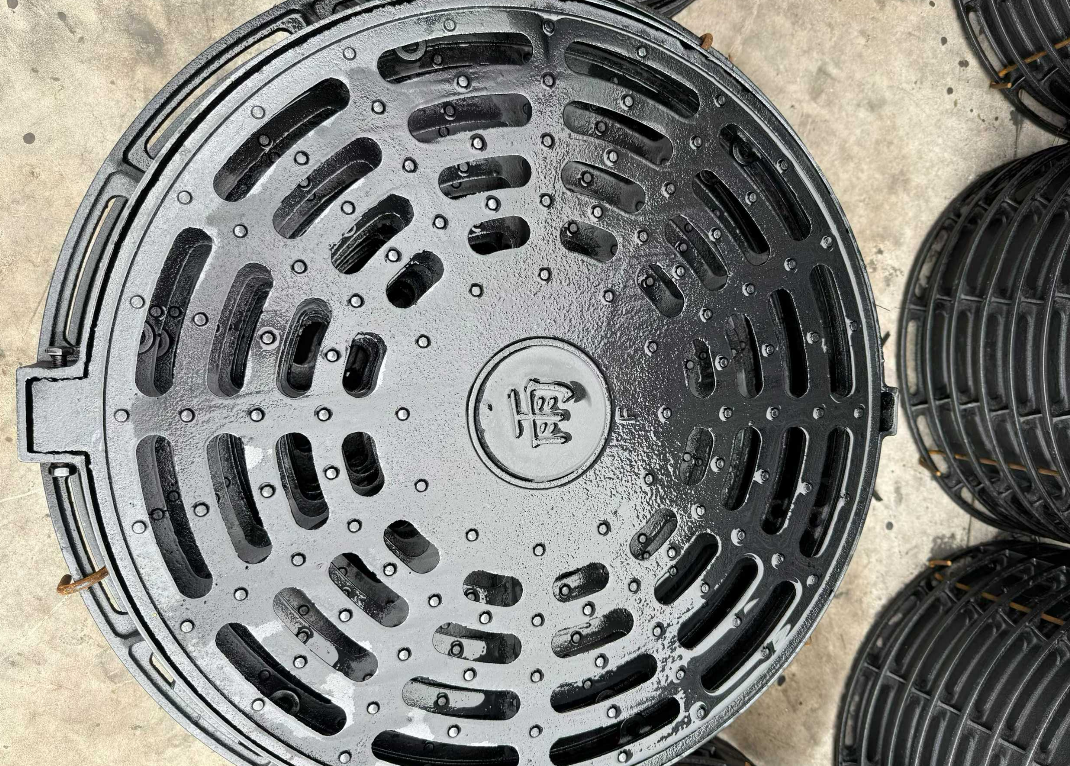
Thickness is one of the most important factors affecting a ductile iron manhole cover's bearing capacity. With the same material and structural design, a thicker cover generally provides greater load capacity. This is because thicker covers offer better support and stability to resist higher pressure.
Specifically, different load ratings correspond to different thickness requirements. Below are common ductile iron manhole cover load ratings and their corresponding thickness levels, based on the Chinese standard GB/T 23858-2009 (which aligns closely with EN124):
A15 Rating — 1.5 Tons
Used in green belts, landscaping areas, and other light-load zones. Minimum cover thickness: 20mm.
B125 Rating — 12.5 Tons
Suitable for sidewalks, pedestrian areas, and non-motorized vehicle lanes. Minimum cover thickness: 30mm.
C250 Rating — 25 Tons
Used in residential communities, parking lots, and similar locations. Minimum cover thickness: 30mm. Although the load capacity increases compared to B125, thickness may not increase significantly due to usage environment and cost considerations.
D400 Rating — 40 Tons
Designed for urban roads, main traffic arteries, and other heavy-load areas. Minimum cover thickness: 50mm to provide adequate structural strength.
E600 Rating — 60 Tons
Used in airports, freight terminals, docks, and other high-intensity industrial zones. Minimum cover thickness: 50mm.
F900 Rating — 90 Tons
The highest load class, designed for extreme heavy-duty applications such as airport runways and major port facilities. Minimum cover thickness: 50mm. Despite the significantly higher load rating, thickness may not increase further due to practical and economic considerations.
Load Rating & Thickness Reference Table
| Load Rating | Test Load | Min. Thickness | Typical Application |
|---|---|---|---|
| A15 | 1.5 tons | 20mm | Green belts, landscaping |
| B125 | 12.5 tons | 30mm | Sidewalks, non-motorized lanes |
| C250 | 25 tons | 30mm | Residential communities, parking lots |
| D400 | 40 tons | 50mm | Urban roads, main traffic arteries |
| E600 | 60 tons | 50mm | Airports, docks, industrial zones |
| F900 | 90 tons | 50mm | Airport runways, port facilities |
Note: The above data is for reference only. Actual load capacity and thickness may vary by manufacturer, material quality, and production process.
Beyond Thickness: Other Factors Affecting Load Capacity
Spheroidization Rate
The spheroidization rate of ductile iron affects both load-bearing capacity and durability. A spheroidization rate of 85%–95% typically achieves optimal casting hardness and toughness, enhancing the overall performance of the manhole cover.
Structural Design
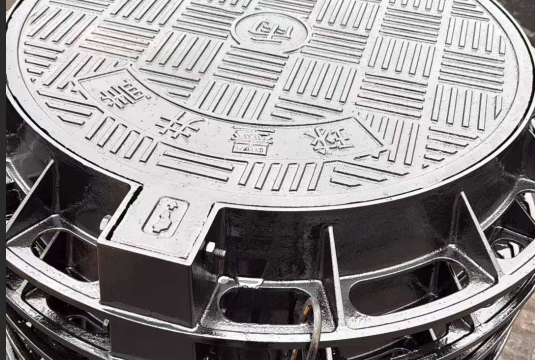
Reinforcement rib patterns, cover geometry, and frame design all contribute to how efficiently the cover distributes load. A well-engineered design can achieve the same load rating with optimized material use.
Material Quality
The grade of ductile iron (typically EN-GJS-500-7 or equivalent) and casting quality control directly impact real-world performance. Always request material certifications from your supplier.
How to Choose the Right Thickness
When selecting a ductile iron manhole cover, consider:
Traffic type and frequency — heavier and more frequent traffic demands higher load ratings
Installation environment — road surface, soil conditions, and climate affect long-term performance
Standard compliance — verify certification to EN124, GB/T 23858-2009, or equivalent
Manufacturer specifications — thickness is a baseline; always review full product test reports
Recommended Reading:
6 Reasons Anti-Settlement Manhole Covers Outperform Traditional Designs
Looking for ductile iron manhole covers that meet international standards?
Visit www.tieguexport.com to explore our full range of casting products. We specialize in all types of iron castings, with manhole covers as one of our core product lines. View our manhole cover product details at Manhole Cover Product Page.
Our EN124 and GB/T 23858-2009 certified covers are available in all load classes (A15–F900), serving municipal buyers and contractors across Southeast Asia, the Middle East, Africa, and South America.
Contact us today for a quotation with full material certifications and test reports.
Published by tieguexport.com — Your source for ductile iron manhole covers manufactured to international standards.