
 en
en  fra
fra  de
de  ru
ru  ara
ara  gle
gle  it
it  jp
jp  kor
kor  th
th  zh
zh 5 Key Steps for Digital Transformation in Foundries
2026-03-23 10:26:47 hits:0
What are the 5 key steps for digital transformation in foundries?
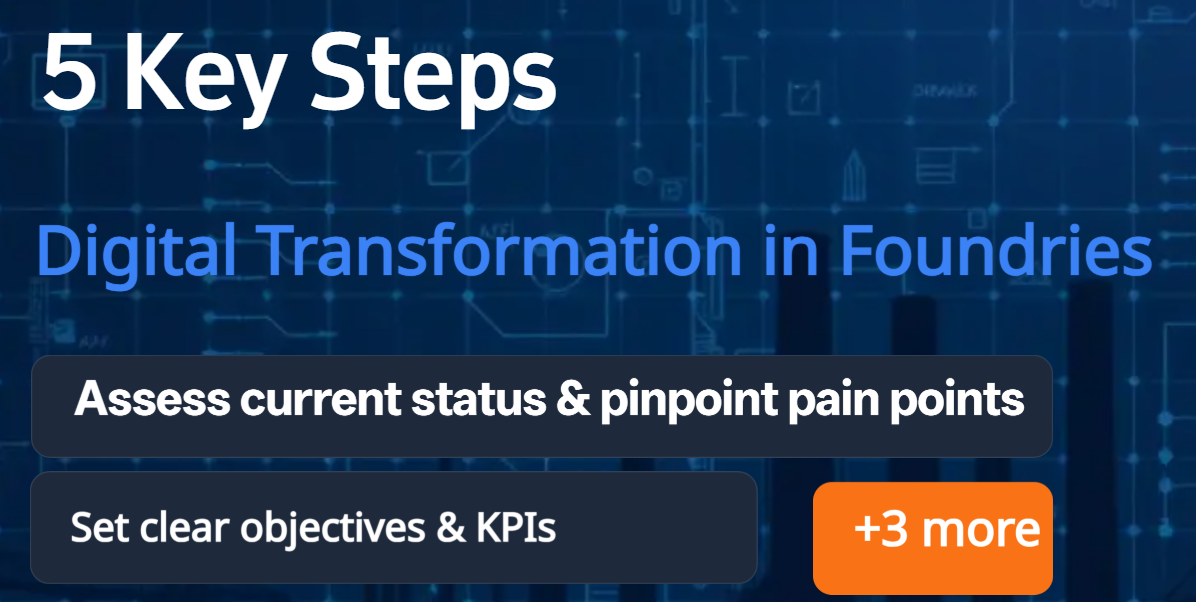
Digital transformation in foundries requires a systematic approach: (1) assess current capabilities and identify pain points, (2) define clear objectives and KPIs, (3) invest in appropriate digital technologies such as IoT sensors and data analytics platforms, (4) train workforce and manage change effectively, and (5) implement continuous monitoring and optimization. The entire process typically takes 12-24 months depending on the foundry size and complexity. Success depends on leadership commitment and employee engagement throughout the journey.
Introduction: Why Digital Transformation Matters for Foundries
The global foundry industry is undergoing a significant shift. Traditional manufacturing methods, while proven over decades, are facing increasing pressure from rising costs, stricter environmental regulations, and demanding customers who expect higher quality and faster delivery.
Digital transformation is no longer a luxury - it is becoming a necessity for survival and growth. Foundries that embrace digital technologies can achieve:
· 15-25% reduction in production costs through optimized processes
· 20-30% improvement in quality consistency
· 30-40% faster response to customer inquiries
· Significant reduction in energy consumption and waste
Step 1: Assess Current Capabilities and Identify Pain Points
Before embarking on any transformation journey, it is essential to have a clear picture of where you stand today.
Step 2: Define Clear Objectives and KPIs
Digital transformation should be driven by business objectives, not technology for technology sake. Define goals that are Specific, Measurable, Achievable, Relevant, and Time-bound.
Step 3: Invest in Appropriate Digital Technologies
Not all technologies are suitable for every foundry. Select technologies based on your specific needs and priorities.
Tiegu, as a professional casting export partner with integrated supply network, has observed successful digital transformation implementations across multiple foundry partners and can share best practices.
Step 4: Train Workforce and Manage Change Effectively
Technology is only part of the equation. The success of digital transformation depends heavily on people.
Step 5: Implement Continuous Monitoring and Optimization
Digital transformation is not a one-time project - it is an ongoing journey.
Conclusion: Start Your Digital Transformation Journey Today
Digital transformation is no longer optional for foundries that want to remain competitive. The five steps outlined in this article provide a structured approach.
FAQ
Q1: How long does digital transformation typically take for a foundry?
Digital transformation is an ongoing journey, but initial results can be seen within 6-12 months. A comprehensive transformation typically takes 18-36 months depending on the foundry size, complexity, and scope of changes.
Q2: What is the typical investment required for foundry digital transformation?
Investment varies significantly based on scope. Small foundries might invest 50,000-200,000 USD for basic IoT and data systems. Medium foundries may invest 200,000-500,000 USD. Large foundries can invest 500,000+ USD for full-scale digital transformation.
Q3: How do we measure ROI on digital transformation investments?
ROI can be measured through multiple metrics: reduction in defect rates, improved OEE, reduced energy consumption, decreased downtime, and improved on-time delivery.
Q4: What are the most common reasons digital transformation projects fail?
Common failure reasons include: lack of clear objectives, insufficient leadership support, inadequate change management, poor technology selection, unrealistic timelines, and failure to involve end-users.
Q5: Should we hire external consultants or handle transformation internally?
This depends on internal capabilities. A hybrid approach often works best: external expertise for strategy and implementation, internal team for day-to-day execution and ownership.