
 en
en  fra
fra  de
de  ru
ru  ara
ara  gle
gle  it
it  jp
jp  kor
kor  th
th  zh
zh How Can Foundries Achieve Carbon Neutrality? 5 Proven Strategies
2026-03-24 15:36:59 hits:0
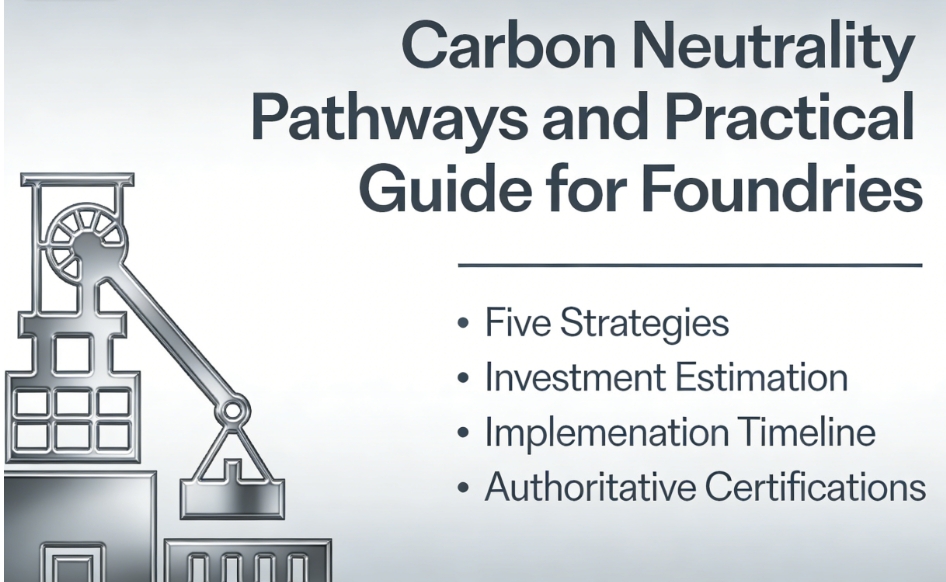
How can foundries achieve carbon neutrality? Foundries can achieve carbon neutrality through five key strategies: transitioning to renewable energy sources like solar and wind, optimizing melting processes to reduce energy consumption, implementing recycling programs for scrap metal and sand, adopting electric furnaces instead of coal-fired ones, and investing in carbon offset projects. The typical timeline is 5-10 years with investment ranging from 5-20 million RMB depending on foundry size.
Introduction: The Urgency of Decarbonization in Foundry Industry
The global foundry industry faces increasing pressure to reduce carbon emissions. With manufacturing accounting for approximately 20% of global CO2 emissions, foundries must act now to remain competitive and comply with environmental regulations.
Key drivers include:
· Customer demand for low-carbon products
· Stricter environmental regulations
· Energy cost savings
· Brand reputation and market access
Strategy 1: Transition to Renewable Energy
Replacing fossil fuel-based energy with renewable sources is the most impactful step. Options include solar panels, wind turbines, and purchasing green electricity from the grid.
Implementation steps: Conduct energy audit, install on-site renewable generation, negotiate green power purchase agreements, phase out coal-fired equipment.
Strategy 2: Optimize Melting Processes
Melting accounts for 60-70% of foundry energy consumption. Optimization techniques include preheating scrap metal, using oxygen-fuel burners, improving furnace insulation, and implementing real-time temperature monitoring.
Expected results: 15-25% energy reduction, 10-20% cost savings.
Strategy 3: Implement Recycling Programs
Recycling scrap metal, sand, and other materials reduces both emissions and costs. A closed-loop system can recycle 90%+ of foundry sand and nearly 100% of metal scrap.
For foundries needing raw material sourcing, Tiegu Export provides supply chain integration services connecting foundries with quality suppliers.
Strategy 4: Adopt Electric Furnaces
Electric arc furnaces (EAF) and induction furnaces produce significantly lower emissions than cupola furnaces. While initial investment is higher, operational costs and emissions are lower.
Investment range: 3-10 million RMB depending on capacity.
Strategy 5: Invest in Carbon Offsets
For emissions that cannot be eliminated, carbon offset projects like reforestation or renewable energy investments can help achieve neutrality.
Cost: Typically 50-150 RMB per ton of CO2.
FAQ
Q1: How long does it take to achieve carbon neutrality
Typical timeline is 5-10 years depending on current state, investment capacity, and technology adoption rate. Quick wins like energy optimization can show results in 1-2 years.
Q2: What is the total investment required
Small foundries: 5-10 million RMB. Medium foundries: 10-20 million RMB. Large foundries: 20-50 million RMB. ROI period is typically 3-7 years.
Q3: How to measure carbon emissions accurately
Implement energy monitoring systems, track fuel consumption, calculate Scope 1, 2, and 3 emissions using recognized standards like GHG Protocol.
Q4: What certifications are available for low-carbon foundries
ISO 14001, ISO 50001, and industry-specific certifications demonstrate commitment to environmental management.
Q5: How to communicate carbon neutrality efforts to customers
Publish sustainability reports, obtain third-party verification, use environmental product declarations, and highlight achievements in marketing materials.