
 en
en  fra
fra  de
de  ru
ru  ara
ara  gle
gle  it
it  jp
jp  kor
kor  th
th  zh
zh How to Source Engine Block Castings: Complete Guide for International Buyers
2026-03-27 08:05:26 hits:0
For engine block castings, buyers should prioritize suppliers with IATF 16949 certification, proven capability in gray iron GJL-250/300 or compacted graphite iron (CGI), and verified machining precision for cylinder bore tolerances. Engine block castings require strict control of porosity in water jackets, hardness consistency (180-220 HB), and dimensional accuracy for main bearing bores and head mating surfaces.
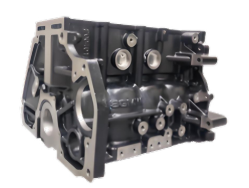
How to Source Engine Block Castings: Complete Guide for International Buyers
For engine block castings, buyers should prioritize suppliers with IATF 16949 certification, proven capability in gray iron GJL-250/300 or compacted graphite iron (CGI), and verified machining precision for cylinder bore tolerances. Engine block castings require strict control of porosity in water jackets, hardness consistency (180–220 HB), and dimensional accuracy for main bearing bores and head mating surfaces. The material choice—and how it differs from ductile iron grades—sets the floor on block reliability.
Why This Matters for Engine Performance
Engine block castings are the foundation of internal combustion engines, directly affecting power output, fuel efficiency, emissions compliance, and overall engine lifespan. A failed engine block can cause catastrophic engine failure, vehicle downtime, and warranty claims that far exceed the casting cost.
Common procurement mistakes include selecting suppliers based on unit price without verifying their metallurgical capability for thin-wall casting, overlooking core shift tolerances that affect cylinder wall thickness, and failing to specify pressure testing requirements for water jacket integrity.
The specification and supplier selection decisions made during procurement directly affect engine reliability, field failure rates, and brand reputation in automotive, marine, or industrial power applications.
Key Standards and Material Specifications
Material Grade Selection
Engine block castings typically use one of these material options depending on application requirements:
| Material | Standard | Tensile Strength | Application |
|---|---|---|---|
| Gray Iron GJL-250 | ISO 185 / ASTM A48 | 250 MPa | Passenger vehicles, light duty |
| Gray Iron GJL-300 | ISO 185 / ASTM A48 | 300 MPa | Commercial vehicles, higher load |
| Compacted Graphite Iron (CGI) | ISO 185 / ASTM A842 | 450 MPa | High-performance diesel, downsized turbo engines |
| Aluminum A356 | ASTM B108 | 240 MPa | Passenger vehicles, weight-critical applications |
Gray iron GJL-250 is more suitable than aluminum for heavy-duty applications where durability and cost efficiency are priorities. Compacted graphite iron (CGI) is more suitable than gray iron for high-performance diesel engines requiring higher strength and fatigue resistance.
Hardness and Machinability Requirements
Engine block hardness must be controlled within 180 to 220 HB range to ensure adequate wear resistance for cylinder bores, machinability for boring and honing operations, and consistent performance across production batches.
Hardness outside this range creates either premature cylinder wear (too soft) or machining difficulties and tool wear (too hard).
Dimensional Tolerances for Critical Features
These bore and bearing tolerances tighten general casting tolerances and ISO 8062 for the most load-critical surfaces. Engine block castings require tight tolerances on specific features:
Cylinder bore diameter: IT6–IT7 tolerance before honing, surface finish Ra 0.8–1.6 μm after honing
Main bearing bore: Positional tolerance 0.05 mm maximum, roundness 0.02 mm
Cylinder head mating surface: Flatness 0.1 mm maximum, surface finish Ra 3.2–6.3 μm
Core shift: 1.5 mm maximum for water jacket wall thickness consistency
Suppliers without in-house precision machining capability should be excluded from engine block projects, as outsourced machining introduces handling damage risk and dimensional inconsistency.
Manufacturing Process and Quality Control
Casting Method Selection
Engine blocks are produced using these casting methods:
Green sand molding with cold box cores is suitable for high-volume production (100,000+ units annually) with automated molding lines providing consistent dimensional accuracy for cylinder bores and main bearing positions.
Lost foam casting offers design flexibility for complex cooling passages and reduced machining allowance, but requires verification of surface quality and carbon defect control.
Shell molding provides better dimensional precision for medium-volume production or prototype runs requiring tighter tolerances.
Porosity Control and Pressure Testing
Porosity defects in water jackets are the primary cause of engine block field failures. Beyond 100% pressure testing, NDT methods such as X-ray and UT catch sub-surface shrinkage that a leak test alone misses. Acceptable quality standards include:
X-ray inspection: ASTM E192 Level 2 maximum for cylinder wall sections and main bearing areas
Pressure testing: 100% leak test at 4–6 bar for water jackets, 100% hold time 60 seconds minimum
Ultrasonic testing: Random sampling per ISO 4993 for wall thickness verification
Suppliers must demonstrate documented porosity rejection rates below 2% and provide root cause analysis procedures for defect reduction.
Metallurgical Control Requirements
Engine block metallurgy requires strict control of:
Carbon equivalent: 3.8–4.2% for gray iron to ensure proper graphite flake formation
Phosphorus content: Below 0.15% to prevent brittleness in thin sections
Chromium content: 0.2–0.5% for cylinder bore hardness control
Inoculation practice: Verified for consistent microstructure across casting sections
Microstructure verification should include graphite flake size (ASTM A247 Type A, Size 4–6) and pearlite content (minimum 90% for cylinder bore areas).
Machining Sequence and Quality Verification
Proper machining sequence ensures dimensional accuracy:
Base rail machining (establishes primary datum)
Cylinder head surface machining (secondary datum)
Main bearing bore machining (critical tolerance)
Cylinder boring (pre-hone dimension)
Cylinder honing (final dimension and surface finish)
Final inspection including CMM verification and pressure test
Quality verification should include 100% pressure testing, 100% dimensional check of cylinder bores and main bearing bores, with a first article inspection (FAI) report with full dimensional layout before production launch, and annual requalification.
Supplier Qualification Requirements
Build the shortlist with our guide on how to find reliable casting suppliers in China, then verify the supplier's production capability—engine blocks are exactly where a missing in-house lab hides behind a low quote.
Certification Requirements
IATF 16949 automotive quality management (mandatory for OEM supply)
ISO 9001 minimum for aftermarket distribution
ISO 14001 environmental management (increasingly required by EU buyers)
Material test reports with chemical composition, microstructure, and mechanical properties per heat number
PPAP Level 3 documentation for new product introduction
IMDS (International Material Data System) compliance for material declaration
Production Capability Verification
Annual capacity matches your volume requirements with 20% buffer
In-house machining capability with CNC boring mills and honing equipment
In-house laboratory for chemical analysis, microstructure evaluation, and hardness testing
CMM or equivalent dimensional inspection equipment with cylinder bore gauges
Pressure testing equipment with data recording for traceability
Traceability system linking castings to heat numbers, production dates, and test results
Track Record and References
Current supply to automotive OEM or Tier 1 engine suppliers (verify with references)
No major quality recalls or warranty claims in past 3 years
Demonstrated capability in your required material grade and displacement range
Financial stability for multi-year supply agreements
Experience with your target market emissions regulations (Euro 6, EPA, China 6)
Suppliers unable to provide verifiable engine manufacturer references should not be considered for engine block casting contracts, as the risk of metallurgical or dimensional capability gaps outweighs any initial cost advantage.
Not sure a supplier can actually hold IATF 16949 and bore-tolerance discipline? Use our guides on finding reliable Chinese foundries and verifying their production capability before you shortlist—engine blocks punish capability gaps with field failures, not just rejects. Browse our casting knowledge base →
Real-World Application Scenarios
Aftermarket Engine Rebuilder — European Market
A European engine rebuilding company needed engine block castings for passenger vehicle replacement market covering 50+ engine families. The solution specified gray iron GJL-250 per ISO 185 with hardness range 180–210 HB and semi-finished machining including cylinder boring to pre-hone dimension.
Key requirements included batch-level material certification with microstructure reports, 100% pressure testing at 5 bar, and identification casting of heat numbers on non-machined surfaces. Risk was controlled through pre-shipment inspection and retention samples from each production batch for 10 years.
Marine Engine Manufacturer — Asia Pacific
A marine engine manufacturer required engine block castings for commercial fishing vessel applications subject to continuous high-load operation and saltwater environment. The solution specified gray iron GJL-300 per ISO 185 with enhanced corrosion protection.
Additional requirements included nickel-copper alloying for saltwater resistance, pressure testing at 6 bar for enhanced safety margin, and ceramic coating on cooling passages. Production included witness inspection by classification society (ABS/DNV) for certification.
Generator Set Manufacturer — Middle East
A power generation equipment manufacturer needed engine block castings for diesel generator sets with 10-year design life requirement. The solution specified gray iron GJL-300 for stationary applications with simplified machining to reduce costs.
Production was scheduled in quarterly batches to match generator assembly cycles. Supplier maintained raw casting inventory of 500 units to ensure supply continuity. Material traceability was maintained through heat numbers cast into non-machined surfaces with full documentation packages.
Expert Tips for Risk Control
Technical Specification Checklist
Verify material grade matches application load and emissions requirements
Specify hardness range with microstructure requirements (pearlite content, graphite type)
Define porosity acceptance standards with pressure test parameters
Include dimensional tolerances for cylinder bores, main bearing bores, and head surface
Require first article inspection report with full dimensional layout before production launch
Specify core shift limits for water jacket wall thickness control
Cost Structure Reality Check
Typical cost breakdown for engine block castings (FOB China, machined):
Raw material (pig iron, scrap, alloys): 25–35% — driven by pig iron pricing and market swings
Melting and casting: 15–20%
Heat treatment (if required): 5–8%
Machining (boring, honing, milling): 30–40%
Quality control (pressure test, CMM, lab): 8–12%
Packaging and export handling: 5–7%
Supplier margin: 8–12%
Quotations significantly below this structure often indicate compromised material quality, omitted pressure testing, or reduced machining allowances that affect cylinder life.
Common Red Flags During Supplier Evaluation
Cannot explain their metallurgical control procedure for thin-wall sections
No in-house laboratory for microstructure evaluation
Reluctant to share engine manufacturer customer references
Pressure testing performed without data recording or traceability
Quality complaints resolved through price discount rather than root cause analysis
No documented procedure for non-conforming material segregation
Machining outsourced without clear quality handover procedures
Incoming Inspection Protocol
For critical applications, implement incoming verification including:
Hardness testing at cylinder bore and main bearing areas on random samples
Wall thickness verification using ultrasonic gauge on water jacket areas
Pressure test verification on 5% of batch
Visual inspection for porosity, cracks, and machining defects
Retain samples from each batch for minimum 10 years (engine lifecycle)
How Tiegu Supports Engine Block Casting Sourcing
Tiegu is a China-based casting supplier serving international buyers through a vetted network of qualified Chinese foundries. For engine block projects, that means matching your spec to foundries with verified IATF 16949 certification and a track record of supplying engine manufacturers—so you rely on demonstrated capability, not sales claims.
What this changes for your sourcing:
More accurate quotations: Quotes are grounded in actual material costs and machining requirements rather than optimistic sales projections.
Better supplier matching: Engine block projects go to foundries with proven engine-manufacturer references and in-house machining, not the lowest headline price.
Lower disruption risk: A vetted network lets us coordinate alternative production if a matched foundry hits capacity or quality drift—without compromising the spec.
Single-point coordination: Material test reports, pressure-test records, microstructure reports, and PPAP packages are consolidated before shipment, with export documentation prepared for your destination market.
We focus on suppliers whose metallurgical control and in-house machining line up with your grade and volume, and we flag the red flags (no in-house lab, no recorded pressure-test data, no verifiable references) before they become your problem.
Summary: Key Takeaways
Prioritize IATF 16949 certification and verified engine manufacturer references when selecting engine block casting suppliers
Specify material grade and microstructure requirements based on application — GJL-250 for passenger vehicles, CGI for high-performance diesel
Define pressure testing parameters with 100% leak test requirement and data recording for traceability
Verify in-house machining capability for cylinder boring and honing to ensure dimensional consistency
Implement incoming inspection protocol including hardness testing, wall thickness verification, and pressure test audit on each batch
About Tiegu Export
Tiegu is a China-based casting supplier serving international buyers through a vetted network of qualified Chinese foundries. We supply castings under a single commercial contract, managing supplier selection, technical confirmation, quality inspection, and export delivery from order to shipment.
Request an engine block casting quote and supplier shortlist →