
 en
en  fra
fra  de
de  ru
ru  ara
ara  gle
gle  it
it  jp
jp  kor
kor  th
th  zh
zh How to Source Automotive Wheel Hub Castings: Complete Guide for International Buyers
2026-03-26 07:50:22 hits:0
Quick Answer
For automotive wheel hub castings, buyers should prioritize suppliers with IATF 16949 certification, proven capability in ductile iron or gray iron GJL-250/300 grades, and verified machining precision for bearing seat tolerances. Wheel hub castings require strict control of porosity defects, hardness consistency (190-240 HB), and dimensional accuracy for ABS sensor mounting positions.
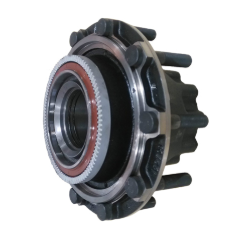
Why This Matters for Automotive Safety
Wheel hub castings are safety-critical components that directly affect vehicle handling, braking performance, and passenger safety. A failed wheel hub can cause wheel detachment, loss of vehicle control, or catastrophic bearing failure resulting in accidents and liability exposure far exceeding the component cost.
Common procurement mistakes include selecting suppliers based on unit price without verifying their automotive certification status, overlooking machining tolerance requirements for bearing seats and bolt patterns, and failing to specify porosity standards that affect structural integrity under cyclic loading.
The specification and supplier selection decisions made during procurement directly affect warranty claim rates, field failure frequency, and brand reputation in the automotive aftermarket or OEM supply chain.
Key Standards and Material Specifications
Material Grade Selection
Automotive wheel hub castings typically use one of three material options depending on application requirements:
Material | Standard | Tensile Strength | Application |
Gray Iron GJL-250 | ISO 185 / ASTM A48 | 250 MPa | Passenger vehicles, standard duty |
Gray Iron GJL-300 | ISO 185 / ASTM A48 | 300 MPa | Light commercial vehicles, higher load |
Ductile Iron GJS-500-7 | ISO 1083 / ASTM A536 | 500 MPa | Heavy duty, off-road, performance applications |
Gray iron GJL-250 is more suitable than ductile iron for standard passenger vehicle wheel hubs where cost efficiency and vibration damping are priorities. Ductile iron GJS-500-7 is more suitable than gray iron for heavy-duty applications subject to impact loading or extreme operating conditions.
Hardness and Machinability Requirements
Wheel hub hardness must be controlled within 190 to 240 HB range to ensure adequate wear resistance for bearing surfaces, machinability for bearing seat and bolt hole finishing, and consistent performance across production batches.
Hardness outside this range creates either premature wear (too soft) or machining difficulties and brittleness risk (too hard).
Dimensional Tolerances for Critical Features
Wheel hub castings require tight tolerances on specific features:
Bearing seat diameter: IT7-IT8 tolerance, surface finish Ra 1.6-3.2 μm
Wheel stud bolt circle: Positional tolerance 0.2 mm maximum
ABS sensor mounting hole: Location tolerance 0.15 mm for accurate speed signal
Mounting flange runout: 0.1 mm maximum to prevent brake judder
Suppliers without in-house CNC machining capability should be excluded from wheel hub projects, as outsourced machining introduces handling damage risk and dimensional inconsistency.
Manufacturing Process and Quality Control
Casting Method Selection
Automotive wheel hubs are produced using green sand molding for high-volume production (50,000+ units annually), shell molding for better dimensional precision and medium-volume production, or lost foam casting for complex hub designs with integrated features.
Porosity Control and Testing
Porosity defects are the primary cause of wheel hub field failures. Acceptable quality standards include X-ray inspection ASTM E192 Level 2 maximum for critical sections, 100% leak test at 3 bar for hubs with integrated ABS tone rings, and random ultrasonic testing per ISO 4993 for internal soundness verification.
Suppliers must demonstrate documented porosity rejection rates below 3% and provide root cause analysis procedures for defect reduction.
Heat Treatment Requirements
Stress relief heat treatment is required for all wheel hub castings to reduce residual stresses from solidification, stabilize dimensions before machining, and prevent distortion during service. Typical heat treatment cycle: 550-600°C for 2-4 hours followed by controlled furnace cooling.
Machining Sequence and Quality Verification
Proper machining sequence ensures dimensional accuracy starting with face milling of mounting flange to establish datum, bore machining of bearing seat for critical tolerance, drilling and tapping of stud holes or bolt holes, ABS sensor hole machining if applicable, and final inspection including CMM verification.
Supplier Qualification Requirements
Certification Requirements
IATF 16949 automotive quality management (mandatory for OEM supply)
ISO 9001 minimum for aftermarket distribution
ISO 14001 environmental management (increasingly required by EU buyers)
Material test reports with chemical composition and mechanical properties per heat number
PPAP Level 3 documentation for new product introduction
Production Capability Verification
Annual capacity matches your volume requirements with 20% buffer
In-house machining capability with CNC equipment for bearing seats
In-house laboratory for chemical analysis and hardness testing
CMM or equivalent dimensional inspection equipment
Traceability system linking castings to heat numbers and production dates
Track Record and References
Current supply to automotive OEM or Tier 1 suppliers (verify with references)
No major quality recalls or warranty claims in past 3 years
Demonstrated capability in your required material grade and volume
Financial stability for multi-year supply agreements
Suppliers unable to provide verifiable automotive customer references should not be considered for wheel hub casting contracts, as the risk of quality system gaps outweighs any initial cost advantage.
Real-World Application Scenarios
Aftermarket Distributor — European Market
A European automotive parts distributor needed wheel hub castings for passenger vehicle replacement market covering 200+ SKUs. The solution specified gray iron GJL-250 per ISO 185 with hardness range 200-230 HB and standard machining including bearing seat and stud holes.
Key requirements included batch-level material certification, 100% dimensional inspection of bearing seats, and packaging with individual protection to prevent machining damage during ocean freight. Risk was controlled through pre-shipment inspection and retention samples from each production batch.
Off-Road Vehicle Manufacturer — North America
A US-based ATV/UTV manufacturer required wheel hub castings for heavy-duty off-road applications subject to extreme impact loading. The solution specified ductile iron GJS-500-7 per ISO 1083 with enhanced quality controls including X-ray inspection on 10% of production, salt spray testing 500 hours minimum for coating performance, and dynamic load testing per SAE J267.
Commercial Vehicle Fleet Operator — Middle East
A regional transport company needed wheel hub castings for bus fleet maintenance program with 5-year supply agreement. The solution specified gray iron GJL-300 for higher load capacity with simplified SKU range to reduce tooling costs. Production was scheduled in quarterly batches to match maintenance cycles with safety stock of 2000 units at destination warehouse.
Expert Tips for Risk Control
Technical Specification Checklist
Verify material grade matches application load requirements
Specify hardness range with rejection criteria for out-of-spec material
Define porosity acceptance standards with reference samples
Include dimensional tolerances for all machined features
Require first article inspection report before production launch
Cost Structure Reality Check
Typical cost breakdown for automotive wheel hub castings (FOB China, machined):
Raw material (pig iron, scrap, alloys): 30-40%
Melting and casting: 15-20%
Heat treatment: 5-8%
Machining (bearing seat, bolt holes): 25-35%
Quality control and inspection: 5-8%
Packaging and export handling: 5-7%
Supplier margin: 8-12%
Quotations significantly below this structure often indicate compromised material quality, omitted heat treatment, or reduced machining allowances.
Common Red Flags During Supplier Evaluation
Cannot explain their porosity control procedure or rejection rate
No in-house laboratory for chemical analysis and hardness testing
Reluctant to share automotive customer references
Quality complaints resolved through price discount rather than root cause analysis
No documented procedure for non-conforming material segregation
Machining outsourced without clear quality handover procedures
How Tiegu Supports Wheel Hub Casting Sourcing
Tiegu operates as a professional casting export partner with integrated supply network, maintaining strategic partnership with a leading Chinese ductile iron pipe manufacturer and extensive foundry network connections.
Because we supply raw materials (pig iron, scrap steel, key alloys) to over 3000 foundries across China, this allows us to verify real production conditions before matching your wheel hub project. We see actual material consumption, melting practices, and quality consistency data — not sales brochures or self-reported claims.
This means that buyers can avoid common sourcing failures such as suppliers who overpromise on automotive certification, underdeliver on porosity control, or cannot maintain dimensional consistency across production batches.
For automotive wheel hub casting procurement specifically, this translates to several concrete benefits:
More accurate quotations: Because we understand raw material costs at the source, this allows us to provide budget estimates grounded in actual material prices and machining requirements rather than optimistic sales projections.
Better supplier matching: Wheel hub projects are matched to foundries with verified IATF 16949 certification and proven automotive supply track record. This means that buyers can rely on demonstrated capability rather than marketing claims.
Lower disruption risk: Because we monitor production conditions continuously through our material supply relationship, this allows us to identify potential capacity constraints or quality drift before they affect your shipment. If issues arise, we can coordinate alternative production within our network without compromising specification compliance.
Single-point coordination: All documentation including material test reports, dimensional inspection records, and PPAP packages are consolidated before shipment. Export documentation complies with destination country requirements including customs valuation and country-of-origin certification.
Summary: Key Takeaways
Prioritize IATF 16949 certification and verified automotive customer references when selecting wheel hub casting suppliers
Specify material grade and hardness range based on application load — GJL-250 for passenger vehicles, GJS-500-7 for heavy-duty applications
Define porosity acceptance standards with X-ray inspection requirements for critical sections (bearing seat, stud bosses)
Verify in-house machining capability for bearing seats and bolt patterns to ensure dimensional consistency
Implement incoming inspection protocol including hardness testing and dimensional verification on each batch