
 en
en  fra
fra  de
de  ru
ru  ara
ara  gle
gle  it
it  jp
jp  kor
kor  th
th  zh
zh How to Select the Right Material for Custom Castings for Export?
2026-03-03 15:47:57 hits:0
In international casting projects, material selection is not only a technical issue — it directly affects cost structure, production stability, machining performance, and long-term product reliability.
For overseas buyers, the real challenge is often not “what materials exist,” but:
Which material fits the functional requirement?
How do international standards align?
What are the hidden sourcing risks?
How can buyers balance performance and cost?
Selecting the right casting material requires a structured decision approach rather than simple grade comparison.
1️⃣ Start with Functional Requirements — Not Material Names
Material selection should begin with application conditions:
Static load or dynamic load?
Impact resistance required?
Operating temperature range?
Corrosive environment?
Machining tolerance level?
Surface treatment or coating requirements?
For example:
Machinery bases → vibration damping priority → Gray iron is often suitable
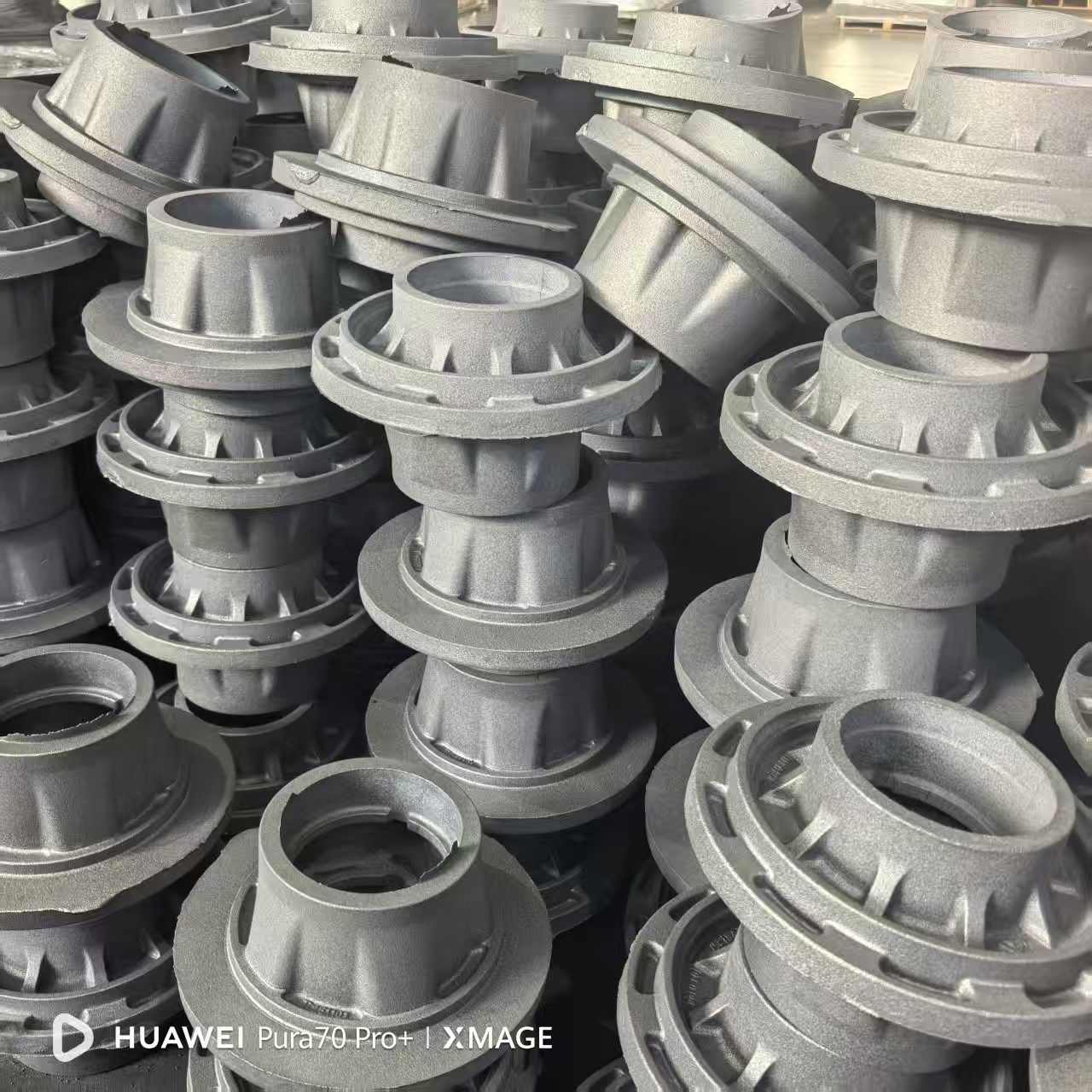
Automotive structural components → higher tensile strength → Ductile iron preferred
Heavy industrial equipment → high load & impact → Steel castings may be required
Material must follow function — not the other way around.
2️⃣ Understand Common Casting Material Options
Gray Iron Castings
Characteristics:
Good vibration damping
Stable machining performance
Cost-efficient
Moderate strength
Typical applications:
Equipment bases
Housings
Covers
Structural supports
Suitable for high-volume, cost-controlled projects.
Ductile Iron Castings
Characteristics:
Higher tensile strength
Better elongation
Good balance of strength and cost
Can replace some forged parts
Widely used in:
Automotive components
Pipeline systems
Heavy equipment parts
Infrastructure applications
Material grades must align with applicable standards such as ASTM, EN, or DIN.
Steel Castings
Characteristics:
High strength
Strong impact resistance
Suitable for high-load applications
Considerations:
Higher cost
Greater shrinkage control required
More complex casting process
Typically used for:
Mining equipment
Heavy engineering components
Load-bearing structures
3️⃣ Common Risks in Export Casting Material Selection
Risk 1: International Standard Mismatch
A material grade in one system may not be fully equivalent in another.
Examples:
ASTM vs EN grade differences
Strength values vs elongation requirements
Chemical composition tolerance variations
Without standard alignment before production, inspection failure risk increases.
Risk 2: Material–Process Misalignment
Some materials require specific casting processes or heat treatment capability.
If supplier capability does not match:
Defect rate increases
Mechanical properties fluctuate
Machining issues arise
Material selection must consider foundry process capability.
Risk 3: Over-Specification
Choosing unnecessarily high-grade material may:
Increase cost
Extend production lead time
Complicate machining
Reduce supplier options
Optimal material meets functional need — not maximum strength by default.
4️⃣ A Structured Decision Path for Buyers
International buyers can follow this five-step approach:
Step 1 – Confirm Functional Requirements
Define load, environment, tolerance, and performance expectations.
Step 2 – Align Material Standards
Cross-check ASTM, EN, DIN or other applicable systems.
Step 3 – Evaluate Manufacturing Compatibility
Confirm casting method, heat treatment, and machining feasibility.
Step 4 – Confirm Testing & Certification Scope
Material certificates, mechanical testing, third-party inspection if required.
Step 5 – Match Supplier Capability
Ensure production capacity and export readiness align with project scale.
This structured method significantly reduces sourcing uncertainty.
5️⃣ Why Supplier Matching Matters in Material Selection
China’s casting industry is highly diversified. Not every foundry specializes in every material category.
Instead of operating as a single foundry,
Tiegu works with a network of specialized casting manufacturers to align:
Material grade capability
Production scale
Quality stability
Machining support
Export documentation readiness
Through integrated supply coordination, material decisions are linked directly with manufacturing feasibility and delivery planning.
This reduces sourcing risks for international buyers.
6️⃣ FAQ – Material Selection for Export Castings
Q1: Is higher material grade always better?
No. Material should meet functional needs. Over-specification increases cost without improving practical performance.
Q2: How do buyers verify international grade equivalency?
Before production, confirm mechanical properties, chemical composition ranges, and applicable standard references in writing.
Q3: Can ductile iron replace steel casting?
In some medium-load applications, yes. However, impact resistance and structural requirements must be evaluated carefully.
Q4: What documents should be required?
Commonly:
Material certificate
Mechanical testing report
Dimensional inspection record
Third-party inspection report (if required)
Casting Material Selection Checklist for Export Buyers
Before confirming material for your export casting project, ensure the following points are clearly aligned:
✔ Functional performance requirements defined
✔ Applicable international standards confirmed (ASTM / EN / DIN)
✔ Mechanical property targets documented
✔ Casting process capability evaluated
✔ Heat treatment requirements clarified
✔ Machining tolerances reviewed
✔ Testing and inspection scope agreed
✔ Material certification format confirmed
✔ Supplier export readiness verified
A structured checklist reduces specification misunderstandings and improves long-term supply stability.
Conclusion
Selecting the right material for custom export castings requires balancing:
Functional performance
International standards
Manufacturing capability
Cost control
Delivery stability
A structured material confirmation and supplier matching process significantly reduces procurement risk.
Tiegu supports international buyers through coordinated casting supply solutions — aligning material selection with production capability and export execution planning.
If you have technical drawings or material questions for your next project, structured confirmation at the early stage can improve long-term project stability.