 en
en  fra
fra  de
de  ru
ru  ara
ara  gle
gle  it
it  jp
jp  kor
kor  th
th  zh
zh Trading Company vs Foundry vs Casting Supplier: Which Is Right for Sourcing Castings from China?
2026-07-16 16:03:54 hits:0
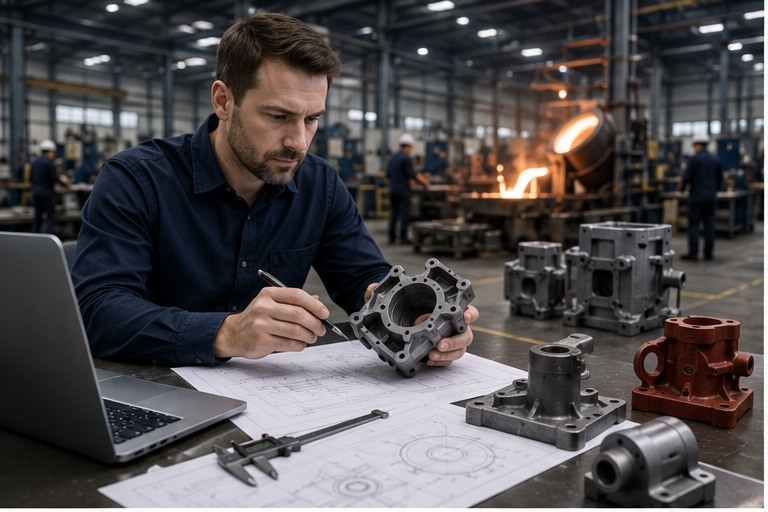
Most buyers assume there are two options: go direct to a Chinese foundry, or use a trading company. There's actually a third — the casting supplier. It's different from both, and for a lot of international buyers, it's the one that makes the most sense.
This guide breaks down all three honestly. No model is universally better. But one is probably better for your situation.
Tiegu is a China-based casting supplier serving international buyers through a vetted network of qualified Chinese foundries. We supply castings under a single commercial contract, managing supplier selection, technical confirmation, quality inspection, and export delivery from order to shipment.
The Two Models Most Buyers Know
Going Direct to a Foundry
You deal with the factory. No middlemen, no markup. You get the factory-gate price and can talk directly to the engineers.
That's the upside. Here's what most articles don't tell you:
Most Chinese foundries specialize in one process and one material. If you need ductile iron castings this year and stainless steel investment castings next year, you're starting a new supplier qualification from scratch.
Quality coordination is entirely on you. When something goes wrong — and it will at some point — you're the one managing the back-and-forth across time zones and language barriers.
Without local presence, auditing a Chinese foundry properly is harder than it sounds.
Trading Companies
They source from foundries and resell to you. Broader product range, easier English communication, lower barrier to entry. The trade-off is a 15–30% markup and, more importantly, limited accountability when things go wrong.
When a quality issue appears, the trading company contacts the foundry, waits for a response, and relays it back to you. Nobody owns the problem. That relay chain gets expensive fast when you're trying to resolve a production defect before a customer deadline.
| Direct Foundry | Trading Company | |
|---|---|---|
| Price | Factory-gate | Factory + margin |
| Technical access | Direct | Through trading company |
| Process coverage | One process/material | Broader but shallow |
| Quality responsibility | Buyer manages | Relay-based |
| Commercial accountability | Unclear | Limited |
The Costs Nobody Puts in the Quotation
Direct foundry sourcing looks cheaper on paper. It isn't always cheaper in practice.
Qualifying a new foundry takes real resources. Either you visit, you hire a third-party auditor, or you spend significant time verifying documents remotely. And you repeat this process every time you add a new supplier.
Quality problems don't resolve themselves. A dimensional non-conformance on a production batch means engineering back-and-forth, potential rework, and someone needs to manage that process. With a direct foundry, that someone is you.
One foundry, one process. If your sourcing needs spread across multiple casting processes or materials, you end up managing multiple foundry relationships — each with its own qualification, quality system, and export documentation.
None of these costs appear on the quotation. But they're real.
What a Casting Supplier Actually Is
A casting supplier is not a trading company. That distinction is worth understanding before you decide.
A trading company is essentially a broker. They connect you to a factory, take a margin, and relay communication. When problems arise, their accountability is limited — they'll point to the foundry, and the foundry will point back at them.
A casting supplier is the contracting seller. They sign the commercial agreement with you. They're responsible for delivery, quality, and documentation. When something goes wrong, there's one party accountable — not two parties blaming each other.
| Trading Company | Casting Supplier | |
|---|---|---|
| Contract signed with | Trading company | Casting supplier |
| Who's responsible for production | The foundry | Casting supplier |
| Process coverage | Broad, unspecialized | Matched to your spec |
| Quality coordination | Relay-based | Direct management |
| Commercial accountability | Limited | Full |
The price difference between a casting supplier and a direct foundry is usually smaller than buyers expect. The coordination, qualification, and inspection that a casting supplier handles in-house would cost a direct buyer roughly the same — it's just invisible because you're paying for it in time and internal resources rather than in the unit price.
Curious what this looks like in practice? Talk to Tiegu — we'll walk through the model and give you a quotation you can compare directly.
Which Model Fits Your Situation?
| Your Situation | Best Fit |
|---|---|
| Large stable volume, single process, single material | Direct Foundry |
| You have an in-country team that can audit and manage suppliers | Direct Foundry |
| Multiple part types or mixed materials | Casting Supplier |
| No local resources in China | Casting Supplier |
| First time sourcing from China | Casting Supplier |
| Very small one-off order, no repeat | Trading Company |
| Sourcing many unrelated product categories | Trading Company |
Red Flags Worth Knowing
Direct Foundry
Can't handle your specific process or material grade — but quotes anyway
No experience with international export documentation
Hesitates when you mention third-party inspection
Trading Company
Can't explain who actually makes your parts or how
Won't arrange a factory visit
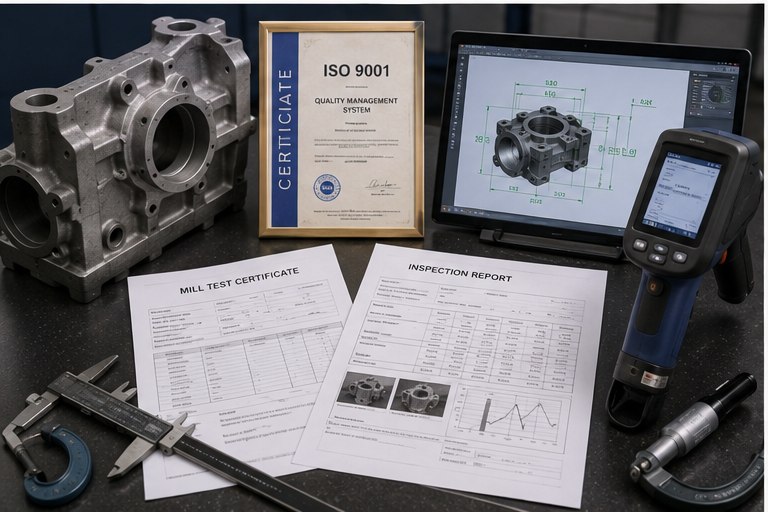
Sends generic quality documents with no heat number or batch reference
Casting Supplier
Can't name a qualified foundry for your process and material
No batch-specific MTCs available from previous orders
Won't accept quality accountability language in the contract
Frequently Asked Questions
Is a casting supplier the same as a trading company?
No, and the difference matters. A trading company relays information between you and a factory — they're a broker. A casting supplier signs the contract with you and is accountable for the outcome. If parts arrive non-conforming, you don't need to figure out who to call. The casting supplier is responsible.
Does using a casting supplier cost more than going direct?
Less than you'd think. The 15–30% markup people associate with trading companies doesn't really apply here. A casting supplier's value — pre-qualified foundries, coordinated inspection, integrated documentation — replaces costs a direct buyer absorbs themselves. The real question is total cost of sourcing, not unit price.
Who's responsible when quality problems happen with a trading company?
In practice, nobody. The trading company points to the foundry. The foundry points back. You're caught in the middle trying to resolve a production issue while two parties argue over responsibility. With a casting supplier, the contract makes the answer clear before anything goes wrong.
How do I tell if a Chinese supplier is a factory or a trading company?
Ask for their business license. Factories list manufacturing as their primary registered activity. Trading companies list import-export or trading. You can also just ask to visit — a real foundry has no reason to say no. And if they do arrange a visit but it's to "a partner factory," that tells you what you need to know.
When does it make sense to switch from a trading company to a casting supplier?
Usually when the relay communication starts costing you more than the margin saves you. If resolving a quality issue takes three rounds of back-and-forth and two weeks, the model isn't working. A casting supplier relationship makes more sense as your volume grows and documentation requirements get stricter.
Tiegu is a China-based casting supplier serving international buyers through a vetted network of qualified Chinese foundries. We supply castings under a single commercial contract, managing supplier selection, technical confirmation, quality inspection, and export delivery from order to shipment.
Not Sure Which Model Fits?
Tell us your casting process, material, annual volume, and quality requirements. We'll explain how a casting supplier relationship works for your situation — and give you a quotation you can compare against a direct foundry.