
 en
en  fra
fra  de
de  ru
ru  ara
ara  gle
gle  it
it  jp
jp  kor
kor  th
th  zh
zh Pipe Bedding and Backfill for Ductile Iron Pipe: Installation Guide
2026-05-13 17:34:48 hits:0
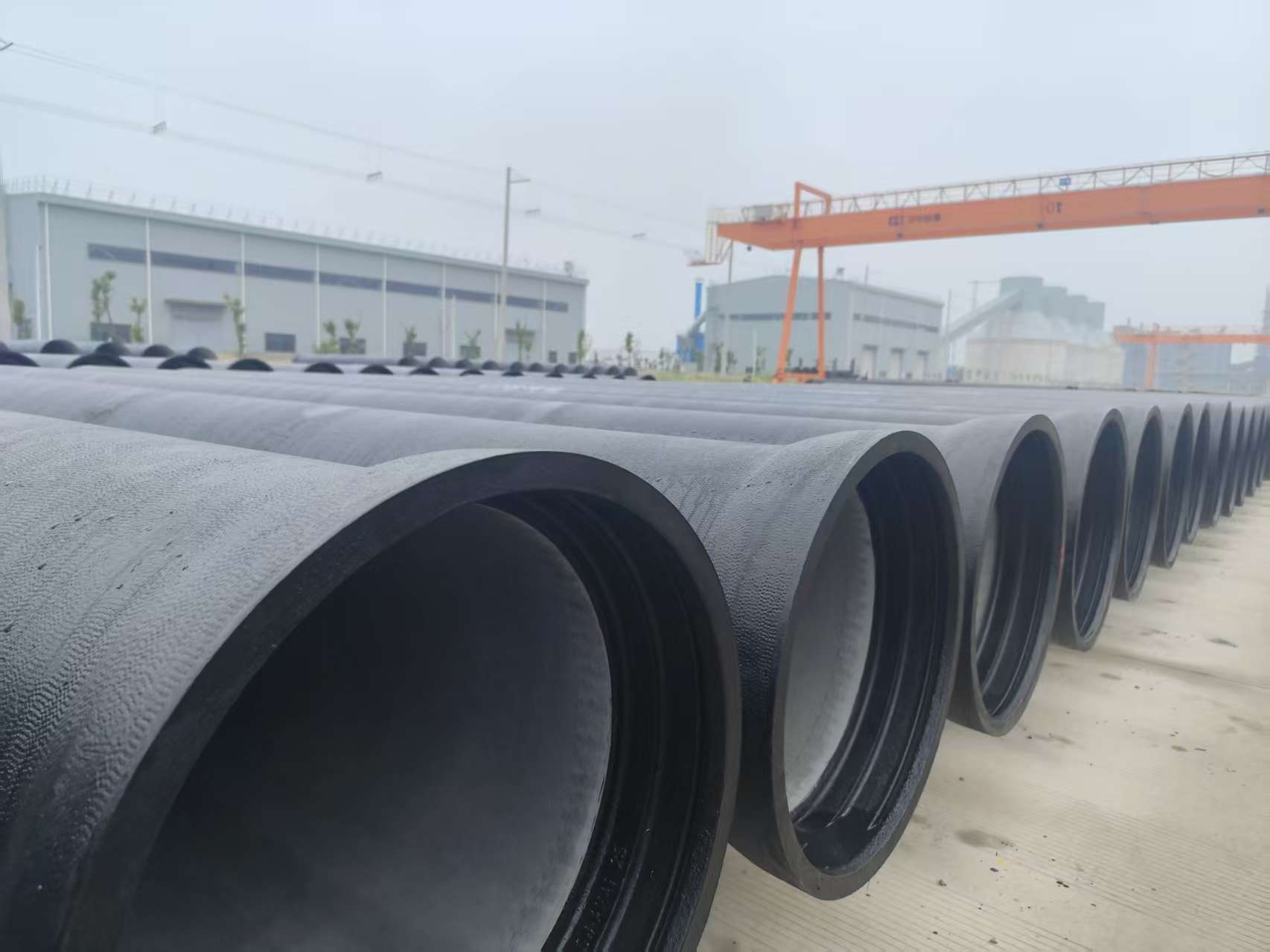
Proper pipe bedding and backfill installation is critical for ductile iron pipe performance and longevity. The bedding system supports pipe weight, distributes loads, prevents settlement, and protects the pipe from damage during backfilling. Incorrect bedding or compaction can cause pipe deflection, joint leaks, surface settlement, and premature failure. This comprehensive guide covers bedding types, soil selection, compaction requirements, haunching procedures, and quality control measures.
Quick Summary: Proper bedding prevents 90% of installation-related pipe failures. Use Class B bedding (granular material) for most applications. Compact haunching to 90% Proctor density. Place backfill in 200mm lifts. Avoid large rocks near pipe.
Bedding System Components
Bedding Zones
| Zone | Location | Function | Material |
|---|---|---|---|
| Foundation | Below pipe bedding | Supports entire system | Native soil (compacted) |
| Bedding | Directly below pipe | Supports pipe barrel | Granular material (Class B) |
| Haunching | Sides of pipe (bottom quadrant) | Provides lateral support | Granular material (compacted) |
| Initial Backfill | Above pipe to 300mm | Protects pipe from damage | Select material (no rocks) |
| Final Backfill | Remaining trench | Restores surface | Native soil (compacted) |
Bedding Classes (per ISO 10803)
| Class | Description | Application | Relative Cost |
|---|---|---|---|
| Class I | Flat-bottom trench, native soil | Small DN, shallow bury, stable soil | Lowest |
| Class II | Shaped bedding (hand-formed) | DN100-300, normal conditions | Low |
| Class B | Granular bedding (100-150mm) | Most common, DN80-2000 | Moderate |
| Class C | Concrete cradle | High load, soft soil, shallow cover | High |
| Class D | Concrete arch | Extreme load, very soft soil | Highest |
Recommendation: Class B bedding (100-150mm granular material) is suitable for 90% of ductile iron pipe installations. It provides uniform support, accommodates minor trench irregularities, and is cost-effective.
Soil Selection and Classification
Bedding Material Requirements
| Property | Requirement | Test Method |
|---|---|---|
| Particle Size | Max 20mm (below pipe), max 50mm (haunching) | Sieve analysis |
| Fines Content | Max 12% passing 0.075mm sieve | ASTM D422 |
| Plasticity Index | Non-plastic (PI < 6) | ASTM D4318 |
| Organic Content | None acceptable | Visual inspection |
| Compaction | 90% Standard Proctor (haunching) | ASTM D698 |
Acceptable Bedding Materials
| Material Type | Suitability | Notes |
|---|---|---|
| Crushed stone (5-20mm) | Excellent | Best choice, angular particles lock together |
| Gravel (5-20mm) | Good | Rounded particles, may shift under load |
| Sandy gravel | Good | Sand fills voids, improves compaction |
| Coarse sand | Fair | Requires careful compaction, may wash out |
| Native soil (granular) | Fair | Only if meets specifications |
| Clay/silt | Unacceptable | Poor drainage, settlement risk |
Materials to Avoid
Prohibited Materials in Pipe Zone:
❌ Clay or silty clay (poor drainage, settlement)
❌ Organic soil (decomposes, settles)
❌ Construction debris (sharp objects, variable compaction)
❌ Large rocks (>50mm in haunching, >100mm above pipe)
❌ Frozen soil (thaws and settles)
❌ Expansive soil (swells when wet, shrinks when dry)
Installation Procedures
Trench Excavation
| Parameter | Requirement |
|---|---|
| Trench Width | OD + 300mm minimum (each side) |
| Trench Depth | Design grade + bedding thickness |
| Bottom Grade | ±10mm tolerance |
| Side Slopes | Per soil type (typically 1:1 to 1:1.5) |
| Shoring | Required for depth >1.5m or unstable soil |
Step 1: Excavate to Subgrade
Excavate trench to 100-150mm below final grade
Verify trench width (OD + 300mm minimum each side)
Check for rocks, debris, or soft spots
Compact subgrade if disturbed
Step 2: Place Bedding Material
Spread granular bedding material (100-150mm thick)
Grade to final elevation (±5mm tolerance)
Compact lightly (do not over-compact)
Verify grade with laser or string line
Step 3: Lay Pipe
Lower pipe carefully (avoid dropping)
Center pipe in trench
Align grade and line
Assemble joints per manufacturer instructions
Step 4: Haunching (Critical Step)
Place granular material under pipe haunches (both sides)
Compact in 50mm lifts with hand tamper or mechanical compactor
Work both sides simultaneously (balance pressure)
Compact to 90% Standard Proctor density
Continue to pipe springline (mid-height)
Step 5: Initial Backfill
Place select material above pipe to 300mm cover
No rocks >50mm in this zone
Compact in 150mm lifts
Avoid direct compaction on pipe crown
Step 6: Final Backfill
Place native soil in 200-300mm lifts
Compact each lift to required density
Restore surface (pavement, grass, etc.)
Allow for settlement (overfill by 50-100mm)
Compaction Requirements
Compaction Density by Zone
| Zone | Required Density | Compaction Method |
|---|---|---|
| Foundation | 85% Standard Proctor | Plate compactor or roller |
| Bedding | 85% Standard Proctor | Light compaction (do not over-compact) |
| Haunching | 90% Standard Proctor | Hand tamper or mechanical compactor |
| Initial Backfill | 85% Standard Proctor | Plate compactor (careful on pipe) |
| Final Backfill | 90-95% Standard Proctor | Roller or plate compactor |
| Pavement Subgrade | 95% Standard Proctor | Heavy roller |
Compaction Equipment Selection
| Equipment | Application | Lift Thickness | Notes |
|---|---|---|---|
| Hand tamper | Haunching (DN80-300) | 50mm | Labor-intensive, good control |
| Vibratory plate | Haunching (DN350+), backfill | 100-150mm | Faster, consistent results |
| Jumping jack | Trench backfill | 150-200mm | Good for cohesive soils |
| Walk-behind roller | Wide trench backfill | 200-300mm | High production |
| Excavator-mounted compactor | Deep trench backfill | 300mm | Reaches deep areas |
Warning: Never use heavy compaction equipment directly above pipe. Maintain minimum 300mm cover before using rollers >1 ton. Direct compaction on pipe can cause damage or deflection.
Settlement Prevention
Causes of Settlement
| Cause | Prevention |
|---|---|
| Inadequate compaction | Compact each lift, verify density |
| Organic material in trench | Remove all organics, use select fill |
| Water infiltration | Proper drainage, compact at optimal moisture |
| Large voids in backfill | Use well-graded material, compact thoroughly |
| Frozen backfill | Do not backfill with frozen material |
| Expansive soil | Replace with non-expansive material |
Settlement Allowance
| Backfill Height | Settlement Allowance | Notes |
|---|---|---|
| <1m | 20-30mm | Minimal settlement expected |
| 1-2m | 30-50mm | Moderate settlement |
| 2-3m | 50-80mm | Significant settlement |
| >3m | 80-150mm | Engineered fill required |
Quality Control Testing
Field Density Testing
| Test Method | Application | Frequency |
|---|---|---|
| Nuclear density gauge | Granular soils | Every 50m or 3 lifts |
| Sand cone method | All soils | Every 50m or 3 lifts |
| Dynamic cone penetrometer | Quick check | Every 20m |
| Plate load test | Subgrade verification | Every 100m |
Acceptance Criteria
| Zone | Minimum Density | Tolerance |
|---|---|---|
| Haunching | 90% Standard Proctor | -2% (88% minimum) |
| Initial Backfill | 85% Standard Proctor | -3% (82% minimum) |
| Final Backfill | 90% Standard Proctor | -2% (88% minimum) |
| Pavement Subgrade | 95% Standard Proctor | -1% (94% minimum) |
Supply Chain Perspective
Bedding Material Quality and Availability
Bedding material quality varies by region. Some areas have abundant crushed stone; others rely on river gravel or manufactured sand. Consistency is key - material should meet gradation and plasticity requirements. Tiegu integrates production capacity across qualified Chinese foundries, delivering compliant and high-quality casting products to buyers worldwide while coordinating with local suppliers to ensure bedding materials meet project specifications and are available when needed.
This prevents installation delays from material shortages or substandard bedding causing pipe damage.
Submit your project location and specifications to confirm local material availability and quality standards.
Installation Quality Checklist
☐ Trench excavated (correct width, depth, grade)
☐ Subgrade compacted (85% Proctor, no soft spots)
☐ Bedding placed (100-150mm granular material)
☐ Haunched properly (90% Proctor, both sides balanced)
☐ Initial backfill (300mm cover, no large rocks)
☐ Final backfill (compacted in lifts, settlement allowance)
☐ Density tested (field tests meet requirements)
☐ Surface restored (pavement, grass, or as specified)
Conclusion
Proper pipe bedding and backfill installation prevents settlement, protects pipe from damage, and ensures long-term performance. Class B bedding with granular material is suitable for most applications. Haunching compaction (90% Proctor) is the most critical step.
Key points:
Bedding: 100-150mm granular material (Class B)
Haunching: Compact to 90% Proctor, work both sides simultaneously
Backfill: Place in 200mm lifts, compact each layer
Rock size: Max 50mm in haunching, max 100mm above pipe
Testing: Verify density with field tests (nuclear gauge or sand cone)
Investing in proper bedding and compaction prevents costly repairs and surface settlement. For critical installations, consider third-party inspection during backfilling.