
 en
en  fra
fra  de
de  ru
ru  ara
ara  gle
gle  it
it  jp
jp  kor
kor  th
th  zh
zh HPDC vs LPDC Wheels: Casting Process Comparison for Commercial Applications
2026-05-03 06:35:04 hits:0
HPDC (High Pressure Die Casting) uses 10-100 MPa injection pressure, fast cycle (30-90s), thin walls (2-4mm), but has porosity — cannot be heat treated or used for high-load applications. LPDC (Low Pressure Die Casting) uses 0.1-0.5 MPa pressure, slower cycle (3-8 min), thicker walls (4-8mm), dense structure — can be T6 heat treated, suitable for wheels, brake components, high-load parts. For commercial vehicle wheels, LPDC is the industry standard.
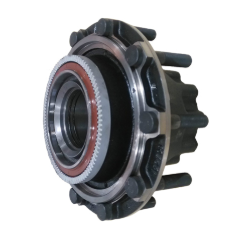
High Pressure vs Low Pressure Die Casting Wheels: Process Differences
What is Die Casting?
Die casting forces molten metal into a reusable steel mold (die). Two main methods:
HPDC — High pressure, fast injection, thin walls
LPDC — Low pressure, slow filling, thick walls
Both use aluminum alloys (A356, A380, ADC12) for wheel applications.
HPDC Process
High Pressure Die Casting injects molten aluminum at 10-100 MPa (1,500-15,000 psi) into the mold cavity.
| Parameter | HPDC |
|---|---|
| Injection pressure | 10-100 MPa |
| Injection speed | 10-50 m/s |
| Filling time | 0.01-0.1 seconds |
| Cycle time | 30-90 seconds |
| Wall thickness | 2-4 mm |
| Min wall | 0.5 mm |
| Tolerance | ±0.1 mm |
| Surface finish | Ra 0.8-3.2 μm |
Process steps:
Melt aluminum alloy (660-720°C)
Lubricate die surface
Close die
Inject molten metal at high speed
Apply intensification pressure (50-140 MPa)
Cool and solidify (10-30 seconds)
Open die and eject casting
Trim flash and gates
LPDC Process
Low Pressure Die Casting uses 0.1-0.5 MPa (15-75 psi) air pressure to push molten aluminum up a riser tube into the mold cavity.
| Parameter | LPDC |
|---|---|
| Filling pressure | 0.1-0.5 MPa |
| Filling speed | 0.1-1.0 m/s |
| Filling time | 5-30 seconds |
| Cycle time | 3-8 minutes |
| Wall thickness | 4-8 mm |
| Min wall | 3 mm |
| Tolerance | ±0.3 mm |
| Surface finish | Ra 3.2-6.3 μm |
Process steps:
Melt aluminum alloy (680-740°C)
Preheat die (180-250°C)
Apply coating to die surface
Close die and clamp
Lower riser tube into molten metal
Apply low pressure to push metal up tube
Metal fills cavity from bottom (laminar flow)
Maintain pressure during solidification
Release pressure, excess metal returns to furnace
Open die and eject casting
Remove riser and feeders

LPDC: Low pressure pushes metal up from below, ensuring laminar flow and minimal turbulence
High Pressure vs Low Pressure Die Casting Wheels: Direct Comparison
Direct Comparison
| Characteristic | HPDC | LPDC |
|---|---|---|
| Pressure | 10-100 MPa | 0.1-0.5 MPa |
| Filling speed | 10-50 m/s (turbulent) | 0.1-1.0 m/s (laminar) |
| Cycle time | 30-90 seconds | 3-8 minutes |
| Production rate | High (400-1200 parts/day) | Medium (50-200 parts/day) |
| Wall thickness | 2-4 mm (thin) | 4-8 mm (thick) |
| Part weight | 10g-5 kg | 1-50 kg |
| Porosity | High (trapped air) | Low (minimal air) |
| Heat treatable | No (blows up) | Yes (T6 possible) |
| Mechanical properties | Moderate | High |
| Surface finish | Better (Ra 0.8-3.2) | Good (Ra 3.2-6.3) |
| Dimensional accuracy | ±0.1 mm | ±0.3 mm |
| Die cost | High (complex machine) | Medium (simpler) |
| Yield rate | 60-70% | 70-85% |
| Alloy options | ADC12, A380, A360 | A356, A357, A319 |
Porosity Comparison
HPDC porosity:
High-speed injection traps air in molten metal
Turbulent filling creates vortex and air entrapment
Micro-porosity: 2-5% volume
Cannot be heat treated (gas expands, part explodes)
Cannot be welded (porosity causes leaks)
Cannot be X-ray inspected for critical applications
LPDC porosity:
Low-speed laminar filling minimizes air entrapment
Metal flows up from bottom, air escapes through vents
Micro-porosity: < 1% volume
Can be T6 heat treated
Can be welded
Passes X-ray inspection (ASTM E505 Level 2)
💡 Critical Point: HPDC wheels cannot be heat treated because trapped gas expands during heating, causing surface blistering or part explosion. LPDC wheels have minimal porosity, making T6 heat treatment possible for maximum strength.
Mechanical Properties Comparison
A356 Aluminum Alloy Properties
| Property | HPDC (As-cast) | LPDC (T6) |
|---|---|---|
| Tensile strength (MPa) | 220-260 | 260-300 |
| Yield strength (MPa) | 160-180 | 210-250 |
| Elongation (%) | 2-4 | 5-8 |
| Hardness (HB) | 70-80 | 80-95 |
| Fatigue strength (MPa) | 80-100 | 110-140 |
| Impact strength (J) | 15-25 | 25-40 |
Why LPDC Has Better Properties
Denser structure — Low porosity means fewer stress concentrators
T6 heat treatment — Solution treatment + aging increases strength 20-30%
Directional solidification — Metal solidifies from top to bottom, feeders compensate shrinkage
Fine grain structure — Controlled cooling rate produces uniform microstructure
⚠️ Safety Critical: For wheels, brake components, and suspension parts, always specify LPDC with T6 heat treatment. HPDC parts have lower fatigue strength and elongation — not suitable for safety-critical applications.
Production Economics
Cost Comparison
| Factor | HPDC | LPDC |
|---|---|---|
| Machine cost | $100,000-500,000 | $80,000-300,000 |
| Die cost | $30,000-80,000 | $20,000-60,000 |
| Cycle time | 30-90 seconds | 3-8 minutes |
| Daily output | 400-1,200 parts | 50-200 parts |
| Part cost (high volume) | Lower ($5-15) | Higher ($15-40) |
| Part cost (low volume) | Higher (machine underutilized) | Lower (flexible) |
| Scrap rate | 10-20% | 5-15% |
| Post-processing | Minimal | Moderate (cut riser, grind) |
When to Choose Each Process
| Selection Criteria | Choose HPDC | Choose LPDC |
|---|---|---|
| Volume | High (>100,000/year) | Medium (10,000-100,000/year) |
| Wall thickness | Thin (2-4 mm) | Thick (4-8 mm) |
| Strength requirement | Moderate | High |
| Heat treatment | Not required | Required (T6) |
| Safety critical | No | Yes |
| Surface finish | Excellent | Good |
| Part weight | Light (< 5 kg) | Heavy (5-50 kg) |
Application Examples
HPDC Applications
• Electronics housings (laptop cases, phone frames)
• Automotive brackets (lightweight, non-critical)
• Motor housings
• Pump bodies (non-pressurized)
• Consumer products (camera bodies, tools)
• Thin-wall components (heat sinks, shields)
LPDC Applications
• Automotive wheels — Passenger car, light truck, commercial vehicle
• Brake components — Calipers, master cylinders
• Suspension parts — Knuckles, control arms
• Engine components — Cylinder heads, intake manifolds
• Aerospace parts — Structural components
• Industrial valves — High-pressure applications
💡 Industry Standard: Over 90% of aluminum alloy wheels worldwide are produced by LPDC. The process provides the optimal balance of mechanical properties, quality, and cost for wheel manufacturing.
Quality Control & Testing
LPDC Wheel Testing Requirements
| Test | Standard | Frequency |
|---|---|---|
| Tensile test | ASTM E8 | Every heat |
| Hardness test | ASTM E10 | Every heat |
| X-ray inspection | ASTM E505 | 100% or sampling |
| Bending fatigue | ISO 3006 | Periodic |
| Radial fatigue | ISO 7141 | Periodic |
| Impact test | JWL/VIA | Type approval |
| Corrosion test | ASTM B117 | Periodic |
Common Casting Defects
| Defect | HPDC | LPDC |
|---|---|---|
| Porosity | High (2-5%) | Low (< 1%) |
| Shrinkage | Low (fast cooling) | Moderate (controlled) |
| Hot tear | Rare | Occasional |
| Cold shut | Rare (fast fill) | Occasional |
| Surface blister | Common (if heat treated) | None |
Tiegu LPDC Wheel Casting Capabilities
Tiegu specializes in LPDC wheel casting with comprehensive quality control:
LPDC Process — Low pressure casting for dense, high-strength wheels
T6 Heat Treatment — Solution treatment + aging for maximum properties
A356 Aluminum — Industry standard alloy for wheels
Size Range — 14"-24.5" for passenger car, light truck, commercial vehicle
Quality Testing — X-ray, bending fatigue, radial fatigue, impact, corrosion
Certification — ISO 9001, IATF 16949, JWL/VIA compliant
For wheel distributors and fleet operators:
✅ High strength — T6 heat treated, tensile 260-300 MPa
✅ Low porosity — Pass X-ray inspection (ASTM E505 Level 2)
✅ Full testing — Every batch tested for mechanical properties
✅ Competitive pricing — Direct foundry pricing, 30-40% savings
✅ Custom designs — OEM/ODM with engineering support
📋 Get Free Technical Quotation
Share your wheel requirements (size, load rating, material, quantity). We'll provide competitive quotes within 48 hours with full specifications.
Summary: Key Takeaways for HPDC vs LPDC
✅ HPDC — High pressure (10-100 MPa), fast cycle (30-90s), thin walls, porous, not heat treatable
✅ LPDC — Low pressure (0.1-0.5 MPa), slow cycle (3-8 min), thick walls, dense, T6 heat treatable
✅ Wheels — LPDC is industry standard (90%+ of aluminum wheels)
✅ Properties — LPDC T6: tensile 260-300 MPa, elongation 5-8%
✅ Porosity — HPDC 2-5%, LPDC < 1% (X-ray pass)
✅ Selection — HPDC for high volume, thin wall, non-critical; LPDC for strength, safety, heat treatment
✅ Cost — HPDC lower per-part at high volume; LPDC better value for wheels
✅ Quality — LPDC passes fatigue, impact, corrosion testing for wheels
📞 Contact Tiegu for LPDC Wheel Solutions
Need aluminum alloy wheels? Our foundry network produces precision LPDC wheels with T6 heat treatment and comprehensive quality testing.
📱 WhatsApp / WeChat: +86 152 5613 5588
📧 Email: zbw@tiegu.net
🌐 Website: www.tieguexport.com
💬 Inquiry Form: Submit Your Requirements
Response Time: Within 24 hours with technical specifications and quotation.