
 en
en  fra
fra  de
de  ru
ru  ara
ara  gle
gle  it
it  jp
jp  kor
kor  th
th  zh
zh Flange Surface Treatment Technologies Explained: Which Coating Should You Specify?
2026-04-20 05:30:07 hits:0
Flange Surface Treatment Technologies Explained: Which Coating Should You Specify?

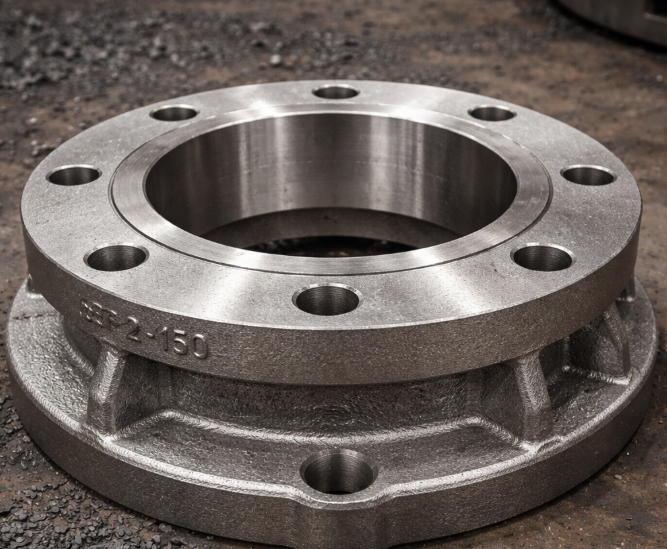
⚡ Quick Answer: For flanges in corrosive environments (offshore, chemical plants, underground), specify hot dip galvanizing per ISO 1461 or FBE coating per NORSOK M-501. For indoor industrial use, epoxy paint at 150-200μm is cost-effective. Always match coating type to ISO 12944 environment classification (C3-C5 for aggressive conditions).
Why Flange Surface Treatment Matters More Than You Think
You've specified the right material grade. You've verified dimensions per ASME B16.5. But if the surface treatment fails, the entire flange connection becomes a leak point.
Flange surface treatment isn't just about appearance. It's about:
Preventing crevice corrosion between flange faces and gaskets
Maintaining bolt torque by protecting thread surfaces
Extending service life from 5 years to 25+ years
Avoiding premature replacement costs
⚠️ Critical Risk: Coating failure at the flange face (sealing surface) can cause leaks. Machined faces must be protected during coating application and kept clean until assembly. Never coat the gasket contact area unless using specialty coated gaskets.
5 Common Flange Surface Treatment Technologies Compared
1. Hot Dip Galvanizing (HDG) — Best for Outdoor & Underground
Process: Flanges are immersed in molten zinc bath at 450°C, forming a metallurgical bond with the steel substrate.
Typical Thickness: 65-85μm (per ISO 1461)
Best For:
Outdoor pipeline systems (atmospheric exposure)
Underground installations (direct burial)
Marine environments (offshore platforms, coastal plants)
Water and wastewater treatment facilities
Advantages:
✅ Excellent corrosion resistance (20-50 years)
✅ Cathodic protection — zinc sacrifices itself
✅ Complete coverage including edges and threads
✅ Low maintenance — no repainting required
Limitations:
❌ Not suitable for temperatures above 200°C
❌ Dimensional changes — thread fit may require retapping
❌ Flange faces must be machined after galvanizing
💡 Pro Tip: For galvanized flanges, specify "over-galvanized" threads on bolts or use hot dip galvanized bolt sets with lubricated threads to ensure proper torque without galling.
2. Epoxy Coating — Versatile & Cost-Effective
Process: Liquid epoxy paint applied by spray or dip, then cured at ambient or elevated temperature.
Typical Thickness: 150-250μm (dry film thickness)
Best For:
Indoor industrial environments
Chemical processing plants (specific chemical resistance required)
Food and beverage facilities (FDA-approved epoxy available)
Architectural applications (color matching available)
Advantages:
✅ Wide temperature range (-40°C to +120°C)
✅ Excellent chemical resistance
✅ Color options for coding or aesthetics
✅ No dimensional changes — threads remain usable
Limitations:
❌ Shorter service life than HDG (10-15 years)
❌ Requires proper surface preparation (Sa 2.5 blast cleaning)
❌ Coating damage during installation exposes bare steel
3. Fusion Bonded Epoxy (FBE) — Premium Protection
Process: Thermoset epoxy powder applied electrostatically, then heat-cured to form a cross-linked coating.
Typical Thickness: 300-500μm (per NORSOK M-501)
Best For:
Offshore oil & gas platforms
Subsea pipeline systems
High-temperature service (up to 230°C)
Aggressive chemical environments
Advantages:
✅ Superior adhesion (cross-linked molecular bond)
✅ Excellent cathodic disbondment resistance
✅ High temperature resistance (up to 230°C)
✅ Industry standard for offshore (NORSOK M-501)
Limitations:
❌ Higher cost than liquid epoxy
❌ Requires specialized application equipment
❌ Field repair requires specialty materials
💡 Industry Standard: For offshore projects, specify FBE coating per NORSOK M-501 with third-party inspection for thickness, adhesion, and holiday detection.
4. Zinc-Rich Primer + Topcoat — Budget Option
Process: Zinc-rich epoxy primer (80μm) followed by epoxy or polyurethane topcoat (100-150μm).
Typical Thickness: 180-230μm total
Best For:
Temporary or short-term installations
Budget-constrained projects
Indoor environments with low corrosion risk
Situations where field application is required
Advantages:
✅ Lowest cost option
✅ Can be applied on site
✅ Easy to touch up and repair
Limitations:
❌ Shortest service life (5-10 years)
❌ Requires frequent maintenance
❌ Not suitable for aggressive environments
5. Bare Machined — For Specific Applications Only
Process: Flanges supplied with machined faces only, no coating on sealing surfaces.
Best For:
High-temperature service (>400°C)
Cryogenic applications
Flanges with ring-type joint (RTJ) gaskets
Situations where coating would interfere with gasket sealing
Advantages:
✅ No coating interference with gasket sealing
✅ Suitable for extreme temperatures
Limitations:
❌ Requires immediate rust preventive oil
❌ Short-term protection only (weeks to months)
❌ Not suitable for corrosive environments
Comparison Table: Flange Surface Treatment Options
| Treatment Type | Typical Thickness | Service Life (C3) | Max Temperature | Relative Cost | Best Application |
|---|---|---|---|---|---|
| Hot Dip Galvanizing | 65-85μm | 20-50 years | 200°C | $$ | Outdoor, underground, marine |
| Epoxy Coating | 150-250μm | 10-15 years | 120°C | $ | Indoor, chemical plants |
| FBE Coating | 300-500μm | 25+ years | 230°C | $$$ | Offshore, subsea, high-temp |
| Zinc-Rich + Topcoat | 180-230μm | 5-10 years | 120°C | $ | Budget, indoor, temporary |
| Bare Machined | N/A | Weeks-months | 500°C+ | $ | Extreme temp, RTJ gaskets |
How to Select the Right Surface Treatment for Your Project
Step 1: Classify Your Environment (ISO 12944)
The ISO 12944 standard defines corrosion categories that directly impact coating selection:
| Category | Environment | Example | Recommended Treatment |
|---|---|---|---|
| C1 | Very low | Heated indoor spaces | Epoxy paint or bare with oil |
| C2 | Low | Unheated warehouses | Epoxy paint 120-150μm |
| C3 | Medium | Urban industrial areas | HDG or epoxy 200μm+ |
| C4 | High | Chemical plants, coastal | HDG 80μm+ or FBE |
| C5 | Very high | Offshore, marine | FBE per NORSOK M-501 |
Step 2: Consider Operating Temperature
⚠️ Temperature Limits: Never exceed the coating's maximum service temperature. Zinc melts at 419°C (but loses protection above 200°C). Standard epoxy degrades above 120°C. FBE can handle up to 230°C. For higher temperatures, use bare machined flanges with high-temp gaskets.
Step 3: Evaluate Installation & Maintenance Access
Ask yourself:
Will the flange be accessible for maintenance? If buried or offshore, choose HDG or FBE (no repainting needed).
Is scaffolding required for access? If yes, invest in premium coating now to avoid future access costs.
What's the cost of failure? For critical process lines, choose FBE even if overkill for the environment.
Step 4: Check Project Specifications
Many industries have mandatory coating standards:
Oil & Gas (Offshore): NORSOK M-501 (FBE required)
Water/Wastewater: AWWA C213 (FBE or epoxy)
Marine: ISO 12944 C5-M (HDG or high-performance coating)
Food & Beverage: FDA 21 CFR 175.300 (food-grade epoxy)
Quality Control: What to Inspect Before Acceptance
1. Coating Thickness
Method: Magnetic or eddy current gauge per ISO 2808
Acceptance Criteria:
Minimum 90% of specified thickness
No single reading below 80% of specified
Measure 5-10 points per flange (more for large diameters)
2. Adhesion Testing
Method: Cross-cut test (ISO 2409) or pull-off test (ISO 4624)
Acceptance Criteria:
Cross-cut: Rating 0-1 (no removal)
Pull-off: Minimum 5 MPa for epoxy, 10 MPa for FBE
3. Holiday Detection
Method: High-voltage spark tester for coatings >200μm
Acceptance Criteria:
Zero holidays (pinholes) detected
Test voltage: 1.5-3 kV depending on thickness
💡 Buyer's Checklist: Request third-party inspection report (SGS, BV, or TUV) for critical projects. Verify inspector credentials and calibration certificates for testing equipment.
4. Surface Preparation Verification
Method: Visual comparison per ISO 8501-1
Acceptance Criteria:
Blast cleaning: Sa 2.5 (near-white metal)
Surface profile: 50-75μm for epoxy, 75-100μm for FBE
No visible oil, grease, or dust (ISO 8502-3 tape test)
Common Mistakes to Avoid
❌ Mistake 1: Coating the Flange Face
Never apply coating to the gasket sealing surface unless using specialty coated gaskets. Machine faces after coating or mask during application.
❌ Mistake 2: Mixing Coating Systems
Don't combine galvanized bolts with epoxy-coated flanges (galvanic corrosion risk). Match bolt coating to flange coating.
❌ Mistake 3: Ignoring Thread Fit
Hot dip galvanizing adds 50-80μm per surface. Specify "over-galvanized" threads or plan for retapping after coating.
❌ Mistake 4: Poor Storage Protection
Coated flanges must be stored off the ground with protective wrapping. Damaged coating during storage leads to premature corrosion.
Why Tiegu for Flange Surface Treatment
Specifying the right coating is only half the battle. Execution quality determines real-world performance.
Tiegu works with qualified coating applicators who maintain:
ISO 9001 certified quality systems with documented procedures
In-house inspection labs for thickness, adhesion, and holiday testing
NORSOK M-501 approved applicators for offshore projects
For procurement managers, this means:
✅ Consistent quality across multiple production batches
✅ Third-party inspection ready (SGS, BV, TUV)
✅ Traceable documentation (MTRs, inspection reports, photos)
📋 Get Free Technical Quotation
Specify your environment and project standards. We'll recommend the optimal coating system.
Summary: Key Takeaways for Flange Surface Treatment
✅ Match coating to environment: ISO 12944 C1-C5 determines minimum protection level
✅ Hot dip galvanizing: Best value for outdoor/underground (20-50 years)
✅ FBE coating: Premium choice for offshore and high-temp (NORSOK M-501)
✅ Epoxy paint: Cost-effective for indoor industrial (10-15 years)
✅ Never coat flange faces: Machine after coating or use specialty gaskets
✅ Verify quality: Thickness, adhesion, holiday detection, surface preparation
✅ Match bolt coating: Avoid galvanic corrosion by using compatible fasteners
📞 Contact Tiegu for Flange Surface Treatment Solutions
Need expert guidance on flange coating selection? Our technical team helps procurement managers specify the right surface treatment for their project environment.
📱 WhatsApp / WeChat: +86 152 5613 5588
📧 Email: zbw@tiegu.net
🌐 Website: www.tieguexport.com
💬 Inquiry Form: Submit Your Requirements
Response Time: Within 24 hours with technical recommendations and quotation.