
 en
en  fra
fra  de
de  ru
ru  ara
ara  gle
gle  it
it  jp
jp  kor
kor  th
th  zh
zh What Is a Reasonable Profit Margin for Casting Suppliers: Pricing Transparency Guide
2026-03-30 11:09:33 hits:0
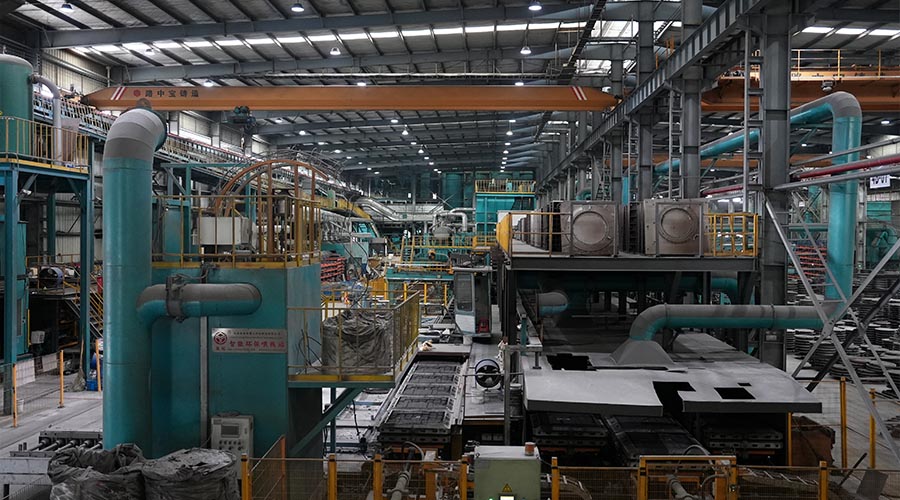
Reasonable profit margins for casting suppliers range from 8-12% for high-volume commodity castings, 12-18% for standard industrial castings, 18-25% for complex/custom castings, and 25-35% for critical applications (aerospace, nuclear). Margins below 8% indicate financial stress or unsustainable pricing; margins above 35% warrant competitive bidding. Fair margins enable supplier investment in quality, capacity, and continuous improvement.
Overview: Why Profit Margin Understanding Matters
Understanding supplier profit margins enables fair negotiations, sustainable supplier relationships, and realistic cost expectations. Excessively low margins compromise quality and supplier stability; excessively high margins indicate inefficient suppliers or lack of competition.
Margin impact on supplier behavior:
| Margin Level | Supplier Behavior | Buyer Risk |
|---|---|---|
| 8-12% | Minimum viable, limited investment capacity | Medium risk, supplier may exit business |
| 12-18% | Sustainable, moderate investment | Low risk, stable supplier relationship |
| 18-25% | Healthy, active improvement investment | Very low risk, preferred supplier tier |
| Above 35% | Potentially excessive, may indicate inefficiency | Buyer overpaying, consider competitive bidding |
Key principle: Fair margins create sustainable partnerships; exploitative pricing creates adversarial relationships and quality risks.
Typical Profit Margin Ranges
Margin by Casting Process
Standard profit margin benchmarks:
| Casting Process | Typical Margin | Notes |
|---|---|---|
| Green sand (medium volume) | 12-16% | Standard industrial applications |
| Resin sand | 15-20% | Higher skill, better surface finish |
| Lost wax (investment) | 18-25% | Labor-intensive, high precision |
| Die casting (non-ferrous) | 12-18% | High tooling cost, high volume |
| Centrifugal (pipe) | 10-15% | Specialized process, moderate volume |
| Continuous casting | 8-12% | High volume, standardized products |
Margin by Application Sector
Sector-specific margin expectations:
| Sector | Typical Margin | Rationale |
|---|---|---|
| Automotive (specialized) | 15-20% | Engineering content, lower volume |
| Heavy equipment | 15-22% | Complex parts, moderate volume |
| Pump and valve | 12-18% | Standard industrial, competitive |
| Oil and gas | 18-25% | Critical applications, stringent requirements |
| Aerospace | 25-35% | Extreme quality requirements, traceability |
| Nuclear | 25-35% | Regulatory compliance, documentation |
| General industrial | 12-18% | Standard requirements, moderate competition |
| Construction machinery | 15-20% | Durability requirements, moderate volume |
| Agricultural equipment | 12-18% | Cost-sensitive, seasonal demand |
Margin by Volume Tier
Volume-based margin variation:
| Volume Tier | Annual Quantity | Typical Margin |
|---|---|---|
| Low volume | 100-1,000 pieces | 20-30% |
| Medium volume | 1,000-5,000 pieces | 15-22% |
| Production volume | 5,000-20,000 pieces | 12-18% |
| High volume | 20,000-100,000 pieces | 10-15% |
| Very high volume | 100,000+ pieces | 8-12% |
Why volume affects margin:
High volume enables process optimization and automation
Fixed costs amortized over more pieces
Material purchasing power increases
Learning curve reduces labor content
Competition intensifies at high volumes
Understanding Foundry Cost Structure
Cost Component Breakdown
Typical foundry cost structure:
Total Cost = Direct Material + Direct Labor + Manufacturing Overhead + SG&A

Typical percentages:
- Direct material: 40-60%
- Direct labor: 15-25%
- Manufacturing overhead: 15-25%
- SG&A (selling, general, administrative): 8-15%
- Profit: 8-25% (varies by segment)
Cost Variations by Foundry Type
Cost structure comparison:
| Cost Element | Large Foundry | Medium Foundry | Small Foundry |
|---|---|---|---|
| Labor cost | 15-20% | 18-23% | 20-28% |
| Overhead | 18-23% | 15-20% | 12-18% |
| SG&A | 8-12% | 10-14% | 12-18% |
| Total cost | 86-90% | 93-97% | 99-111% |
| Profit margin | 10-14% | 3-7% | -11% to +1% |
Key insight: Larger foundries achieve better margins through economies of scale, purchasing power, and process efficiency. Small foundries often operate on razor-thin margins or losses.
Overhead Cost Drivers
Major overhead categories:
| Overhead Category | Percentage of Total Cost | Key Drivers |
|---|---|---|
| Equipment depreciation | 5-10% | Automation level, equipment age |
| Maintenance | 3-5% | Equipment age, preventive maintenance program |
| Quality system | 2-4% | Certification requirements, inspection scope |
| Environmental compliance | 2-4% | Local regulations, pollution control equipment |
| Management | 5-8% | Organization complexity, management layers |
How to Evaluate Pricing Fairness
Margin Estimation from Quotations
Reverse-engineering margin from quotes:
Step 1: Estimate supplier's cost
- Material: Calculate based on weight, yield, market prices
- Labor: Estimate based on process, complexity, regional rates
- Overhead: Typically 20-30% of direct costs
- Total estimated cost: Sum of above

Step 2: Compare to quoted price
Quoted Price - Estimated Cost = Estimated Profit

Step 3: Calculate margin percentage
Margin % = (Estimated Profit ÷ Quoted Price) × 100

Example:
Quoted price: $15.00/kg
Estimated cost: $12.50/kg
Estimated profit: $2.50/kg
Margin: ($2.50 ÷ $15.00) × 100 = 16.7%
Fairness Indicators
Signs of fair pricing:
| Indicator | What It Means |
|---|---|
| Willing to provide cost breakdown | Transparent, confident in pricing |
| Explains cost drivers clearly | Understands their own costs |
| Open to value engineering | Focused on mutual benefit |
| Invests in quality and capacity | Long-term orientation |
Warning signs of unfair pricing:
| Warning Sign | Potential Issue |
|---|---|
| Margin above 30% (standard parts) | Overpricing, lack of competition |
| Unwilling to discuss pricing | May hide inflated margins |
| Cannot explain cost basis | May not understand own costs |
| Resists all negotiation | May have excessive margins |
Regional Margin Variations
Margin expectations by region:
| Region | Typical Margin | Notes |
|---|---|---|
| China (inland) | 8-15% | Lower labor costs, developing infrastructure |
| India | 10-16% | Competitive, growing capability |
| Southeast Asia | 12-20% | Developing foundry industry |
| Eastern Europe | 12-20% | EU quality, competitive costs |
| North America | 15-25% | Higher labor costs, automation |
| Western Europe | 15-25% | High quality, premium positioning |
Negotiation Strategies for Fair Margins
Collaborative Negotiation Approach
Win-win negotiation tactics:
| Tactic | How It Works | Outcome |
|---|---|---|
| Long-term agreement | Multi-year contract for price stability | Sustainable margin for supplier |
| Payment term improvement | Faster payment for price reduction | Improved cash flow, lower price |
| Standardization | Reduce part variations for efficiency | Lower cost, fair margin |
| Forecast sharing | Enable production planning | Reduced inventory, better pricing |
Negotiation Don'ts
Avoid these negotiation mistakes:
| Mistake | Consequence | Alternative |
|---|---|---|
| Play suppliers against each other excessively | Adversarial relationships, reduced cooperation | Collaborative approach with multiple suppliers |
| Focus only on price | Miss value opportunities | Consider total value, not just cost |
| Ignore cost increases | Supplier financial stress | Build in reasonable escalation clauses |
| Constant re-bidding | No relationship continuity | Balance competition with relationship stability |
Price Adjustment Mechanisms
Fair price adjustment clauses:
| Adjustment Type | Trigger | Typical Adjustment |
|---|---|---|
| Energy cost | Energy price change >10% | Partial pass-through (50-70%) |
| Currency fluctuation | Exchange rate change >5% | Sharing mechanism (50/50) |
| Volume change | Volume variation >20% | Re-negotiate pricing tiers |
| Specification change | Engineering change | Cost impact analysis and adjustment |
Impact of Margin on Quality and Service
Margin-Quality Correlation
How margins affect quality investment:
| Margin Level | Quality Investment | Expected Quality Level |
|---|---|---|
| 8-12% | Limited, compliance-focused | Meets minimum requirements |
| 12-18% | Moderate, proactive | Good quality system, continuous improvement |
| 18-25% | Active, strategic | Advanced quality tools, prevention-focused |
| Above 25% | Comprehensive, best-in-class | Industry-leading quality capabilities |
Margin-Service Correlation
How margins affect service levels:
| Margin Level | Service Characteristics |
|---|---|
| 8-12% | Standard response, basic support, some flexibility |
| 12-18% | Good response, proactive communication, reasonable flexibility |
| 18-25% | Fast response, dedicated support, high flexibility |
| Above 25% | Premium service, account management, maximum flexibility |
When to Accept Higher Margins
Justified Higher Margins
Situations where 20-35% margins are reasonable:
| Situation | Justification |
|---|---|
| Critical applications | Enhanced testing, documentation, traceability |
| Low volume/prototype | Setup costs amortized over few pieces |
| Urgent delivery | Overtime, production schedule disruption |
| Specialized materials | Limited supplier base, higher risk |
| Tight tolerances | Enhanced inspection, higher rejection risk |
| New supplier qualification | PPAP costs, learning curve investment |
Value-Added Services
Services that justify higher margins:
| Service | Value to Buyer | Margin Justification |
|---|---|---|
| Inventory management (VMI) | Reduced buyer inventory cost | +2-4% margin |
| Enhanced testing/certification | Reduced buyer quality risk | +3-5% margin |
| Technical support | Faster problem resolution | +2-3% margin |
| Flexible production scheduling | Reduced buyer lead time | +2-4% margin |
How Tiegu Approaches Fair Pricing
Because we supply raw materials to 3000+ foundries and understand actual production costs across our network, this allows us to identify fair pricing that enables sustainable supplier relationships while protecting buyer interests. This means that buyers can negotiate with confidence, knowing which margins support quality and which indicate exploitation.
For pricing fairness specifically, this translates to several concrete benefits:
Cost benchmarking: We compare quoted prices against actual material costs and typical production efficiencies across our network. This reduces the risk of accepting unfairly high prices or pushing suppliers to unsustainable low margins.
Supplier assessment: We provide honest assessments of whether quoted margins enable quality investment or indicate financial stress. Export documentation including material test reports and inspection certificates complies with destination country requirements.
Seek fair pricing that supports sustainable supplier relationships and quality investment.
Summary: Key Takeaways
1. 8-12% margin for high-volume commodity — Competitive pricing, minimal investment capacity
2. 12-18% margin for standard industrial — Sustainable, enables quality investment
3. 18-25% margin for complex/custom — Justified by engineering content and lower volumes
4. 25-35% margin for critical applications — Aerospace, nuclear, extreme requirements
5. Margins below 8% indicate risk — Quality compromise, supplier instability likely
6. Consider total value, not just margin — Service, quality, and capability matter
7. Fair margins create partnerships — Exploitative pricing creates adversarial relationships