
 en
en  fra
fra  de
de  ru
ru  ara
ara  gle
gle  it
it  jp
jp  kor
kor  th
th  zh
zh Trade Company vs Foundry: Which Is Better for Purchasing Castings?
2026-03-10 01:25:59 hits:0
For most international buyers, working with a foundry (casting manufacturer) is better when you need lower cost, better quality control, and customization, while trade companies are useful when you want simplified sourcing, multiple product categories, and lower communication workload.
Quick Comparison: Trade Company vs Foundry
| Factor | Trade Company | Foundry (Casting Manufacturer) |
|---|---|---|
| Price | Higher (includes margin) | Lower (factory price) |
| Customization | Limited | Strong |
| Communication | Easier | Requires technical discussion |
| Quality Control | Indirect | Direct |
| Product Range | Wide | Specialized |
| MOQ Flexibility | Sometimes lower | Often higher |
Conclusion:
Choose a foundry if you want better price and technical support.
Choose a trade company if you want convenience and multiple suppliers managed by one partner.
What Is a Casting Trade Company?
A casting trade company acts as an intermediary between buyers and manufacturers. Instead of producing castings themselves, they source products from multiple factories.
Typical services include:
Supplier sourcing
Price negotiation
Quality inspection
Logistics coordination
Export documentation
Trade companies can be helpful for buyers who want one contact to manage several suppliers.
According to International Trade Centre, intermediaries play an important role in global manufacturing supply chains, especially for small and medium-sized exporters.
What Is a Foundry?
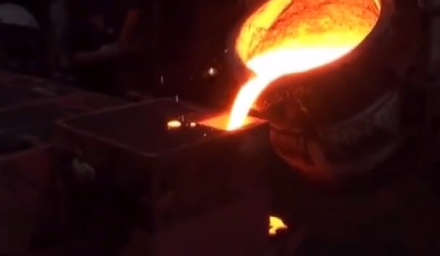
A foundry is a factory that produces metal castings by melting metal and pouring it into molds.
Common casting processes include:
Sand casting
Investment casting
Die casting
Lost foam casting
Foundries typically provide:
Mold development
Engineering support
Casting production
Heat treatment
Machining
Industry data from World Foundry Organization shows that global casting production exceeds 110 million tons annually, with Asia accounting for over 70% of output.
China has become one of the world's largest casting producers, with many specialized manufacturers such as TiegU Foundry supplying iron castings to international industries including machinery, construction, and automotive.
Why Do Buyers Choose Trade Companies?
Trade companies are often preferred when buyers want simpler procurement management.
Key Advantages
1. Multiple Supplier Access
Trade companies can source from many factories, which is useful if you need:
Castings
Machined parts
Forgings
Fabrications
2. Lower Communication Barriers
Trade companies often provide:
English-speaking sales teams
Faster responses
Simplified project coordination
3. Flexible Small Orders
Some trade companies accept smaller minimum order quantities (MOQ) because they consolidate orders from multiple clients.
Why Do Buyers Choose Foundries?
For professional casting buyers, working directly with a foundry is usually more efficient.
1. Lower Cost
Factories do not add intermediary margins.
In many cases, buying directly from a foundry can reduce costs by 10–30% depending on the product.
2. Better Technical Support
Foundries can provide:
Design optimization
Mold improvement
Material recommendations
This is especially important for complex castings such as:
Pump housings
Valve bodies
Automotive components
3. Direct Quality Control
When working with a foundry, buyers can:
Audit the production line
Review casting processes
Inspect molds and materials
According to the World Steel Association, direct manufacturer collaboration improves supply chain transparency and production reliability.
How to Decide Between a Trade Company and a Foundry?
Use the following checklist when choosing your supplier.
Choose a Trade Company If:
You need multiple product categories
You want one contact managing several factories
Your order volume is small or irregular
You prefer simplified communication
Choose a Foundry If:
You need custom casting design
You want the lowest possible price
Your order volume is stable or large
You require direct technical collaboration
Key Factors to Evaluate When Buying Castings
Regardless of supplier type, buyers should evaluate:
1. Production Capability
Check:
Casting processes
Annual capacity
Engineering team
2. Quality Certification
Common certifications include:
ISO 9001
ISO 14001
IATF 16949 (automotive)
3. Inspection Capability
Important testing equipment:
Spectrometer
Ultrasonic testing
X-ray inspection
CMM measurement
FAQ: Trade Company vs Foundry
Is it cheaper to buy castings from a factory?
Yes. Buying directly from a foundry typically reduces costs because there is no intermediary margin.
Are trade companies reliable?
Many trade companies are reliable and provide valuable sourcing services, especially for buyers who need multiple suppliers and simplified procurement management.
Can a trade company provide better quality control?
Sometimes. Some professional trading companies offer third-party inspection and supplier management, which can improve consistency when working with multiple factories.
Quick Summary
Trade companies offer convenience, easier communication, and access to multiple suppliers.
Foundries provide lower prices, stronger engineering support, and direct quality control.
For large or technical casting projects, working directly with a foundry is usually the better option.
For smaller or multi-product sourcing, a trade company may be more practical.