
 en
en  fra
fra  de
de  ru
ru  ara
ara  gle
gle  it
it  jp
jp  kor
kor  th
th  zh
zh Ductile Iron Pipe Joint Leakage: Root Cause Analysis and On-Site Risk Control
2026-02-15 07:50:38 hits:0
Joint leakage in ductile iron pipelines is one of the most sensitive issues in water supply projects.
When leakage occurs, attention is often directed toward pipe manufacturing quality.
However, field investigations across multiple projects show that most leakage cases originate from installation conditions and force management, rather than material defects.
This article provides a structured analysis of:
The technical mechanisms behind joint leakage
Construction-stage risk factors
Preventive control measures for engineers and project managers
For reference on joint structures and connection systems, see:
👉Ductile Iron Pipe Joints & Connections
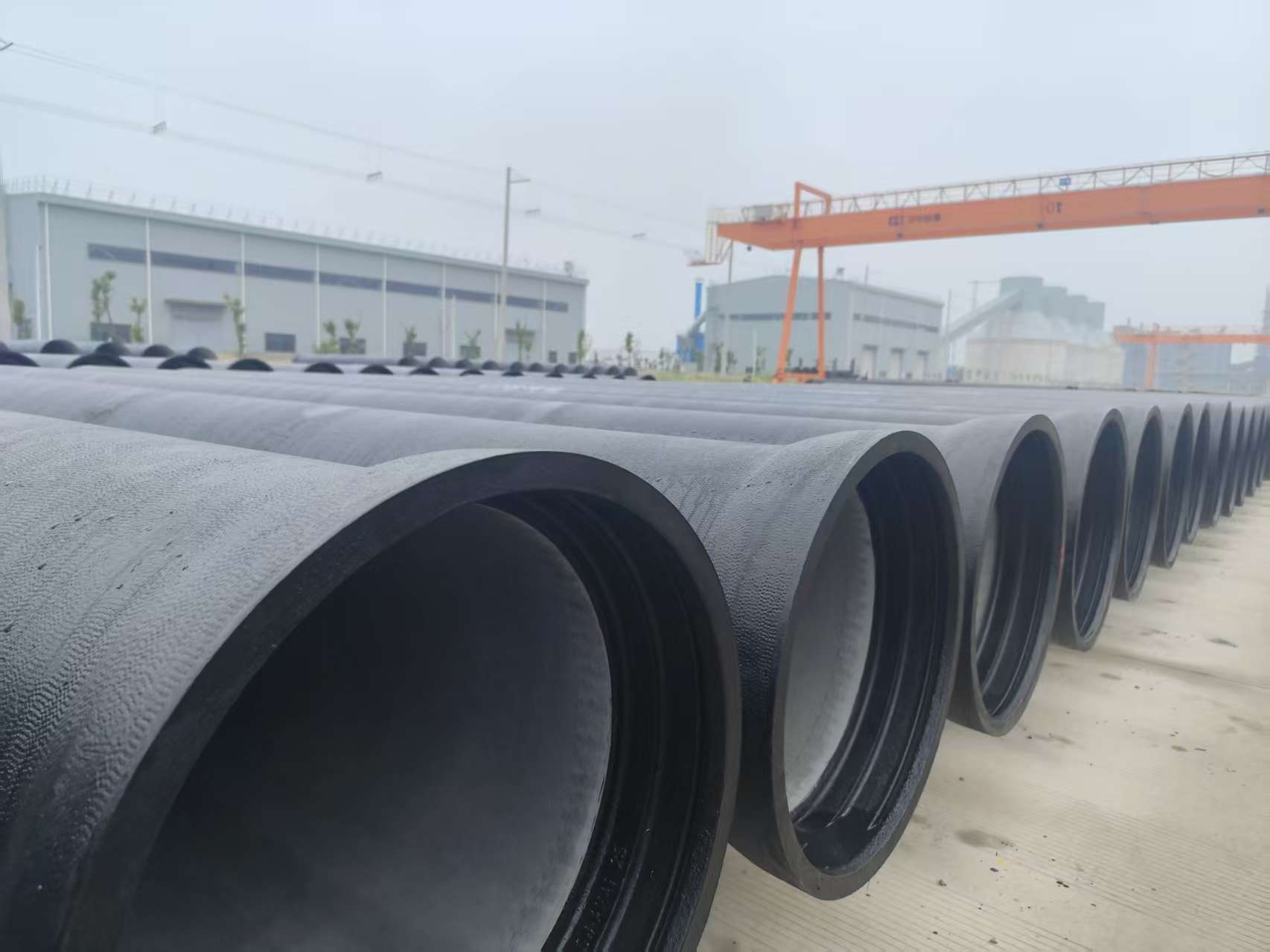
Understanding How Leakage Develops in Ductile Iron Pipe Joints
Ductile iron pipe joints rely primarily on:
Elastic gasket compression
Proper insertion depth
Controlled angular alignment
Stable foundation support
Leakage occurs when any of these conditions are compromised.
Importantly, leakage is often progressive rather than immediate.
Major Technical Causes of Joint Leakage
1. Uneven Gasket Compression
A gasket functions correctly only when uniformly compressed.
Leakage risk increases when:
The gasket is distorted during installation
Foreign particles interfere with sealing contact
Lubrication is uneven or excessive
Under internal pressure, weak points in compression become leakage paths.
2. Partial Engagement of Socket and Spigot
Proper engagement depth ensures balanced sealing pressure.
When insertion is incomplete:
The gasket does not reach its designed compression zone
Pressure distribution becomes uneven
Leakage may appear during pressure testing
This issue is frequently overlooked in fast-paced construction environments.
3. Misalignment and Over-Deflection
While ductile iron joints allow limited angular flexibility, excessive deflection causes:
Asymmetric stress concentration
Long-term gasket fatigue
Reduced sealing stability
Joint flexibility should assist alignment, not compensate for poor trench preparation.
4. Ground Settlement and Bedding Instability
Settlement-related leakage often appears after backfilling and commissioning.
Typical underlying causes include:
Inconsistent trench compaction
Unsupported pipe sections
Soil washout near joints
When differential settlement occurs, joints absorb concentrated stress.
5. Inadequate Control of Axial Thrust Forces
Pressurized pipelines generate axial forces at:
Bends
Branches
End caps
Elevation transitions
If thrust resistance measures are insufficient:
Micro-movement occurs
Gasket sealing integrity weakens
Gradual leakage develops
Proper thrust management is critical in high-pressure systems.
Which Leakage Risks Can Be Controlled During Installation?
Most leakage-related risk factors are controllable before commissioning.
Critical control points include:
Inspecting gasket seating before assembly
Verifying insertion depth marks
Cleaning joint surfaces before lubrication
Maintaining proper alignment within design limits
Ensuring uniform bedding support
Confirming thrust restraint compliance
Systematic inspection during installation significantly reduces long-term leakage risk.
Recommendations for Project Owners and Supervisors
For project owners and supervising engineers:
Monitor joint installation procedures closely
Require documentation of insertion verification
Inspect bedding and backfill compaction near joints
Confirm thrust block or restraint calculations match pressure conditions
Leakage investigation should prioritize construction process review before material evaluation.
Recommendations for Contractors
Contractors can reduce joint failure risk by:
Training crews specifically on gasket handling
Avoiding forced alignment through joint bending
Treating joint zones as structural control points
Performing detailed checks before pressure testing
Careful execution during installation protects long-term system reliability.
Technical Conclusion
Ductile iron pipe joint leakage is usually the result of installation variables and force management — not inherent pipe defects.
Proper control of alignment, compression, and axial restraint ensures sealing performance.
For more information on ductile iron pipe joint configurations and design principles, visit:
👉Ductile Iron Pipe Joints & Connections